
Alaan and Pluto are two of the strongest spend management platforms in the UAE. Narrowing your shortlist to these two means you've already skipped past a lot of weaker options.
They solve different problems, though. Their pricing models also pull in opposite directions once your team grows.
In this guide, I'll walk through what each platform does, where their integrations diverge, and which finance team each one suits.
➡️ I'll also cover a third option: Pemo (that's us), a UAE spend management platform priced per company, whatever your headcount.
TL;DR
- Alaan pairs Visa corporate cards with an AI-Native Business Account issued by Ruya Community Islamic Bank, which receives payments, sends local and cross-border transfers, and runs AI bill pay from one login.
➡️ Choose Alaan if you need outbound international payments from the account itself and AED 499/month plus AED 79 for the account fits your budget.
- Pluto reaches further into procurement than either rival, though the module is a paid add-on on Growth and only Enterprise gets three-way matching, contract management and the vendor portal.
➡️ Choose Pluto if you have a real procurement function and are budgeting for Enterprise rather than the $99 Growth plan.
- Pemo charges AED 399/month for the whole company at any headcount, and its free plan carries unlimited cardholders plus cashback, which neither rival matches.
➡️ Choose Pemo if your headcount is climbing and you'd rather your spend platform stayed flat while it does.
Alaan, Pluto, or Pemo: Head-To-Head
Here's how the 3 spend management platforms stack up:
Alaan vs. Pluto vs. Pemo: features
The short version of how the three compare:
- Alaan covers the most ground, because it bundles a business account in with the cards.
- Pluto goes deepest on procurement and petty cash, which is why it fits larger finance teams better than lean ones.
- Pemo handles the same core work as both, priced so that adding cardholders doesn't change the invoice.
Let's go through each platform, starting with Alaan: 👇
Alaan's features
The SuperCard and spend controls
Alaan's card product is built on Visa. Admins issue cards to teams and individuals at no per-card cost.

Samsung Pay works alongside Apple Pay and Google Pay on both card types.
Admins can set limits per card and restrict spending by merchant category or named vendor.
On Premium, cards lock themselves the moment a receipt policy goes unmet.
Cashback tops out at 2% on international spend with no cap, and 1% domestically. Both require Premium.
Alaan Intelligence
Alaan sells this layer harder than anything else in its product.
A receipt collector agent chases people for missing paperwork, while AI verification flags duplicates and out-of-policy claims before they reach an approver.
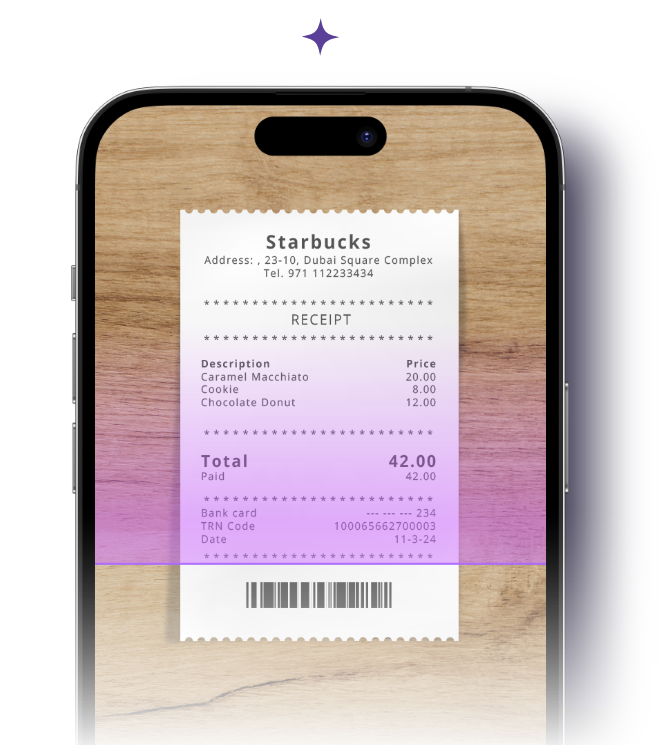
There's also a VAT savings agent, approval recommendations, and Ask Alaan, a chat interface for querying your spend data.
The AI-native business account
Alaan's newest module is the business account, which widens what the product competes with.
You get a dedicated IBAN in your company name, which can receive funds domestically and internationally.
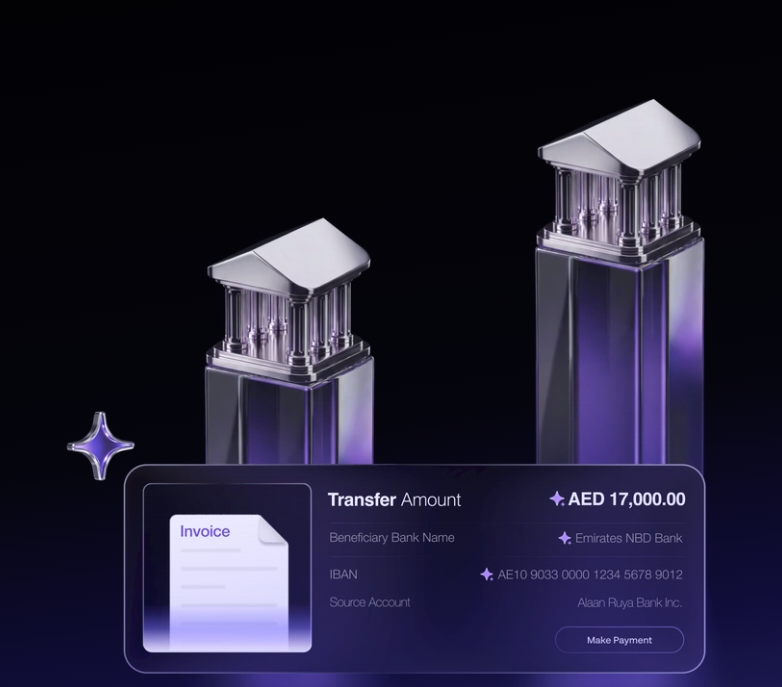
Local transfers go out from the same screen. On the bill pay side, AI pulls invoice details and routes approvals.
Idle cash returns up to 3.75% expected annual profit according to Alaan, withdrawable at any time, with deposits from AED 5,000 up to AED 5,000,000.
Alaan is best suited if:
✅ You want corporate cards and business banking managed from one dashboard.
✅ Meaningful cash is parked in the business, and you want a return on it without locking the money up.
✅ Your spend skews international, where 2% uncapped cashback compounds quickly.
✅ You want one vendor for cards, expenses, bill pay and banking, with a single support line behind all of it.
Pluto's features
Procurement and intake-to-pay
Procurement is the part of Pluto that a finance manager will notice first.
Purchase requests come in through dynamic forms with routing rules. Pluto then generates the purchase orders automatically.
Matching is two-way on Growth and three-way on Enterprise.
Contract management and a vendor portal for suppliers to upload their own invoices are Enterprise-only.
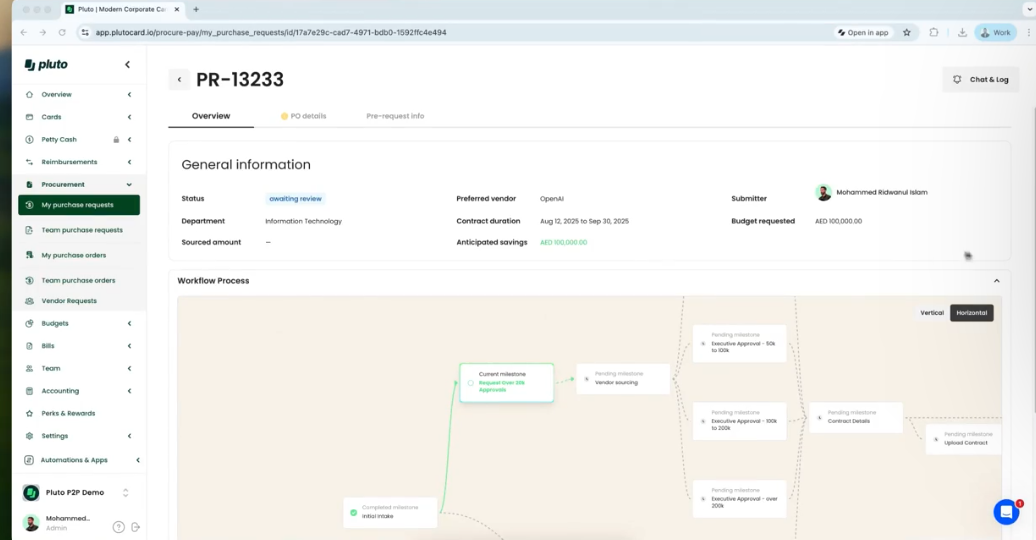
For a company with a procurement manager and a formal approval chain, this is a genuine reason to pick Pluto over the alternatives.
The digital petty cash register
Petty cash hasn't disappeared from UAE businesses. Pluto gives it a dedicated module.
ATM withdrawals get captured automatically as cash on hand. Teams track their own float from there.
Cash expenses then move through the same review flow as card spend.
Paper vouchers stop being the system of record. Useful if you run site teams, drivers or PROs.
PlutoAI and bookkeeping automation
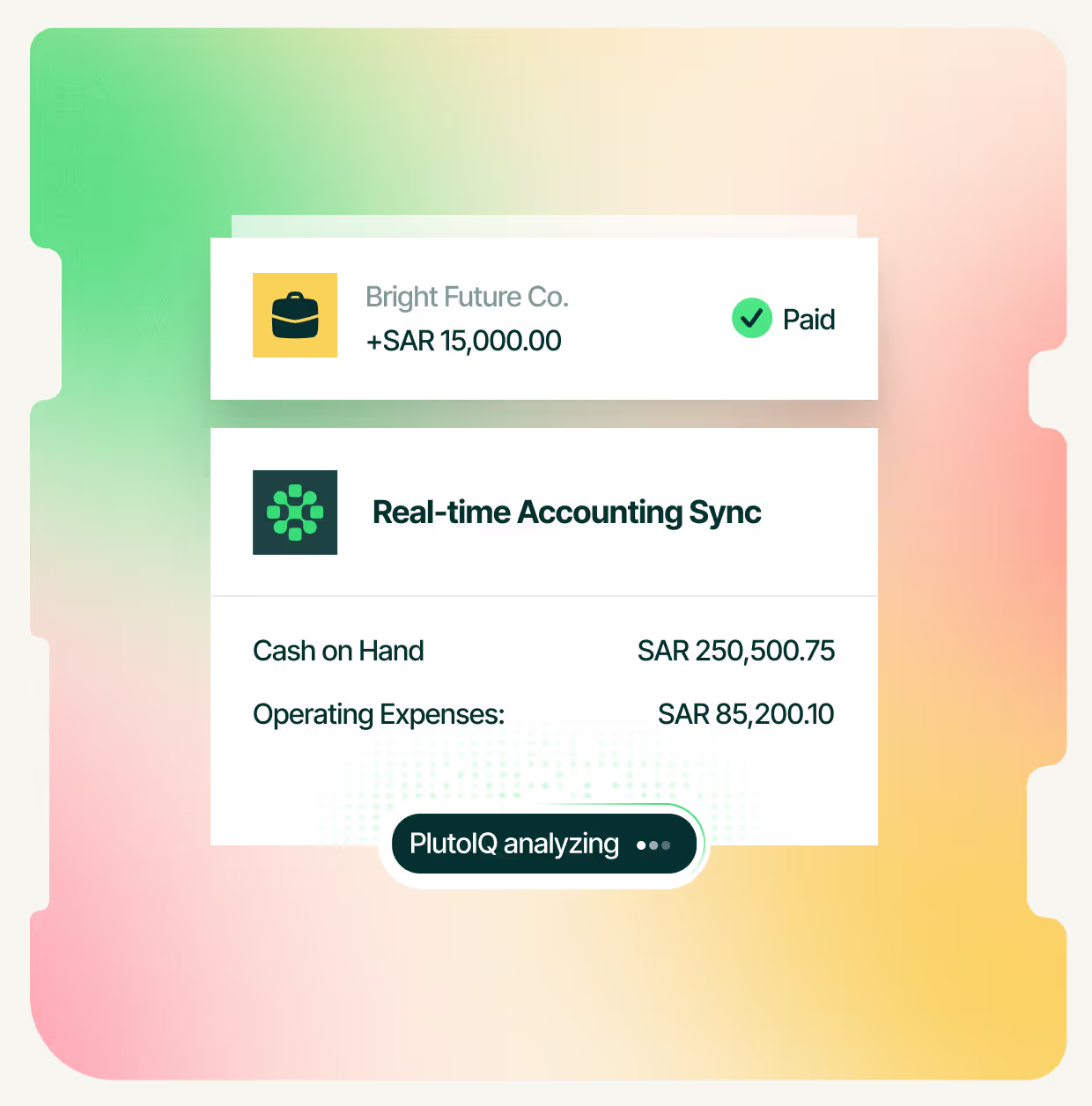
Pluto's AI bookkeeper reconciles transactions as they land, coding GL and tax fields, departments and budgets from vendor data and line-item OCR.
It also chases employees for missing receipts and flags duplicates across the organisation.
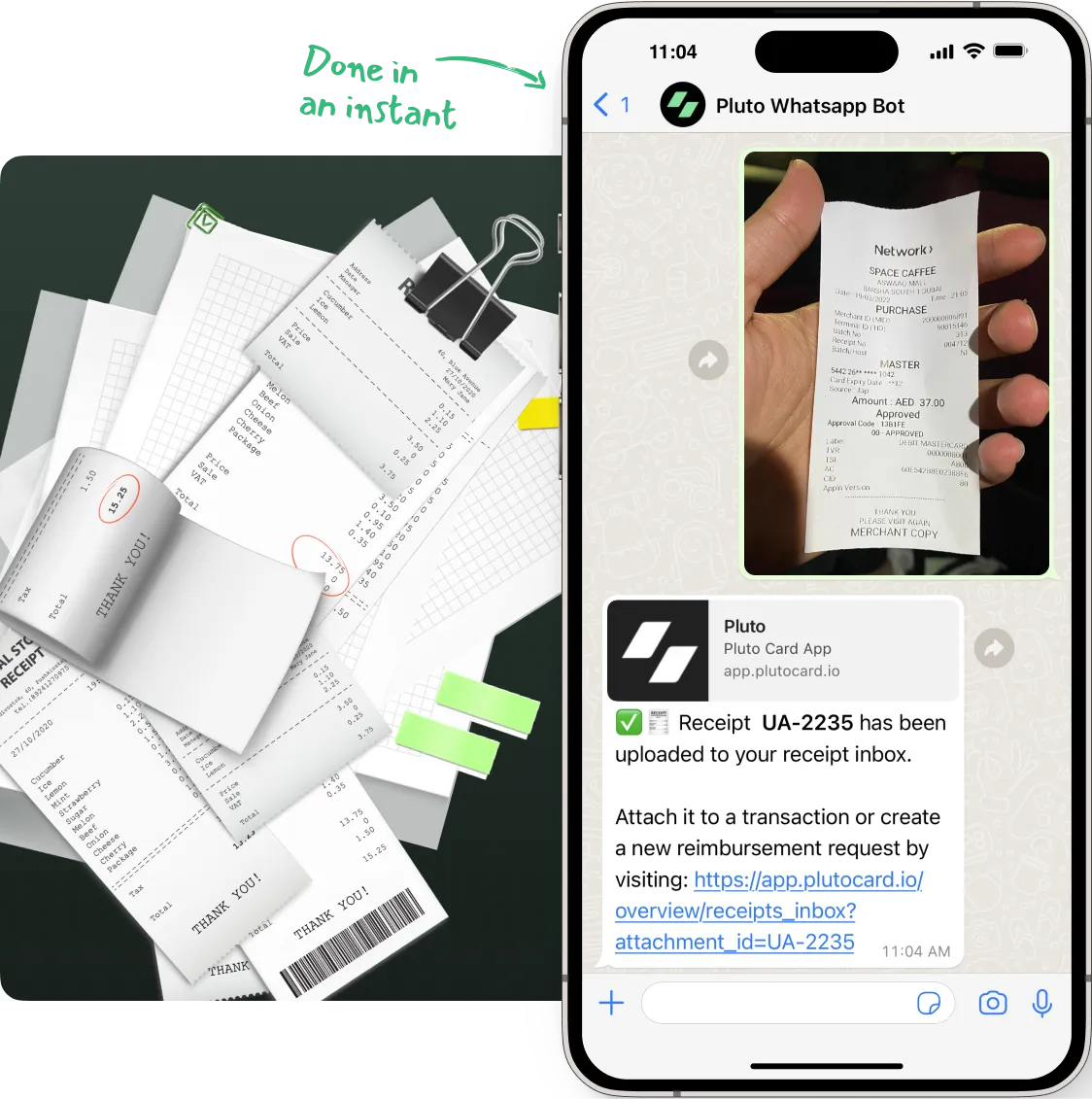
Receipts arrive by WhatsApp, email or the mobile app. Pluto claims its bulk OCR can process 99 receipts in 8 seconds.
Pluto is best suited if:
✅ You run a formal procurement process and want purchase orders and matching in the same tool as your cards.
✅ Petty cash is still a live headache across sites or field teams.
✅ NetSuite or MS Dynamics runs your books and you need bi-directional sync.
✅ You have fewer than 30 cardholders, where $99/month covers everyone with no per-user charge.
Pemo's features
Alaan and Pluto both tie cost to people in some form.
Alaan gives you unlimited users on Premium, but AED 499/month is the entry price. The business account adds AED 79 on top.
Pluto includes 30 users and charges $9 for each one after that.
Pemo works differently.
AED 399/month is billed to the company as a whole. How many people carry a card makes no difference to the invoice.
That decision shapes most of what follows: 👇
Corporate cards without a headcount meter
Every Pemo plan, including the free one, comes with unlimited cards and unlimited cardholders.
Virtual cards issue instantly. For one-off vendor payments, there are single-use cards.
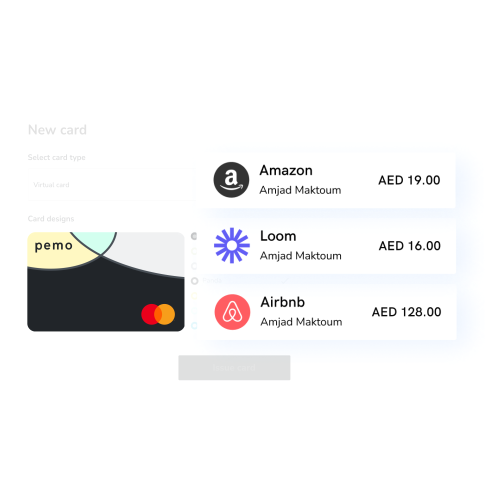
Physical Mastercards support Samsung Pay alongside Apple and Google Pay.
Controls are set before anyone spends: caps per transaction, per day, per week, per month or per year, plus restrictions by merchant category or named vendor.
Cards freeze and unfreeze from the app instantly. Every account also gets a dedicated IBAN for wallet loading, free of charge.
Expense capture that closes itself out
Transactions appear in the dashboard as they happen. The expense record gets created in the same instant.
Receipts come in through the mobile app or by email. OCR matches them to the right transaction without anyone keying in a reference.
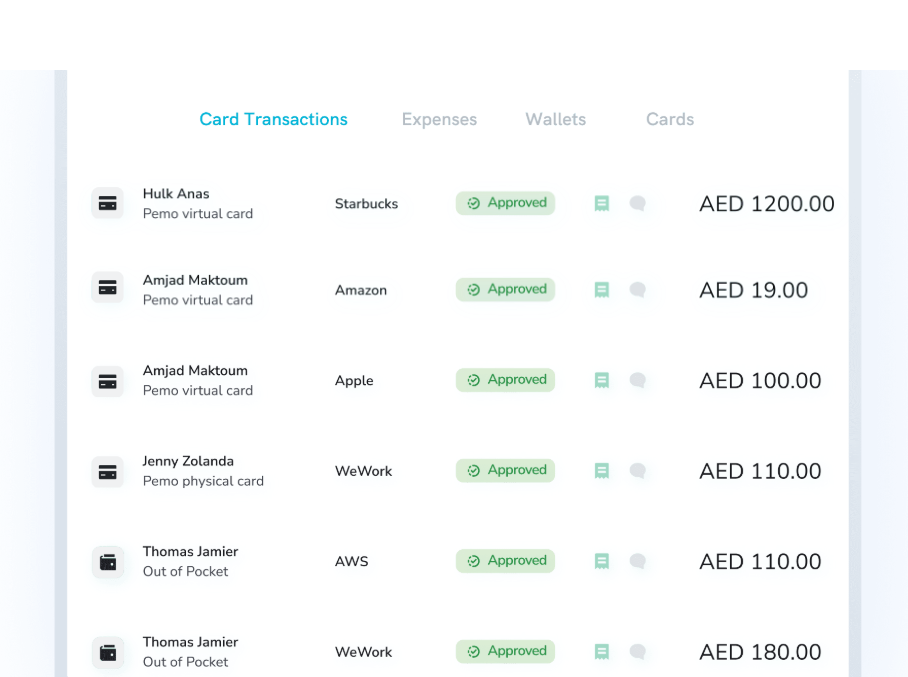
Premium adds receipt reminders, duplicate detection, line-item splitting on a single expense, and tracking for non-card purchases.
The free plan handles approvals through default policies. Premium opens up multi-layer workflows and maker-checker sign-off on card actions.
Pemo Copilot and the accounting layer
Copilot codes each expense against your chart of accounts, maps the category, assigns the vendor and applies VAT coding.
It learns from the entries your team has already approved.
Auto coding, OCR, category mapping and vendor mapping come with every tier.
Premium adds custom financial dimensions, automatic vendor creation and Copilot filling accounting fields for you.
Pemo MCP: your spend data inside ChatGPT or Claude
Alaan and Pluto both have in-app AI assistants. This works the other way round.
Pemo MCP connects Claude, ChatGPT, Gemini, Copilot or any client that supports remote MCP servers to your live Pemo data. The asking happens in the tool your team already has open.
Ask for today's declined transactions, last month's software spend, a month-end summary, cards with no recent activity, or reimbursements submitted this week.
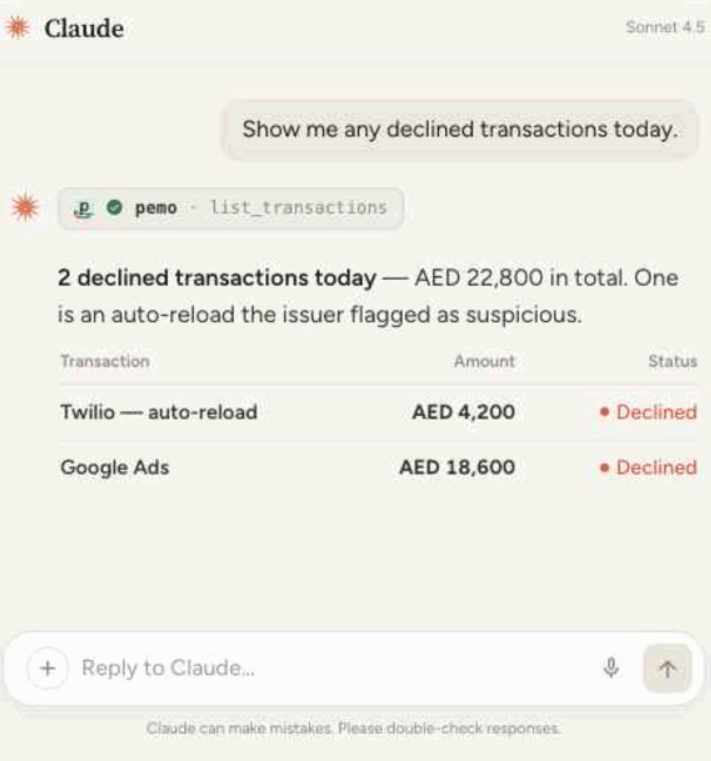
The connection is read-only, so nothing gets approved or changed from a chat window. Cards show their last four digits only. Each person's Pemo role limits what their assistant can see.
Pemo MCP is rolling out to customers now, with an admin requesting access from support before the connector goes in.
Pemo is the right choice if you:
✅ Are adding cardholders faster than budget, since AED 399/month covers the company at any headcount.
✅ Want a free plan a real team can run on, with unlimited cardholders and 0.5% cashback on international spend.
✅ Already work inside ChatGPT or Claude and want to query live spend data from there, which Pemo MCP now supports in early access.
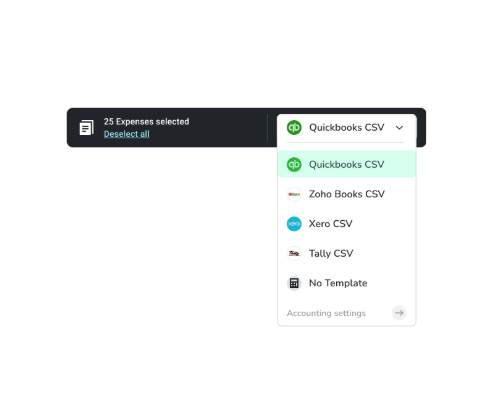
✅ Keep your books in Xero, QuickBooks, Zoho, Odoo, Wafeq or Mazeed, all of which connect on the free plan.
Integrations: Alaan vs. Pluto vs. Pemo
Alaan integrations
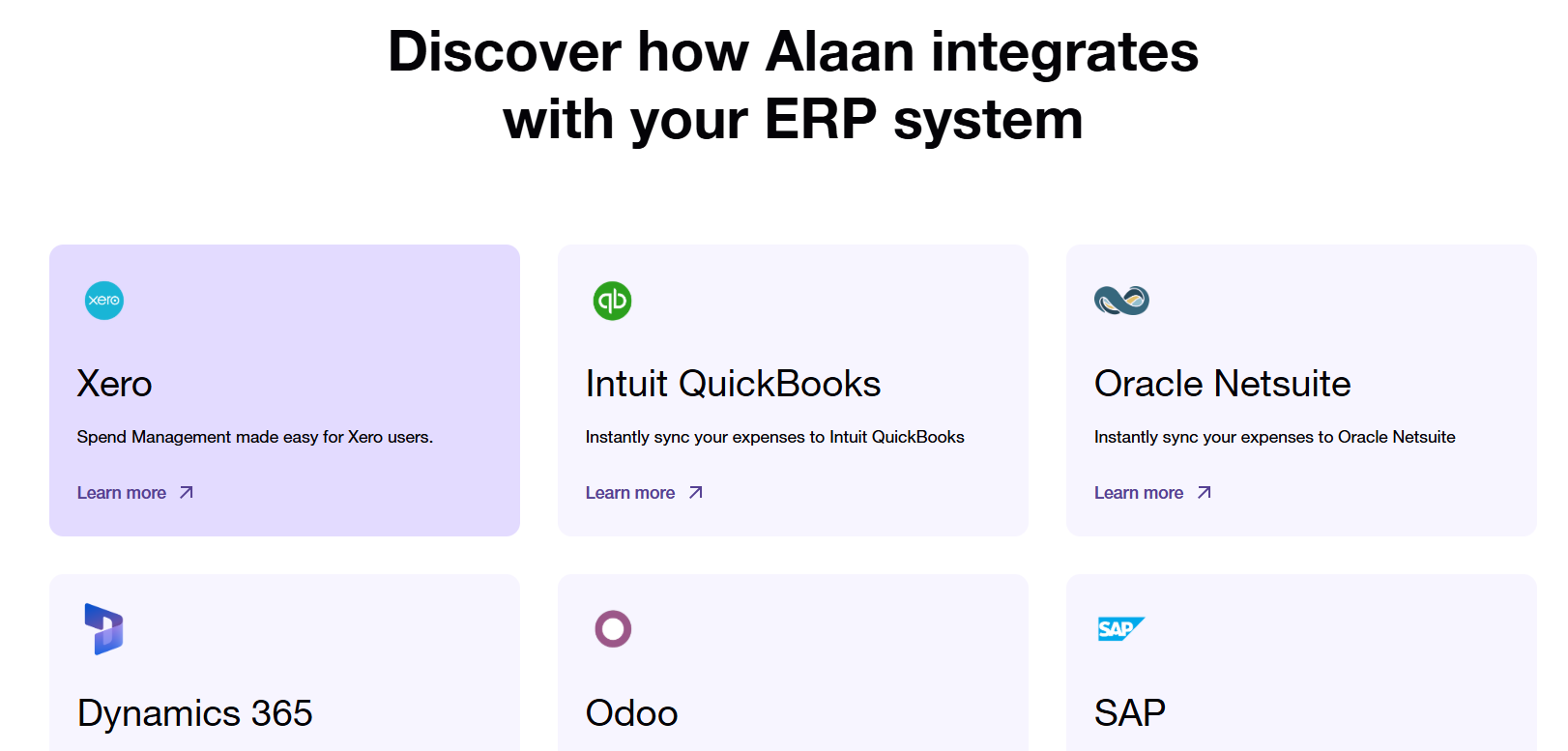
Alaan connects to the standard accounting stack on its free plan and unlocks enterprise ERPs on Premium.
A short list of notable connections:
- Accounting: Xero, Zoho Books, QuickBooks, Wafeq, ERPNext and Odoo.
- Enterprise ERP: Dynamics 365 Business Central, Microsoft F&O, Oracle NetSuite and SAP, all from Premium.
- Custom ERP and API: available on Enterprise, with multi-entity support.
- Exports: configurable CSV downloads for Tally.
Pluto integrations
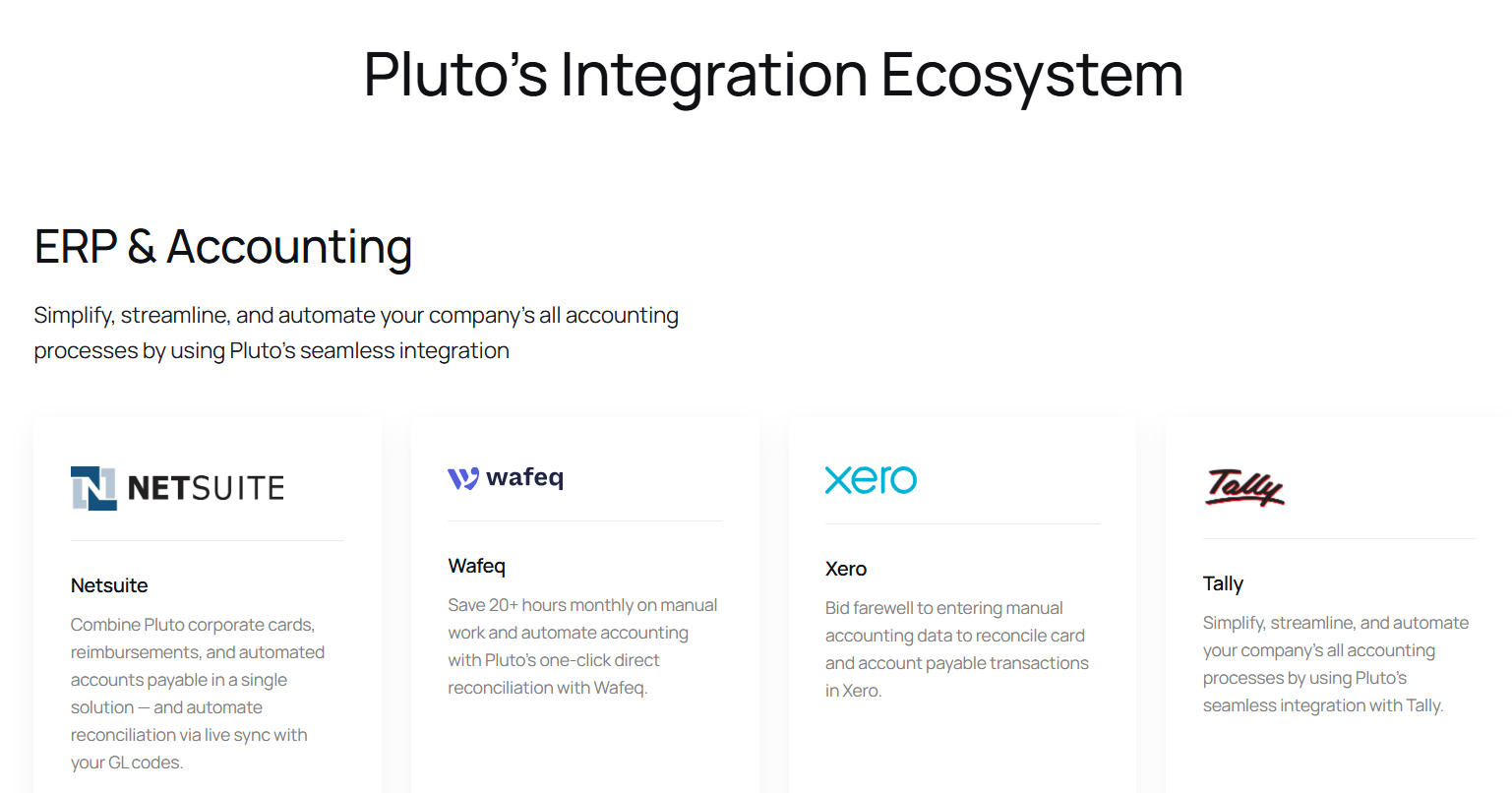
Pluto advertises over 50 integrations and splits them across accounting, HRIS and single sign-on, with the enterprise ERPs held back for higher tiers.
A short list of notable connections:
- Accounting: Xero, QuickBooks, Zoho and Odoo, with direct sync from the Growth plan.
- Enterprise ERP: NetSuite, MS Dynamics, Oracle Fusion, JD Edwards, Epicor, SAP and Infor, on Enterprise.
- HRIS: BambooHR, Deel, Workday, Rippling, Darwinbox and SAP SuccessFactors.
- Communication and SSO: WhatsApp, Slack, Microsoft Teams, Okta, JumpCloud and Microsoft Entra ID.
Pemo integrations
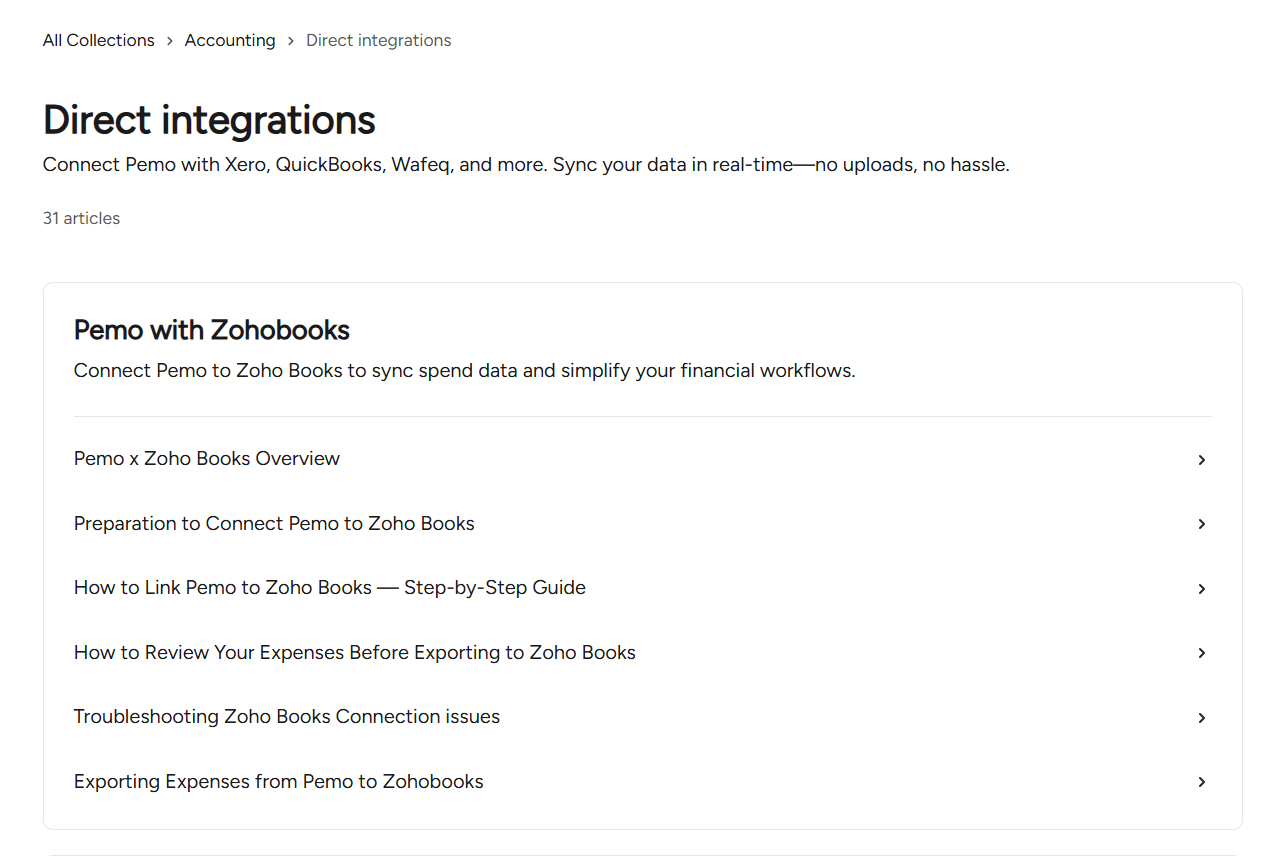
Pemo puts the full standard accounting set on the free plan, which matters if you're starting small.
Here’s a short list of our notable connections:
- Accounting: Xero, QuickBooks, Zoho Books, Odoo, Wafeq and Mazeed, available on every tier including Starter.
- Standard ERP: NetSuite and Dynamics 365 Business Central, from Premium.
- Custom ERP: any system, on Enterprise.
- Developer API: available as an add-on for Premium and Enterprise.
Pricing: Alaan vs. Pluto vs. Pemo
Alaan's pricing
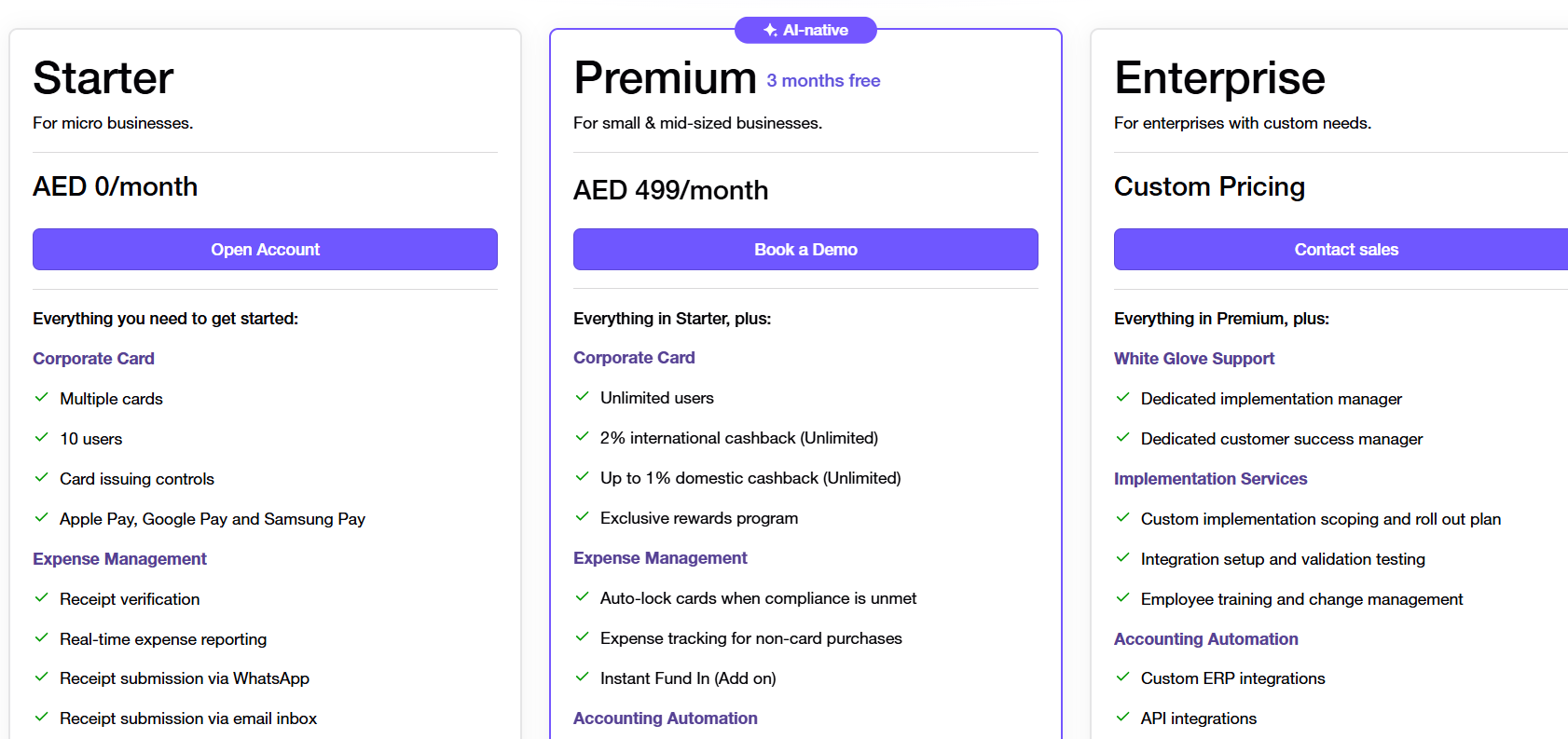
Alaan runs a free Starter tier and two paid plans, with the business account sold separately.
- Starter: free, for up to 10 users, covering corporate cards, receipt verification, real-time expense reporting, WhatsApp and email receipt submission, approval workflows and accounting integrations.
- Premium: AED 499/month for unlimited users, adding 2% uncapped international cashback, up to 1% domestic cashback, Alaan Intelligence, enterprise ERP integrations, auto-locking cards and a customer success manager.
- Business Bank Account and AP Automation: AED 79/month on top of Premium, for the dedicated IBAN, inbound payments and AI-native bill management.
- Enterprise: custom pricing, adding custom ERP integrations, API access, multi-entity support and a dedicated implementation manager.
Pluto's pricing
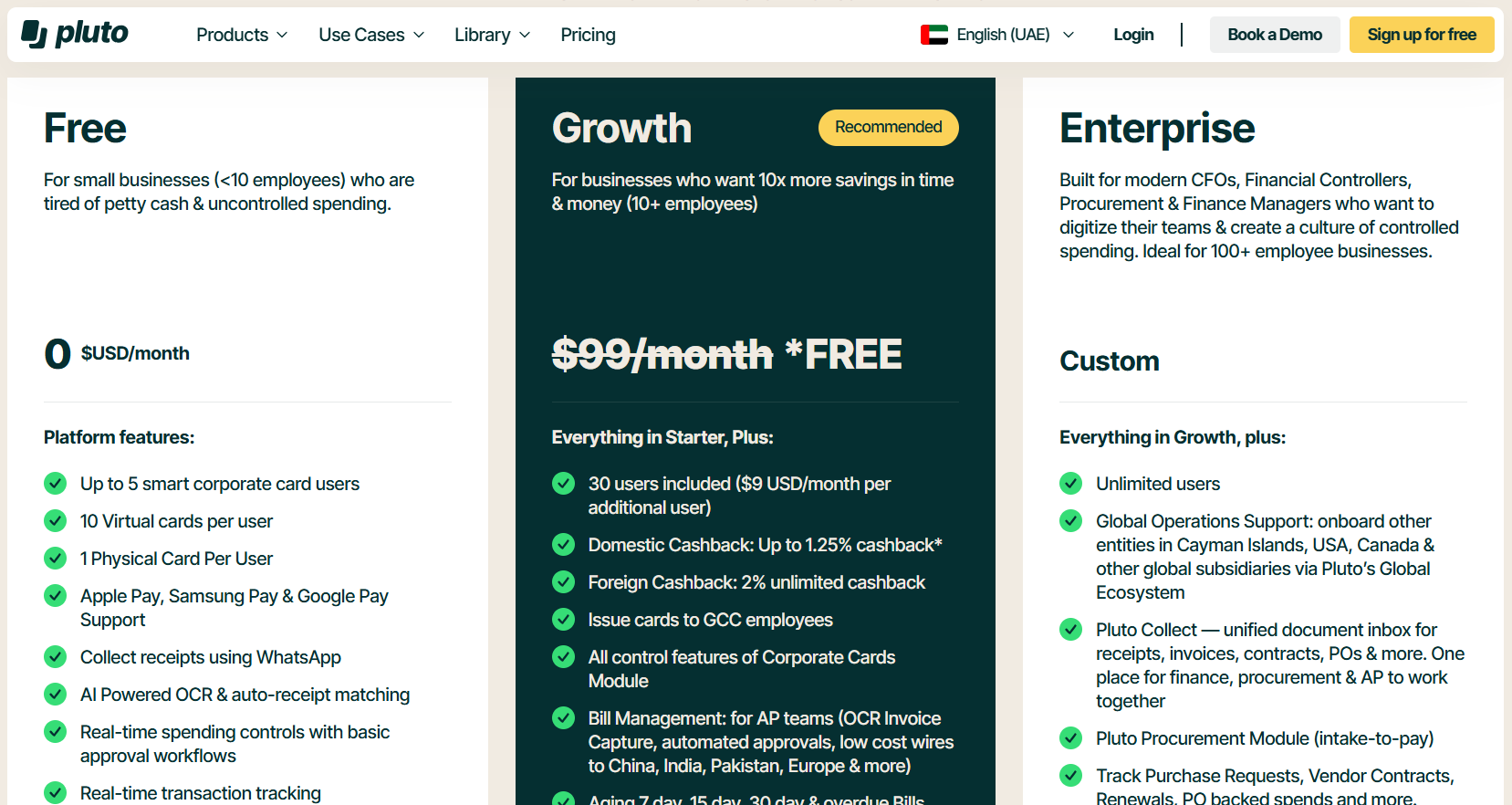
Pluto prices are in US dollars and include a set number of users at each tier.
- Free: $0/month, listed for up to 5 card users, with 10 virtual cards per user, one physical card, WhatsApp receipt collection, OCR matching and airport lounge access.
- Growth: $99/month with 30 users included and $9/month for each additional user, adding up to 1.25% domestic cashback capped at the subscription fee, 2% uncapped international cashback, bill management, petty cash, reimbursements and direct accounting sync.
- Enterprise: custom pricing for unlimited users, adding the procurement module, Pluto Collect, bi-directional NetSuite and Dynamics sync, open API, SSO and a dedicated account manager.
Pemo's pricing
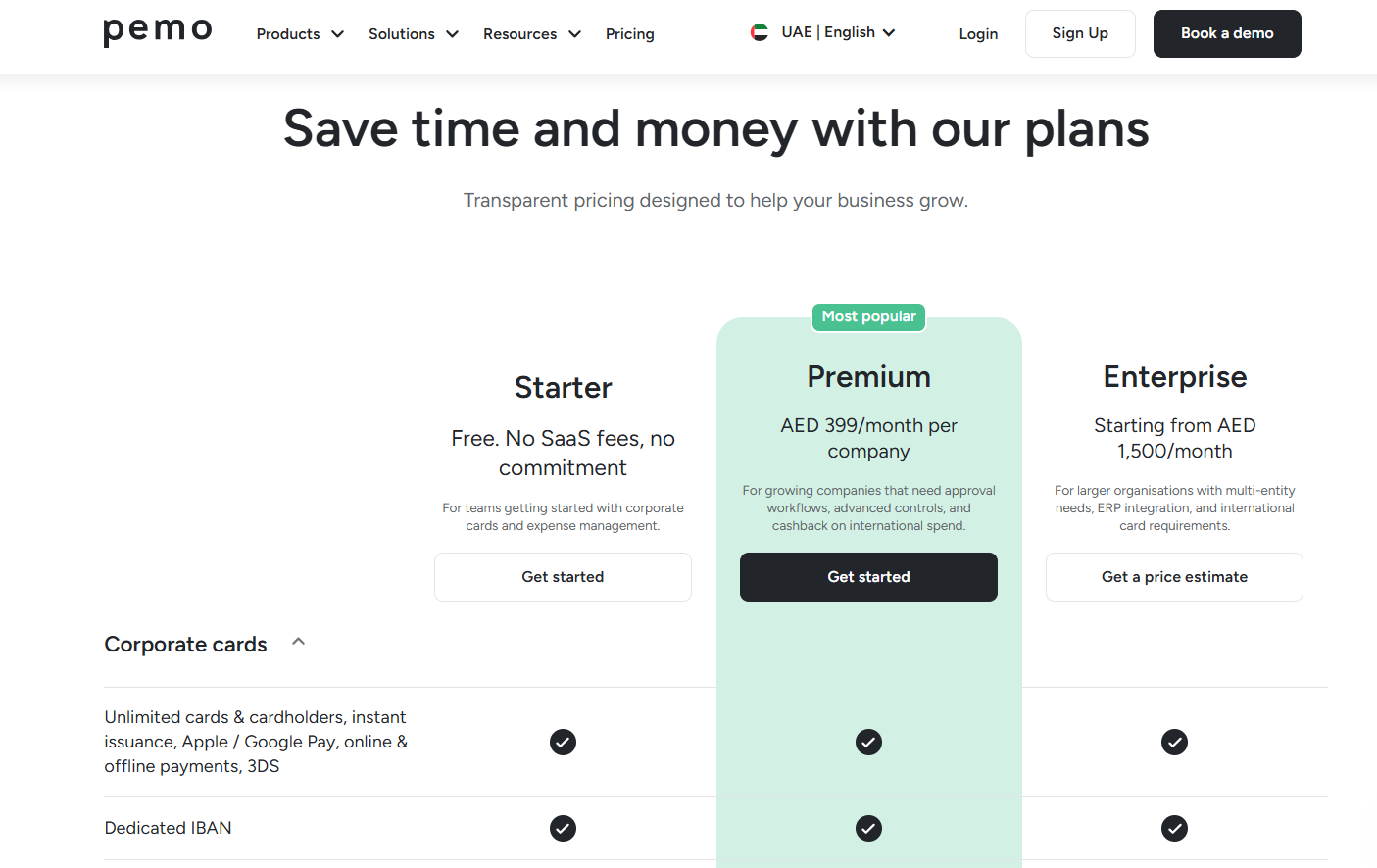
Pemo bills per company across all three tiers, so the number of cardholders never moves the price.
- Starter: free with no SaaS fees or commitment, covering unlimited cards and cardholders, instant issuance, a dedicated IBAN, ATM withdrawals, OCR receipt matching, bulk approvals, 3 sub-wallets, 0.5% international cashback and the standard accounting integrations.
- Premium: AED 399/month per company, adding AI Copilot with receipt verification, multi-layer approval workflows, maker-checker on card actions, unlimited sub-wallets, budgets, spend analytics, standard ERP integrations, up to 2% flat uncapped international cashback and a dedicated CSM.
- Enterprise: from AED 1,500/month, adding multi-entity support, custom ERP integrations, international cards for employees outside the UAE, custom cashback rates, custom exports and a dedicated implementation manager.
Get started with Pemo for free today
Picture your next hire getting a card on their first morning, with your subscription staying exactly where it was.
Then picture the ten hires after that, with the same invoice arriving each month.
Here's what your team gets when you try Pemo:
- A free plan worth using: unlimited cards and cardholders, a dedicated IBAN, OCR receipt matching and 0.5% cashback on international spend, with no SaaS fee and no commitment.
- Flat pricing on Premium: AED 399/month for the company, whether that's 12 cardholders or 120.
- Accounting integrations from day one: Xero, QuickBooks, Zoho Books, Odoo, Wafeq and Mazeed connect on the free tier.
- Pemo Copilot: automatic coding against your chart of accounts, vendor mapping and VAT coding that improves as your team approves entries.
- Pemo MCP, now in early access: read-only queries against live spend data from ChatGPT, Claude, Gemini or Copilot, scoped to whatever each person's Pemo role already allows.
- Invoice management included: capture and approval routing with a full audit trail, then payment straight from your Pemo account, on every plan.
➡️ Sign up for the free plan or book a demo to see why over 10,000 businesses across the MENA region run on Pemo.
⚠️ Disclaimer: This article was last updated on the 6th of August, 2026, and if there's any misinterpretation of the information, please contact us, and we will fact-check it.


