
For any UAE business that runs vehicles, fuel is a cost that never quite settles.
Petrol prices move, drivers fill up wherever they happen to be, and the receipts turn up weeks later.
Fuel cards are the usual fix.
In this guide, I'll explain what they are, how they work in the UAE, where they help, where they get in the way, and why a controlled corporate card often does the same job with far less friction.
TL;DR
- Fuel cards are payment cards issued to drivers or vehicles for buying fuel, with spending locked to petrol and detailed reporting for finance.
- The catch is that most are tied to one fuel network and cover fuel only, so you end up running a separate system for everything else your team spends on.
- A Pemo corporate card does the same fuel-only job when you want it to, works at any station on Mastercard, syncs straight to your books, and pairs with Cafu for fuel delivered to the vehicle plus 1.5% cashback.
What is a fuel card?
A fuel card, sometimes called a fleet card or a gas card, is a payment card a company hands to its drivers so they can pay for fuel without using cash or their own money.
Most are built for fuel and little else.
Some stretch to related costs like vehicle servicing, a car wash, or a bottle of engine oil, though the whole point is to keep spending pointed at the pump.
Businesses hand them out so drivers aren't fronting cash or filing fuel claims after the fact.
The card links back to a company account, so every litre a driver buys is logged against the business right away.
How do fuel cards work in the UAE?
The mechanics don't vary much from one provider to the next:
From sign-up to fill-up
You apply as a business, get approved, and receive your cards.
Then you assign them one of two ways: a card per vehicle that stays in the glovebox for whoever's driving, or a card per driver with a personal PIN.
That PIN does real work.
It ties each purchase to one person, so when fuel spend spikes, you know which driver to ask.
At the pump, the driver swipes or hands the card over, the charge hits the company account, and the transaction is done.
No paper receipt to file, no cash to square up later. The finance controls are built into the same card.
You can cap spending by day or week, hold the card to fuel so it won't cover a trolley of snacks, and pull spend reports by vehicle or by driver.
Where the card is accepted
Acceptance is the thing that separates one fuel card from the next.
Some are tied to a single fuel brand and only work at that brand's forecourts.
Others cover a wider group of stations, and a few add maintenance or vehicle tracking on top.
The tighter the network, the more a driver plans a route around where the card works, not where the fuel happens to be closest.
What are the pros and cons of fuel cards?
Fuel cards became popular for good reason, though the trade-offs tend to show once a team grows:
Where fuel cards help
- Spending stays on fuel. A driver can't slip a weekend grocery run onto the company account.
- No cash, no reimbursements.
- Spend is visible per vehicle or driver, so odd patterns are easy to catch.
- PIN protection ties each fill-up to a person.
- A small pump discount shows up on some cards.
Where they fall short
- Acceptance is limited. A single-brand card can send a driver past two or three stations to reach the right one.
- It only buys fuel. Salik, parking, a hotel on an overnight run, lunch on a long haul, all of that needs another card or another claim.
- Fuel fraud happens. Cards left in gloveboxes get misused, and an attendant can ring up more than went into the tank.
- Reconciliation lands in a separate report, and it rarely drops neatly into your accounting software.
- Someone has to run the whole program.
None of these sinks the idea on their own.
Put together, though, they're why a lot of UAE finance teams start wondering whether a card that only buys petrol is worth the overhead.
What is the difference between fuel cards and corporate cards like Pemo?
Set a Pemo card to behave like a fuel card, then put it next to a traditional one:
How does Pemo replace the fuel card?
Pemo offers smart corporate cards paired with expense management software, and together they let one card stand in for a dedicated fuel card.
The spending rules travel with the card.
You set them once in the dashboard, and the card enforces them at the moment of payment, so a purchase that breaks a rule is declined at the till, not caught weeks later in a report.
That one idea is what lets a general corporate card act like a fuel card when you want, and do much more when you don't.
Lock it to fuel, or don't
Every merchant that accepts cards carries a category code, and fuel stations have their own.
Pemo lets you allow only that code on a given card.
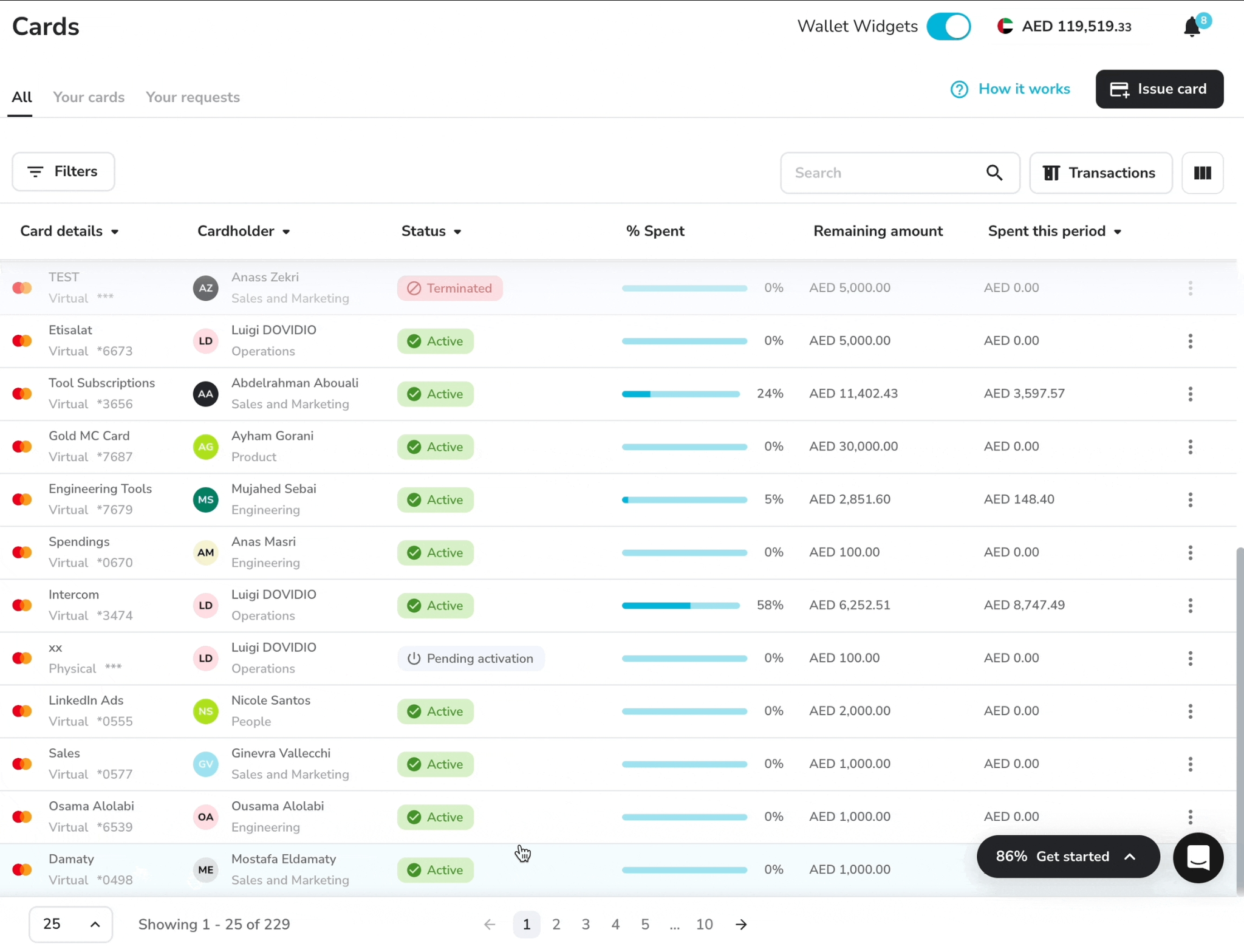
Once it's set, the card clears at a petrol station and gets declined everywhere else, with nobody having to police it.
You can tighten it further by locking a card to a single vendor, so it authorises one named supplier and turns down the rest.
Both controls run at the point of authorisation, which means the rule is applied the instant the card is tapped, not reconciled after the money has already left.
One card, the whole trip
Spending caps layer on top of that category lock.
You can set a limit per transaction, per day, per week, per month, or per year, and the card declines once a cap is hit.
A fuel card can sit at, say, AED 300 a day per driver, and that ceiling holds without a phone call or an approval email.
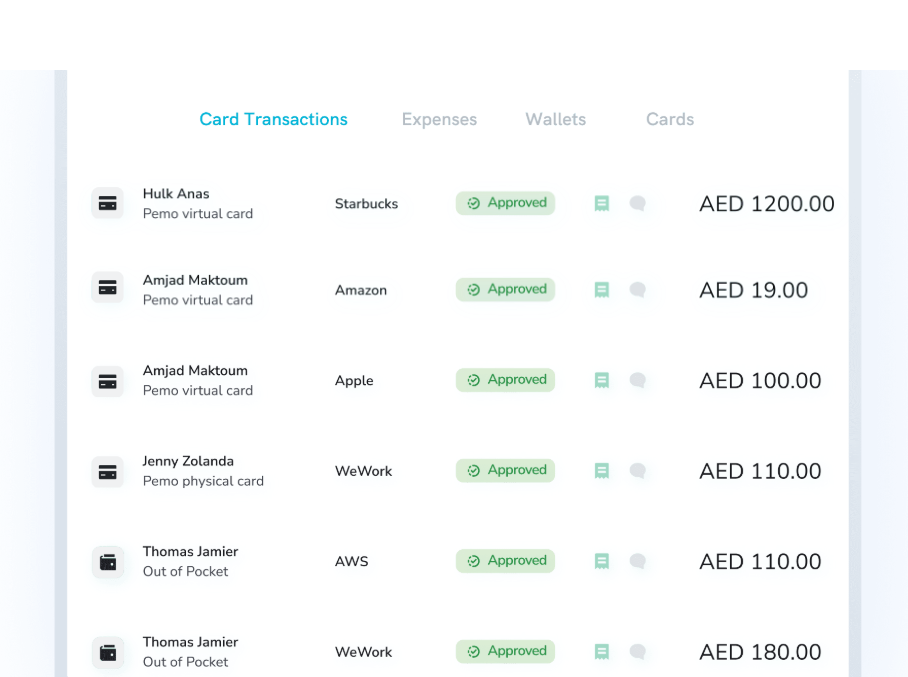
Because the card runs on Mastercard, a driver can fill up at any station that takes Mastercard, not just one brand's forecourts, so nobody's crossing town on an empty tank.
When a job needs more than fuel, the same card stretches to it, covering the Salik toll, the parking, a hotel on an overnight job, and the coffee on a four-hour run to Fujairah.
Every purchase shows up in the dashboard the second it happens, with the amount and the merchant already logged.
The driver then photographs the receipt in the app.
Pemo reads it and matches it to the right transaction, then files it under the correct category on its own.
From there it syncs straight to your accounting software, whether that's QuickBooks, Xero, Zoho Books, Wafeq, or Tally, so the fuel expense reaches your books without anyone keying it in.
By month-end, there's nothing to chase and nothing to rebuild.
On the security side, any card can be frozen or unfrozen from your phone in seconds if it goes missing, and a corporate liability waiver covers unauthorised employee use up to USD 25,000 per card.
Skip the station with Cafu
Through Cafu, the on-demand fuel and car-care app, your team can skip the forecourt entirely and have fuel delivered to the vehicle wherever it's parked.
That's well outside what a traditional fuel card does.
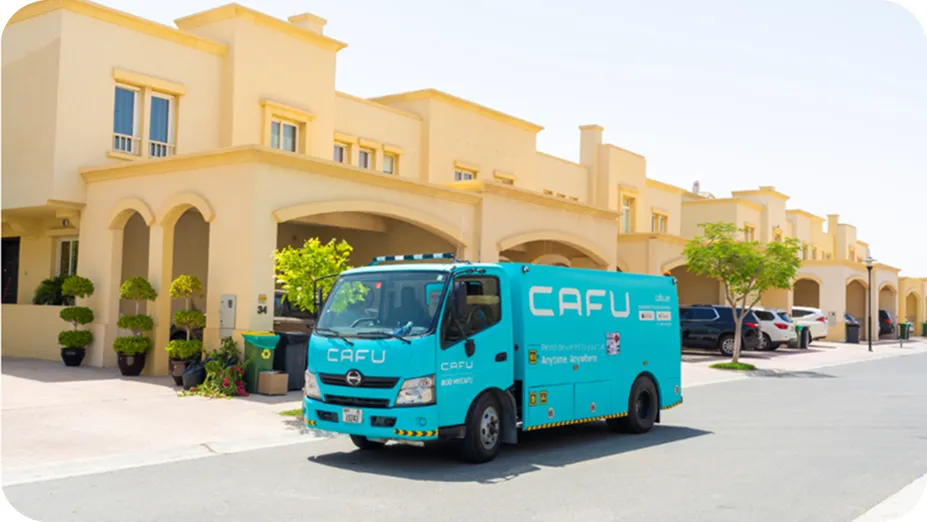
Those deliveries also come with 1.5% cashback, and with up to 2% back on eligible business spend on top, the card taking over from your fuel card gives a little money back.
Pemo's Pricing
Pemo has a free plan for up to 2 card users, which gets you unlimited virtual cards, the mobile app, expense reports, card spending limits, and Excel exports.
To unlock more features, you'd move on to one of our 2 paid plans:
- Essential: Starts at AED 29/month per card user. Adds cashback on online ad spend, direct accounting integrations, spend analytics, and customisable approval workflows.
- Business+: Custom pricing starting from 20 card users. Adds higher cashback rates, custom onboarding, a dedicated CSM, and priority support.

Want to learn more? You can sign up for Pemo's free plan or book a demo to see it in action.
Sign Up For Pemo For Free
Pemo runs corporate cards and expense software together for SMEs across the UAE, so the moment a driver pays for fuel, the expense is already logged, sorted, and ready for the books.
You don't need a separate card just for petrol.
One Pemo card does the fuel-only job when you want it and covers the rest of the trip when you don't, with your spend rules set before anyone swipes.
For a UAE team, that means:
- Fuel-category and single-vendor locks so a card spends only where you allow.
- Live tracking and AI receipt matching, synced to QuickBooks, Xero, Zoho Books, Wafeq, and Tally.
- 1.5% cashback on Cafu fuel deliveries, with up to 2% back on eligible business spend.
- AED pricing that starts free and moves to AED 29/month per cardholder.
Start on the free plan, or book a demo and see why more than 10,000 businesses across the MENA region run on Pemo.
⚠️ Disclaimer: This article was last updated on the 16th of July, 2026. If there's any misinterpretation of the information, please contact us, and we'll fact-check it. This is not legal or accounting advice, so always consult a qualified professional before making decisions.
Frequently Asked Questions
Can I limit a Pemo corporate card to fuel only?
Yes.
With Pemo, you can lock a card to the fuel merchant category so it only authorises fuel purchases and declines everything else.
You can also cap how much it spends per transaction, day, week, month, or year.
Do fuel cards work at every station in the UAE?
Not always.
A station-issued fuel card usually works only within its own brand's network, so drivers sometimes have to pass other stations to find one that accepts the card.
A corporate card on Mastercard gets around that, since it's accepted at any station that takes Mastercard.
How do I keep track of fuel spend across a whole team?
Give each driver a corporate card that reports in real time.
Every fill-up, and the receipt with it, gets recorded the moment it happens.
That way you can watch spend by driver or by vehicle without collecting a single paper slip.


