
TL;DR
- Tail spend is the long, thin end of your vendor list, where dozens or hundreds of suppliers together account for a small share of what you spend.
- Sorting the tail by payment channel beats sorting it by vendor, as a card purchase, a reimbursement, an invoice and a petty cash slip each leave behind a different amount of usable data.
- The fix is in how the purchase gets paid for, with a capped card for each recurring vendor and single-use cards for anything you buy once.
What is tail spend?
Tail spend is the low-value, high-frequency purchasing that falls outside any contract or negotiation, scattered across suppliers you deal with once or twice a year.
Plot every vendor by what you paid them over twelve months, tallest bar first.
You’ll notice that the chart drops off a cliff after the first handful of names.
What follows is a long, shallow slope: the courier you used once in March, the printer who did one batch of business cards, the design tool one team signed up for and forgot.
That slope is the tail.
That work looks at manufacturers with real procurement functions, so treat it as the shape to expect, not a number to hit.
None of this has to do with what you're buying. A laptop and a taxi ride can both count as tail spend.
What puts a purchase there is how it behaves: small, irregular, unnegotiated, and paid for by whoever happened to need it that day.
How do you tell recurring tail spend from one-off tail spend?
The test is whether the vendor can charge you again without anyone deciding to let them.
On the recurring side, you get courier accounts, water and coffee deliveries, maintenance retainers, cloud hosting and the ad platforms.
Drift is what goes wrong here.
Seat counts climb, an annual price goes up, and the renewal clears without anyone asking whether the thing still deserves the budget line.
We covered the software half of this at length in our guide to SaaS spend management in the UAE, so I won't rehash it here.
The one-off side is everything bought a single time: a replacement charger, a same-day courier to Sharjah, catering for one client workshop, a translation job for a single document.
Fuel, taxis, pantry supplies and small repairs fall on either side, depending on whether you hold a standing account with the supplier or pay as you go.
The problem at that end is sheer count.
Every name becomes a line somebody has to identify at month-end, and the supplier record outlives the purchase by years.
How is tail spend different from maverick spending?
The two get confused constantly, though they measure different things: tail spend is about how big and how frequent a purchase is, while maverick spending is about whether it followed the process.
A small subscription bought through the right channel, approved and coded properly, is tail spend and nothing worse.
The same subscription bought on a personal card because the approval queue was slow is both at once.
Very little of the tail inside a small UAE company is dishonest. It's the residue of people getting work done at speed.
If you want the behaviour side of this, we covered it in our guide to maverick spending in the UAE.
Where does tail spend hide in your numbers?
It hides in the payment channel, which is where your audit should start.
You can pull last quarter's small purchases and group them by how each one was paid.
Vendor names can wait. There are four channels with four very different levels of data:
- Company card: merchant name, amount, timestamp and merchant category all arrive at authorisation, before anyone files anything.
- Employee's own card, reimbursed later: you learn about the purchase after the money moved, and the vendor name is whatever the person typed into the form.
- Supplier invoice: a proper document lands in the inbox, though the buying decision happened weeks before it reached you.
- Petty cash: an amount, a date, and a paper slip that has to survive the drive back to the office.
Now count what share of your tail spending came through each one.
If the bottom two channels carry most of it, no amount of vendor consolidation will fix your visibility.
The data was never captured to begin with. That's the part the procurement playbooks skip. They assume every purchase already produced a record.
How do you set a tail spend threshold in AED?
I’d recommend you rank your vendors by twelve-month spend, then draw a line where the cumulative total passes 80% of the year.
Everything below that line is your tail.
The thresholds you'll see recommended elsewhere run from $10,000 to $1 million a supplier, and they were written for companies with a purchasing department. They fall apart at UAE SME scale.
You can run it on real numbers.
- A 40-person Dubai agency spends AED 6 million a year outside payroll.
- Its top 18 vendors take AED 4.8 million of that.
- The remaining AED 1.2 million is scattered across roughly 130 suppliers, averaging AED 9,200 each.
- Those 130 names are the tail, and that AED 1.2 million is the least examined money in the business.
One list that long is unworkable, so set a second line, this one for review. Anything above roughly AED 5,000 a year gets looked at individually.
Below that, you handle the vendor by category and never open its file.
The figure matters less than owning a list you can open and argue with.
Which part of the tail should you leave alone?
The part where managing the vendor costs more than the vendor does.
You can work it out with your own salary numbers.
A UAE finance manager on AED 25,000 a month works out to roughly AED 145 an hour on a 40-hour week, and closer to AED 180 once you add gratuity, insurance and visa costs.
Sourcing a vendor properly takes a few hours once you count the quotes, the comparison, the negotiation and the setup.
Call it four hours, or roughly AED 620 of internal time.
Now put that against a supplier you pay AED 3,000 a year.
You need to negotiate more than 20% off the price to break even in year one, on a vendor nobody has leverage over.
So split the list twice. Above the line, you can consolidate and ask for terms.
Below it, cap the card, review the category once a year, and leave the sourcing alone.
Nearly every guide on this topic pushes consolidation as the default move, and it works well on the fat middle of the tail.
Applied to the very bottom, it shifts admin work around without saving anything.
How does Pemo bring tail spend under control?
Pemo puts the control on the card itself, so a small purchase turns up already capped, coded and carrying its own receipt before finance sees it.
How do you stop a one-off vendor from becoming a permanent one?
With Pemo, our answer is single-use virtual cards.
You create one, set the exact amount, pay the vendor, and the card expires once the transaction clears.
The supplier never holds credentials that can be charged again next quarter.
Pre-funded cards cover the larger one-offs: approve a fixed amount, and it stays available until spent, with funds you can add or pull while the card is open.
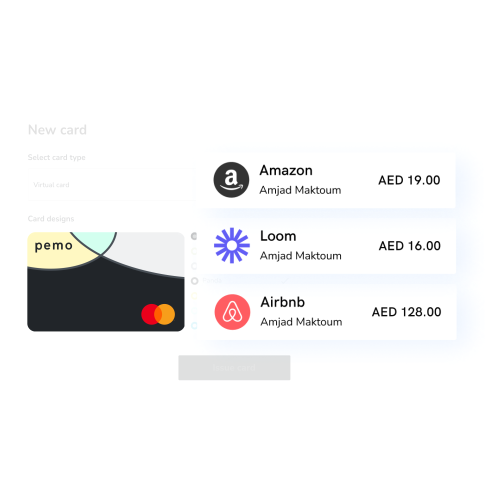
Cards issue in seconds, and since every plan now includes unlimited cards and cardholders, a card per one-off purchase adds nothing to your subscription.
Catch a price rise before it bills
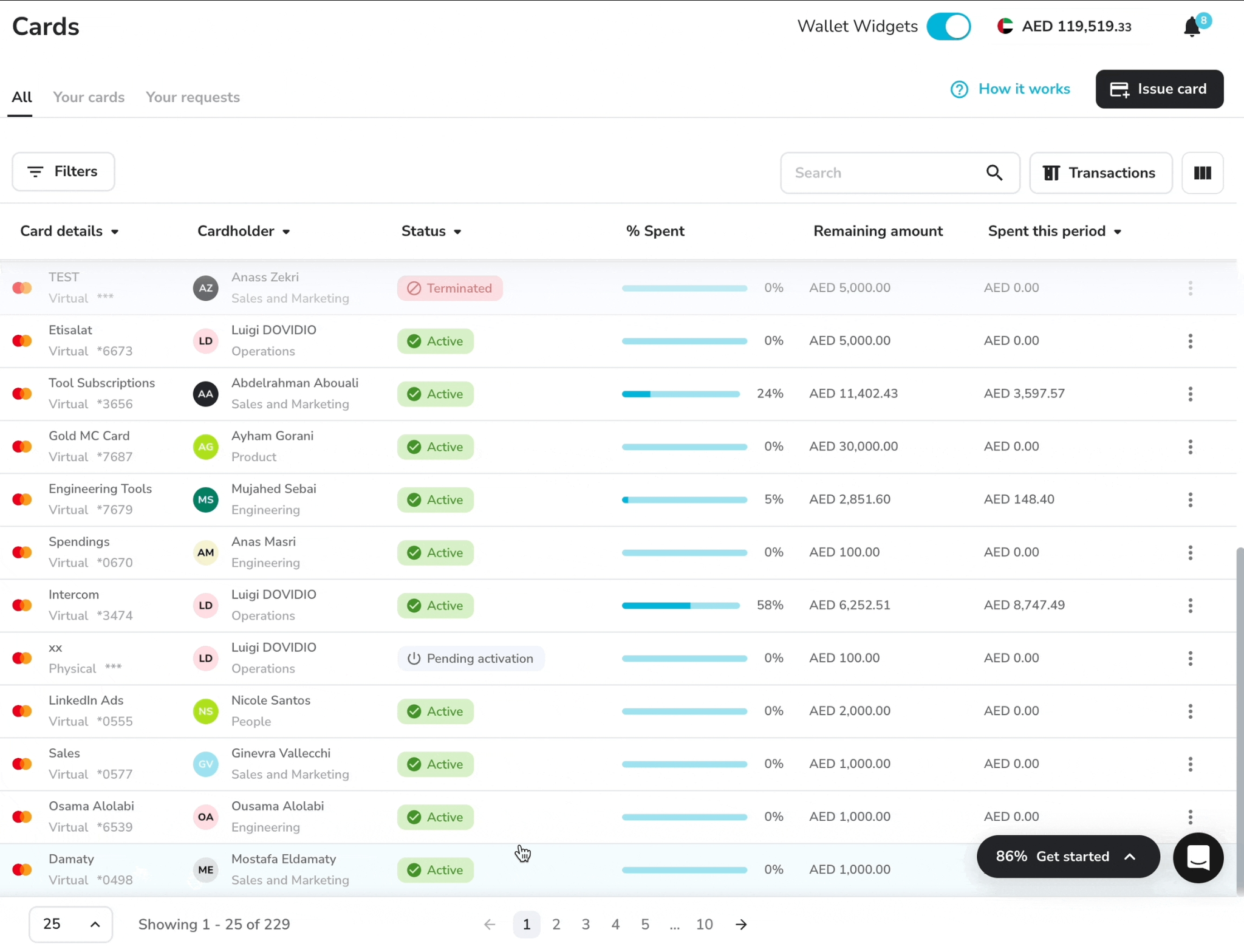
Pemo lets you set the per-transaction cap on each recurring vendor's card a little above what that vendor charges you today.
A price increase, or three seats somebody added last week, pushes the charge past the cap and the payment fails.
The vendor's own billing attempt becomes your alert, and it usually reaches you the same day.
One cost to weigh: a decline can suspend the service until you raise the cap, so keep this off anything your team cannot lose for a day.
A cap can apply to one transaction or reset on whatever cycle you choose, from daily through to yearly.
Premium adds duplicate detection on expenses, catching the same charge or invoice landing twice.
Spotting two teams paying two similar vendors is still a job for the analytics view and your own eyes.
When you're finished with a vendor, freezing its card ends the renewals there.
How does the paperwork arrive without anyone chasing it?
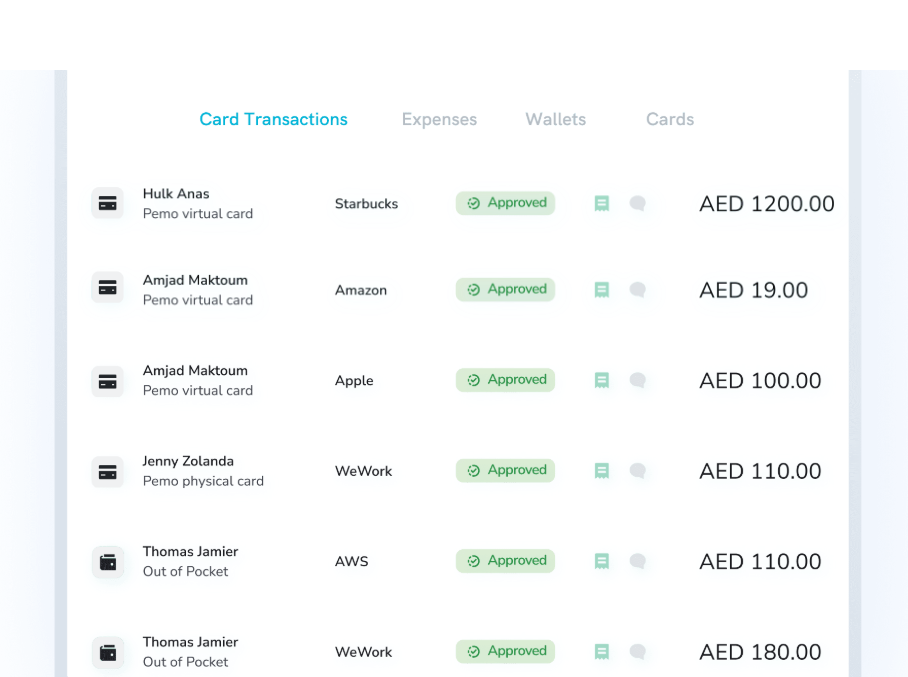
Every cardholder gets a Receipt Inbox with its own email address, and anything sent there gets matched to the right transaction.
Three routes feed the inbox: drop a file in, forward the email it arrived in, or send a photo to Pemo's WhatsApp number. A fourth sits in the mobile app, where the push notification that fires on a card payment lets the cardholder attach a photo on the spot.
The ad platform trick is the one worth stealing.
You can paste a cardholder's Receipt Inbox address into the billing email field on Google Ads, Meta or TikTok.
Their monthly invoices then arrive and match themselves. You need billing admin rights to change the field, and Google may ask you to verify the new address once, after which nobody touches it again.
How does tail spend turn into data you can query?
Pemo Copilot puts the chart of accounts line, the vendor and the category onto each expense as it arrives, getting more accurate on your particular tail the more you override it.
Auto vendor creation means a new tail supplier gets a record without anyone typing one out.
From there the data syncs to Xero, QuickBooks, Zoho Books, Odoo, Wafeq or Mazeed.
Premium adds standard ERP connections for NetSuite, Odoo and Dynamics 365 Business Central.
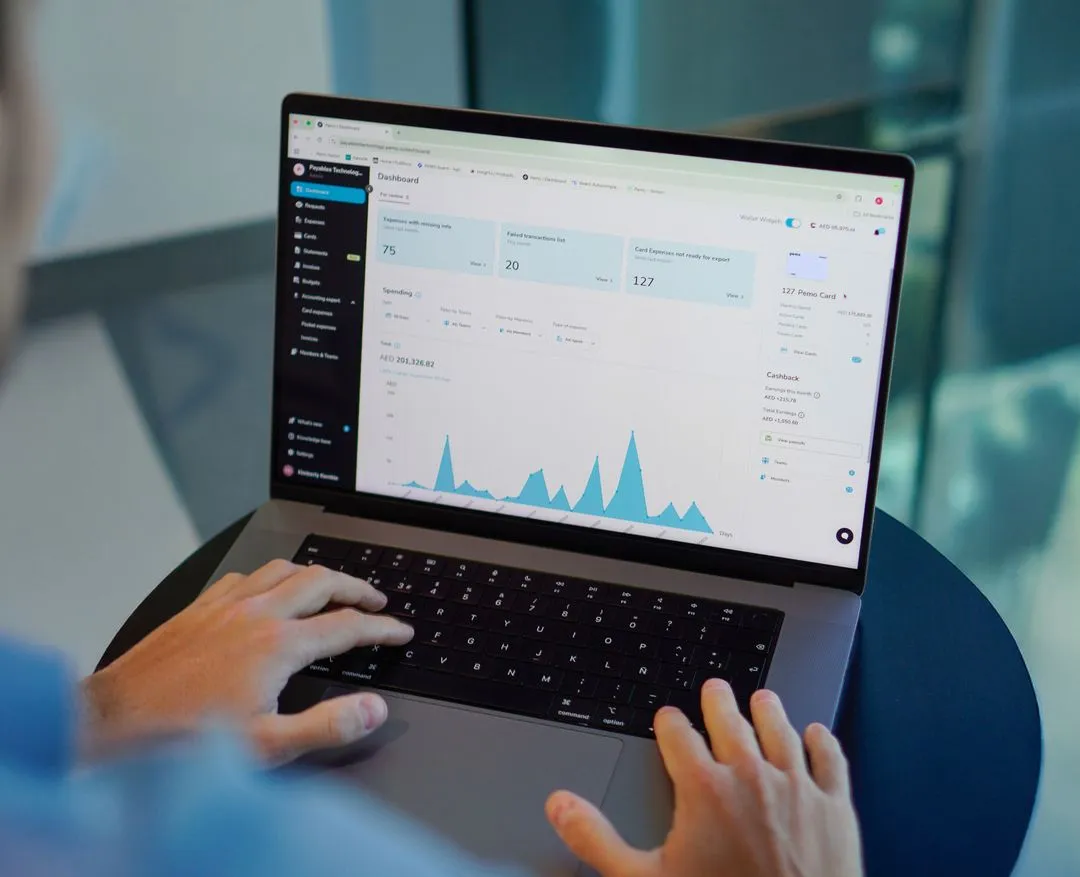
The spend analytics dashboard on Premium is where the tail finally becomes visible: spending by category, by team, by vendor, by trend over time.
What’s more, we've recently launched Pemo MCP, which lets you use ChatGPT or any LLM to get information about your finances, and it’s completely secure.
You will be able to connect your AI assistant they already use (e.g., ChatGPT, Claude, Gemini, or Copilot) securely to your company’s live Pemo finance data.
That means you can conversationally ask questions and get answers from your own Pemo data, such as:
- Which teams spent the most this month?
- What are our top vendors by business spending?
- How did this month’s spending compare to last month?
- Which expenses are still waiting for review?
Note: Sensitive card data is protected before it reaches the AI assistant.
Sign up for Pemo for free
The tail is where most UAE finance teams lose their afternoons, and it responds faster than anything else to a change in how payments get made.
Pemo hands your team cards that carry the rules with them, so the small stuff stops arriving as a surprise.
If you want tail spend handled with:
- A card for every vendor, at no per-card cost on any plan.
- Single-use cards that expire after one payment.
- Receipts that match themselves, whether they arrive by email, upload or WhatsApp.
- Automatic coding into Xero, QuickBooks, Zoho Books, Odoo, Wafeq or Mazeed.
Then you can sign up for the free plan or book a demo to see why over 10,000 businesses across the MENA region run on Pemo.
⚠️ Disclaimer: This article was last updated on the 31st of July, 2026, and if there's any misinterpretation of the information, please contact us, and we will fact-check it. This is not legal, tax, or accounting advice, so always consult a qualified professional before making decisions.
FAQs
Is tail spend the same as indirect spend?
No. Most tail spend is indirect, though indirect spending also covers large negotiated commitments like your office lease or your annual insurance.
Size and frequency are what put a purchase in the tail, while indirect is about whether the purchase ends up inside what you sell.
Can I manage tail spend without a procurement team?
Yes, and most UAE SMEs have no other option.
What a procurement function would normally do with approved supplier lists gets handled by the cap on the card and by using a single-use card for anything bought once.
The trade-off is that you end up governing the shape of the spending more than the choice of supplier, which is the right compromise when nobody has time to run a vetting process.
How often should I review the tail?
Quarterly for the recurring half, annually for the rest.
Subscriptions drift on a renewal cycle, so a quarterly pass catches seat creep and price rises while you can still cancel or renegotiate.
What's the fastest first move on tail spend?
Export twelve months of vendor payments, sort by total value, and read the list from the bottom up.
Most teams find two duplicate tools and at least one subscription nobody uses inside an hour.


