
TL;DR
- SaaS spend management is how you keep tabs on every software subscription your company pays for, from your CRM to your ad accounts, and judge what's still worth the money.
- The UAE catch: most SaaS bills are in US dollars (sometimes on cards finance never sees), then renew on their own as a foreign-supplier invoice that pulls you into reverse-charge VAT with the FTA.
- Ignore it, and the same tool can get bought twice across teams, while subscriptions keep charging long after the person who set them up has left or the team never uses them in the first place.
- The fix: a dedicated card for each tool with a hard limit, plus expense software that captures the receipt and VAT the moment a payment clears.
- Pemo is the number one way to run this in the UAE, pairing virtual corporate cards with AI receipt matching, live spend controls, and direct sync to QuickBooks, Xero, Zoho Books, Wafeq, and Tally.
What is SaaS spend management, and why does it matter in the UAE?
SaaS spend management is the work of tracking and controlling every software subscription a business runs, so you always know who's paying for what and whether the platform is still being utilized.
Picture the recurring charges your company makes for software: the CRM, the project tracker, the ad accounts, and the design suite a few people log into.
Then there's the transcription tool somebody expensed for one meeting two years ago.
(It's almost certainly still billing.)
On its own, each charge barely registers. Stacked up, they make one of the biggest line items most growing UAE companies never properly look at.
What makes this trickier here than in a lot of markets is the mix of currency and tax.
Many major SaaS vendors bill in US dollars, so your card adds an FX markup on each charge, and your dirham cost drifts with the exchange rate.
The reverse-charge paragraph (added a clause so VAT doesn't read as a pure cost):
Foreign software also counts as an imported service for UAE VAT.
The reverse-charge mechanism kicks in, which means a VAT-registered business reports the 5% VAT on its own return.
For a business making taxable supplies, that VAT is usually recoverable in the same return, so it nets to zero rather than becoming a real cost.
And with 9% corporate tax now applying to profits above AED 375,000, the paperwork behind a deductible software cost carries weight well beyond your VAT filing.
The closing "twice over" paragraph (so the second cost is clearly the lost records, not the VAT itself):
A forgotten subscription, then, costs you twice over.
Note: The exact treatment depends on your VAT registration and how you make supplies, so confirm the specifics with your tax advisor before you act on any of this.
There's the wasted cash on a tool nobody opens.
And there's the lost paperwork when the charge sits on a personal card finance can't see, which forfeits both the input VAT you could have reclaimed and the corporate tax deduction you were owed.
Why does SaaS spending spiral out of control for UAE businesses?
SaaS spending spirals because often nobody actually owns it, and the cost compounds quietly long before anyone thinks to check.
The pattern is familiar:
- A team lead grabs a tool on a personal card to move fast, meaning to expense it later.
- A couple of other teams do the same with their own tools, nobody loops in finance, and you quietly end up paying for two products that do the same job.
- By month-end, finance is squinting at a dozen unfamiliar dollar charges with no receipts and no VAT invoices, trying to work out which ones are even still in use.
➡️ With Pemo’s controlled cards, you can shut that loop, as each charge logs the instant it happens, with the receipt captured against it at the point of payment.
Who actually signed up for all these tools?
Some of the time, no one can tell you, and that's the heart of the problem.
Once software gets bought on personal cards and one-off logins, there's no single list of which subscriptions exist or who waved them through.
People call it shadow IT, and it spreads fastest in the teams that move quickest, like marketing and product.
You wind up running a company that can't recite its own software bill from memory.
What happens when subscriptions renew on personal cards?
Two costs land at once, and your books feel both.
Your employee fronts the cash, so the reimbursement trails the spend, and a personal card often carries a worse FX rate than a card built for business spending.
Then the VAT invoice you actually need lands in a personal inbox and never makes it to your accounting system.
Run that across every auto-renewal on the team, and you've got a slow, steady drain.
How much are duplicate and forgotten tools quietly costing you?
More than most founders would guess, because the waste hides in the small numbers.
A free trial flips to a paid annual plan nobody chose to keep, then renews in silence for a year.
Worse, someone leaves the company, and the subscriptions tied to their old card keep charging for months, because no one knew they were there.
If you've ever closed the books for a growing team, you've already met this charge: small, recurring, and attached to a login no one remembers creating.
No single line is big enough to trip an alarm, which is precisely why the running total climbs.
Why does reconciling all of it take finance so long?
Every untracked subscription becomes a manual matching job the moment month-end lands, and that's where the hours go.
Someone has to hunt down the receipt, confirm the business reason, settle the VAT treatment for a foreign supplier, and file it under the right account.
Stretch that across dozens of charges, and you've burned days, not hours.
Those are days your finance people spend keying in data when you hired them to read it.
How can you finally get SaaS spend under control?
You fix it by changing where the money flows, not by firing off more reminders to cancel things.
The move is simple enough: stop letting software get bought on personal cards and shared logins.
Give each tool or vendor a dedicated card with a limit that matches what the subscription should actually cost.
Then put expense software behind those cards so the receipt and the VAT capture themselves, and the visibility problem mostly disappears.
That pairing, controlled cards plus automatic capture, is the exact job Pemo set out to do for UAE businesses.
Why is Pemo the best way to manage SaaS spend in the UAE?
Pemo offers the best way to manage SaaS spend in the UAE because it puts the card, the spending controls, and UAE-ready accounting under one roof.

Most options cover a single slice and leave the rest to you:
- A bank card pays the vendor but never captures a receipt.
- A standalone expense app tracks the spend but can't touch the card that created it.
Pemo runs both ends, virtual corporate cards on one side and AI-driven expense and accounting software on the other, built around the dirham and the FTA from the start.
That combination is why more than 10,000 businesses across the region keep their spending with us, and why admins clock roughly 138 hours saved a month on expense work.
Virtual and single-use cards that stop subscription sprawl
Virtual and single-use cards box in every tool on its own card, so a subscription can't wander off.
You can spin up a virtual card in seconds and tie it to a single job, such as your Meta ad account or your CRM.
As that card is locked to one vendor and one limit, the subscription can't quietly inch past what you signed off, and you can read at a glance which tool any charge belongs to.
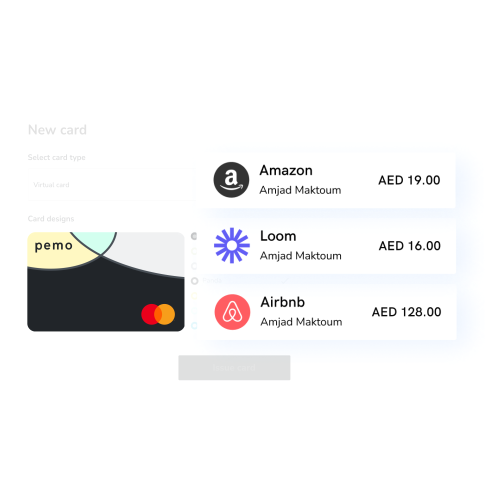
For trials and one-off buys, single-use cards die after the payment, so a free trial can't become an annual plan you never agreed to.
Real-time visibility into every subscription
The moment a charge hits, it shows up in your dashboard, with no waiting on a statement.
Spend comes split by team and by card, with categories rolled up however you need them.
So a duplicate tool surfaces the day it's bought, not three weeks later when the statement finally lands.
A live view like that turns a vague "we probably spend a lot on software" into a figure you can act on this week.
Spend limits and controls that prevent runaway renewals
Pemo’s cards help you cap the spend up front, so the money can't leave before you've approved the shape of it.
You set a limit on each card by the day, week, month, or year, and a ceiling on any single transaction.
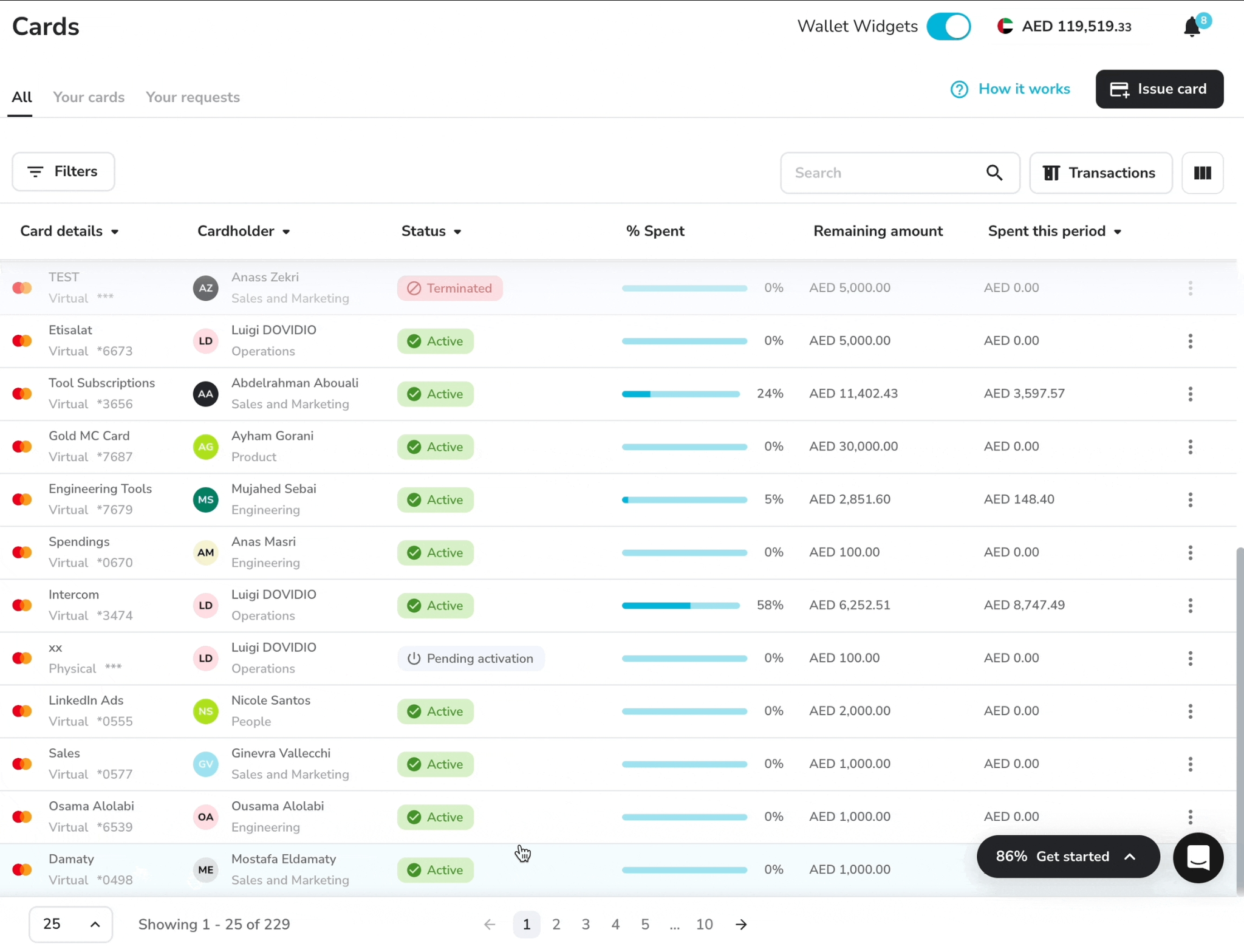
Your team can also lock a card to one merchant category, or a vendor, and a marketing card simply won't work anywhere but marketing tools.
And when a subscription has to go, you freeze the card from your phone in a tap, with no bank call in sight.
Keep your SaaS spend audit-ready for the FTA
Your SaaS spending will stay audit-ready because the receipt and the tax detail get captured at the point of payment, then stored against the charge.
Every Pemo transaction prompts for the receipt and tax invoice as the money moves, and flags anything missing so it doesn't wander off.
That matters most for foreign software.
UAE reverse-charge rules mean you account for the VAT on imported services yourself, and from January 2026 you hold on to the supplier's invoice and payment evidence rather than cutting a self-invoice.
Pemo keeps that evidence pinned to each charge, and since the FTA expects these records for five years, having them attached from the start saves a frantic dig later.
Can Pemo actually bring down what you pay for software?
Yes, on two fronts: cashback on the spend, and member rates on the tools you're buying anyway.
Essential earns up to 2% cashback on business transactions, the ad platforms that usually top a software bill included.
Pemo also unlocks discounted rates on more than 100 business platforms, with the likes of Google Ads, Meta, Notion, and Microsoft on the list.
So the subscriptions you were already paying for can simply cost less, while the cashback chips away at the rest.
How much does Pemo cost?
Getting started costs nothing, and the paid tiers price in dirhams per card user.
- Kickoff: AED 0 a month for entrepreneurs and small teams, with up to 2 card users, unlimited virtual cards, the mobile app, expense reports, card spending limits, and Excel exports.
- Essential: AED 29 a month per card user, adding cashback on online ad spend, direct accounting integrations, spend analytics, and customisable approval workflows.
- Business+: Custom pricing from 20 card users, adding higher cashback rates, custom onboarding, a dedicated success manager, and priority support.
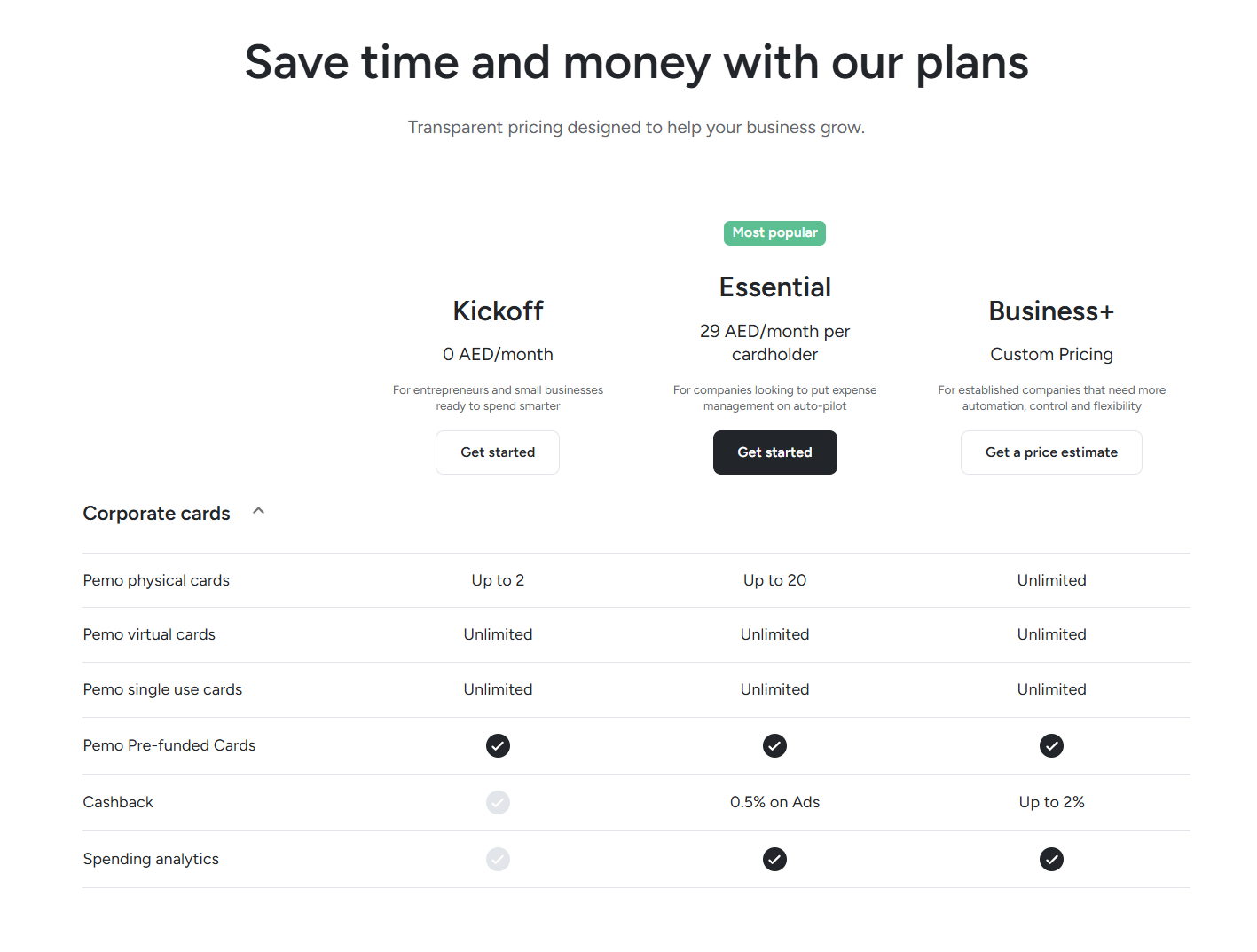
ATM withdrawals on physical cards run AED 5.25 each, on every plan.
Sign up for Pemo for free
Pemo offers an all-in-one expense management software for SMEs and growing businesses in the UAE, with pre-loaded corporate cards that turn every transaction into a tracked, categorised, audit-ready expense.
Our cards and software work together so your finance team stops chasing receipts, month-end reconciliation moves much faster, and your spending stays inside the rules you set before anyone swipes a card.
If you're looking for expense management software with smart corporate cards for your UAE-based team that offers:
- AI receipt matching and real-time spend visibility.
- Direct sync with QuickBooks, Xero, Zoho Books, Wafeq, and Tally.
- Cashback on Google Ads, Meta Ads, and FX fees.
- AED-denominated pricing that starts at AED 29 a month.
Then you can sign up for the free Kickoff plan or book a demo to see why over 10,000 businesses across the MENA region run on Pemo.
Frequently asked questions about SaaS spend management in the UAE
How is SaaS spend different from other business expenses?
The difference is that SaaS recurs and starts almost frictionlessly, so it leaks where a one-off cost wouldn't.
Book a flight once, and it shows up plainly on the books.
A subscription bills away every month, often on a personal card, and keeps running long after anyone recalls signing up.
How do virtual cards help manage SaaS subscriptions?
Virtual cards pin each subscription onto its own card, so one tool can't bleed into another.
Assign a virtual card to a single vendor with a set limit, and every charge becomes easy to spot and impossible to push past what you approved.
Single-use cards go a step further for trials, expiring after one payment so a freebie can't roll into a plan you forgot you owned.
What's the best way to track software spending across a whole team?
Route the lot through controlled cards that feed a single expense system.
When every tool gets paid on a company card wired into expense software, the tracking happens on its own, receipts and categories attached as the spend lands.
Spreadsheets and reimbursement claims only ever hand you the picture weeks after the cash has gone, which is no way to catch a renewal in time.
What's the one thing most teams get wrong about SaaS spend?
The biggest mistake I see is treating this as a one-off cleanup instead of a habit.
A team finally audits its subscriptions, cancels a dozen tools over a weekend, then drifts back into sprawl six months later because nothing changed about how software gets bought.
Cards and software handle the visibility, but they don't decide who's allowed to sign up for what, and that part is on you.
The fix is almost embarrassingly simple: one short rule about who can buy software, and a named owner for every recurring tool.
Get that in place, and Pemo's controls have something real to enforce, not a free-for-all to clean up after.


