
I'll review the 6 best Rydoo alternatives in 2026 for UAE businesses, covering their features, pricing, and pros and cons.
TL;DR
- Pemo is the best Rydoo alternative in 2026 for UAE businesses that want corporate cards, real-time expense tracking, and accounting automation in one platform.
- If your main need is travel expense reimbursement or global vendor payments, Spendesk and Tipalti are built for those workflows specifically.
What Are The Best Alternatives To Rydoo In 2026?
The best alternatives to Rydoo in 2026 are Pemo and Spendesk.
Here's my shortlist of the 6 best Rydoo alternatives on the market:
#1: Pemo
Pemo (that's us) is the best Rydoo alternative in 2026 for UAE businesses that want corporate cards, real-time expense tracking, and AI-powered accounting automation without paying per user for basic features.

Full disclosure: Even though Pemo is our platform, I'll give you an honest breakdown of why it stands out and where it fits.
With Pemo, you get smart virtual and physical corporate cards for your team in the UAE, with no setup fees and full visibility into every dirham spent.
Our cards connect with MENA's #1 spend management platform to help you control employee expenses, automate accounting, and close books faster.
Let's go over the capabilities that make Pemo the best option for teams looking to switch from Rydoo: 👇
Corporate Cards With Built-In Spending Controls
Pemo puts corporate cards at the center of the platform.
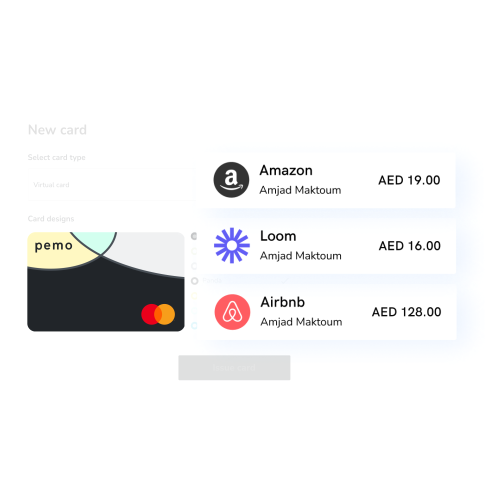
Every employee who needs to spend company money gets their own card, with the rules set before they make a single purchase.
Here are some of the things our customers love about this:
- Unlimited virtual cards that you can create in seconds for any team, project, or one-time vendor payment.
- Granular spending limits that go beyond just monthly caps. You can set limits per transaction, daily, weekly, monthly, or yearly, and restrict by merchant category or specific vendor.
- Instant card freezing from your desktop or mobile if a card is lost or compromised.
- Apple Pay, Google Pay, and Samsung Pay support so your team can pay from their phone without carrying a physical card.
Expense Tracking That Runs on Autopilot
Every card transaction appears in your dashboard the moment it happens.
Your team gets a push notification to snap the receipt, and our AI matches it to the right transaction automatically.
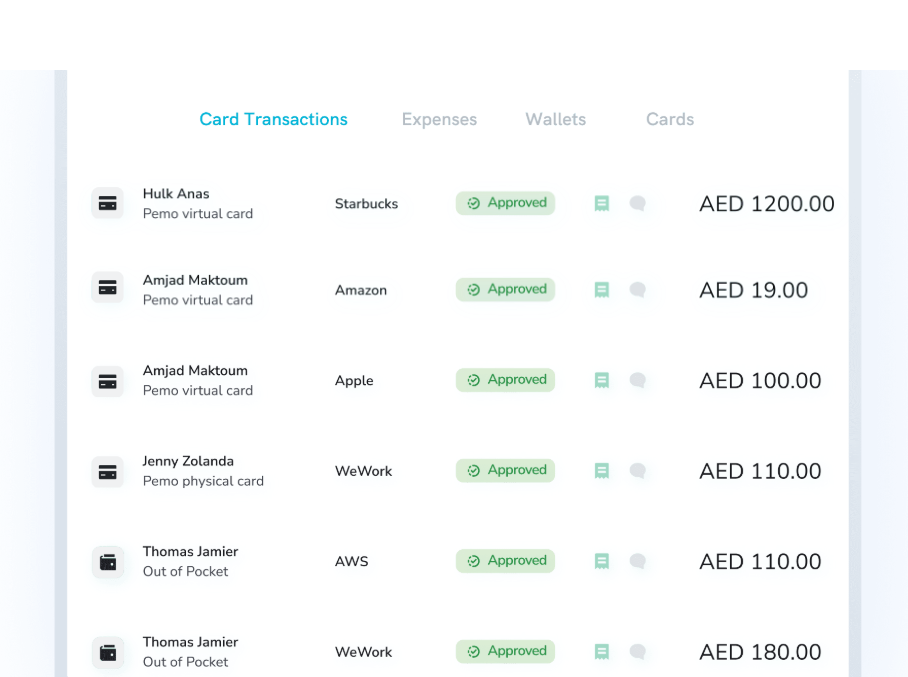
Here's how this works in practice:
- Real-time expense capture the second a card is used, not at month-end when details are fuzzy.
- AI-powered receipt matching that connects photos to the correct transactions without manual tagging.
- Automated reminders that chase employees for missing receipts so your finance team doesn't have to.
- Multi-level approval workflows that route expenses to the right manager based on amount, department, or spending category.
- Out-of-pocket expenses get submitted through the same app with the same receipt-capture flow.
Expense reports build themselves from the transaction data. No more scrambling at the end of every month.
Accounting Automations That Close Your Books Faster
Pemo connects directly to QuickBooks, Xero, Zoho Books, Wafeq, and Tally, and our AI copilot handles the grunt work of categorizing transactions.
Here's what your accounting team gets:
- Automatic transaction syncing between Pemo and your accounting software in real-time.
- AI-powered categorization that assigns every expense to the correct account in your chart of accounts.
- VAT-compliant records that are ready for corporate tax filing without manual tagging.
- Invoice management with OCR capture, approval workflows, and direct payments from your Pemo account.
The result? Your monthly close goes from a week-long grind to something that's mostly done before your bookkeeper even starts.
Automate Invoice Payments and Approvals
Vendor bills get captured using AI-powered OCR. You photograph the invoice, and our system reads it.
Each invoice routes through your approval workflow with a full audit trail. Once approved, pay directly from your Pemo account.
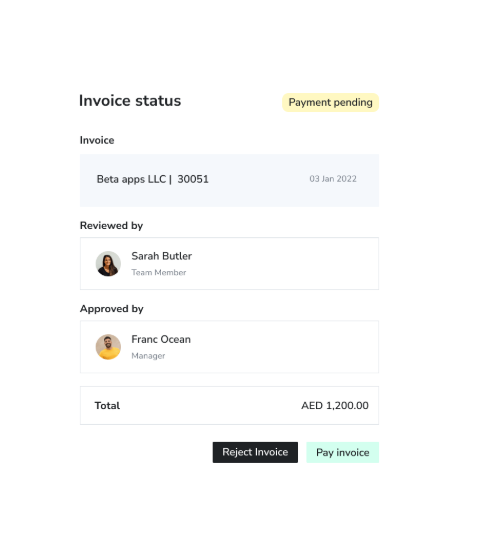
You can automate payments, approval flows, and transfers, saving hours of manual work every month.
Your approvers only receive what they need to review and stay in control of upcoming payments.
Every plan includes invoice management at no extra cost.
Pemo's Pricing
Pemo has a free plan for up to 2 card users that gives you access to unlimited virtual cards, a mobile app, expense reports, card spending limits, and Excel exports.
To access Pemo's advanced features, you'd need to be on one of our 2 paid plans:
- Essential: Starts from AED 29/month for 1 card user, which adds cashback on online advertising spend, integration with popular accounting platforms, spend analytics, and more.
- Business+: Custom pricing starting from 20 card users, which adds additional cashback on card spending, custom onboarding and training, and a dedicated CSM.

Want to learn more?
You can book a demo with our team or sign up for free to see why 10,000+ companies in the MENA region have chosen Pemo.
Pemo's Pros and Cons
✅ Real-time expense tracking from the moment a card is used.
✅ Integrations with QuickBooks, Xero, Zoho Books, Wafeq, and Tally.
✅ Automate invoice payments and approval flows.
✅ Cashback on online advertising spend and up to 2% cashback on FX fees.
✅ Generous free plan for up to 2 card users.
✅ Users on G2 highlight ease of use and fast processing.
❌ Wallet top-ups require bank transfers and aren't available on weekends, according to some user feedback.
#2: Spendesk
Best for: Reimbursing employees for out-of-pocket expenses without paperwork.
Similar to: Pemo.
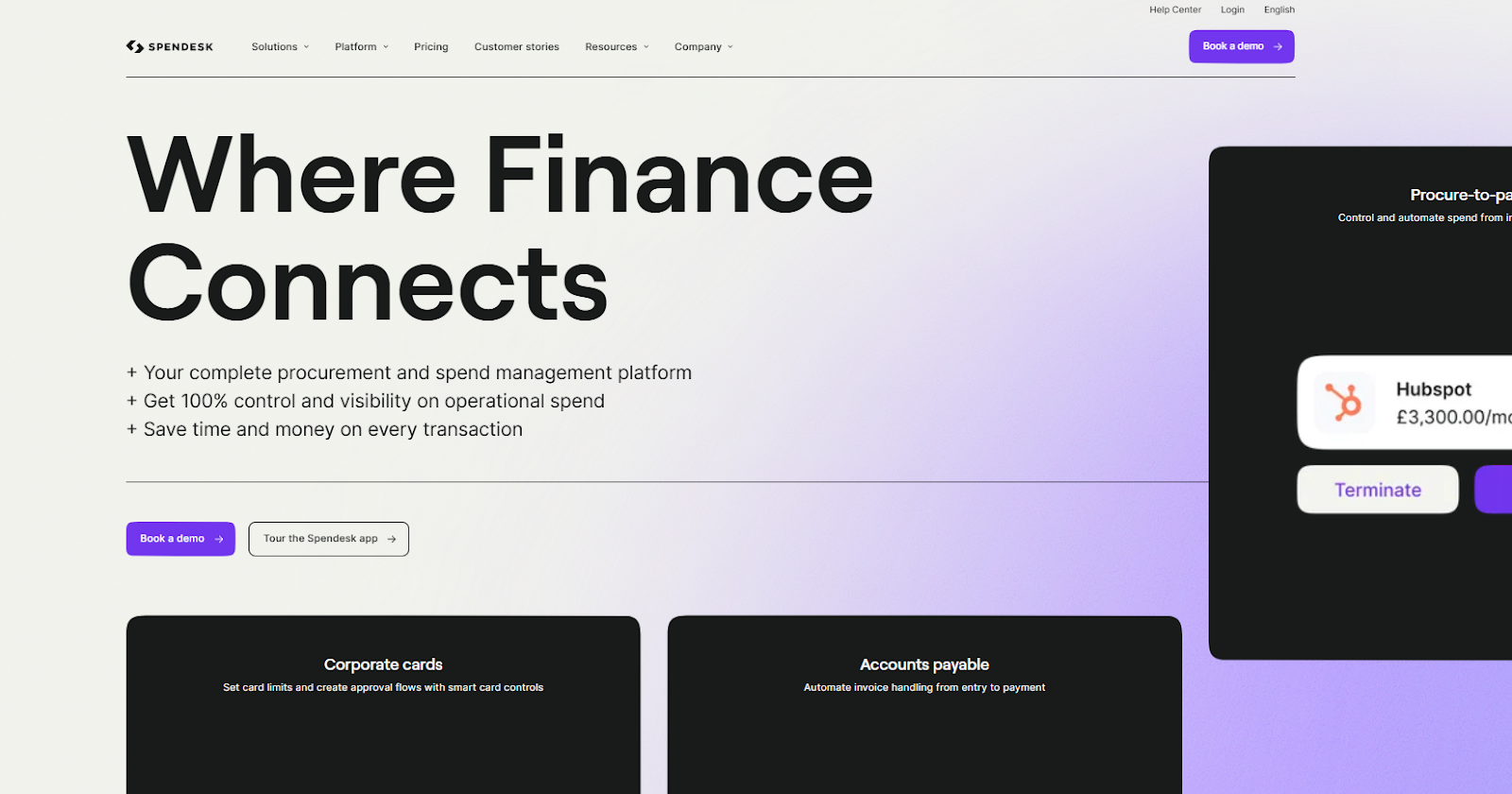
Spendesk is a spend management platform that bundles spending approvals, employee reimbursement, and invoice management into one system for businesses operating in the UAE.
The platform's OCR technology captures receipt details automatically, and its mobile app lets employees submit reimbursement requests on the go.
Features
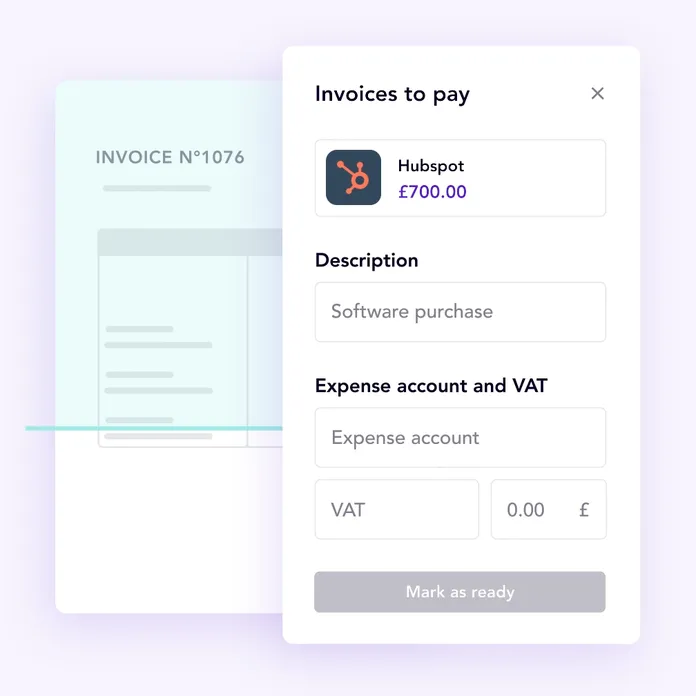
- Real-time expense monitoring so your finance team can spot errors and missing receipts before they become compliance issues.
- Mobile reimbursement app that lets employees snap photos of receipts for fast reimbursement submissions.
- Duplicate invoice detection that catches errors before they make it through the approval process.
Pricing
Spendesk uses custom pricing, so you'd need to contact their team for a quote tailored to your team size and feature needs.
Pros and Cons
✅ End-to-end invoice management with accounting integrations on the Essentials plan.
✅ Duplicate invoice and error detection.
✅ Advanced budgeting tools for real-time spending control.
❌ Pricing is not transparent.
#3: Happay
Best for: Companies that need to manage travel bookings and expense reporting in one place.
Similar to: Xpence, Tipalti.
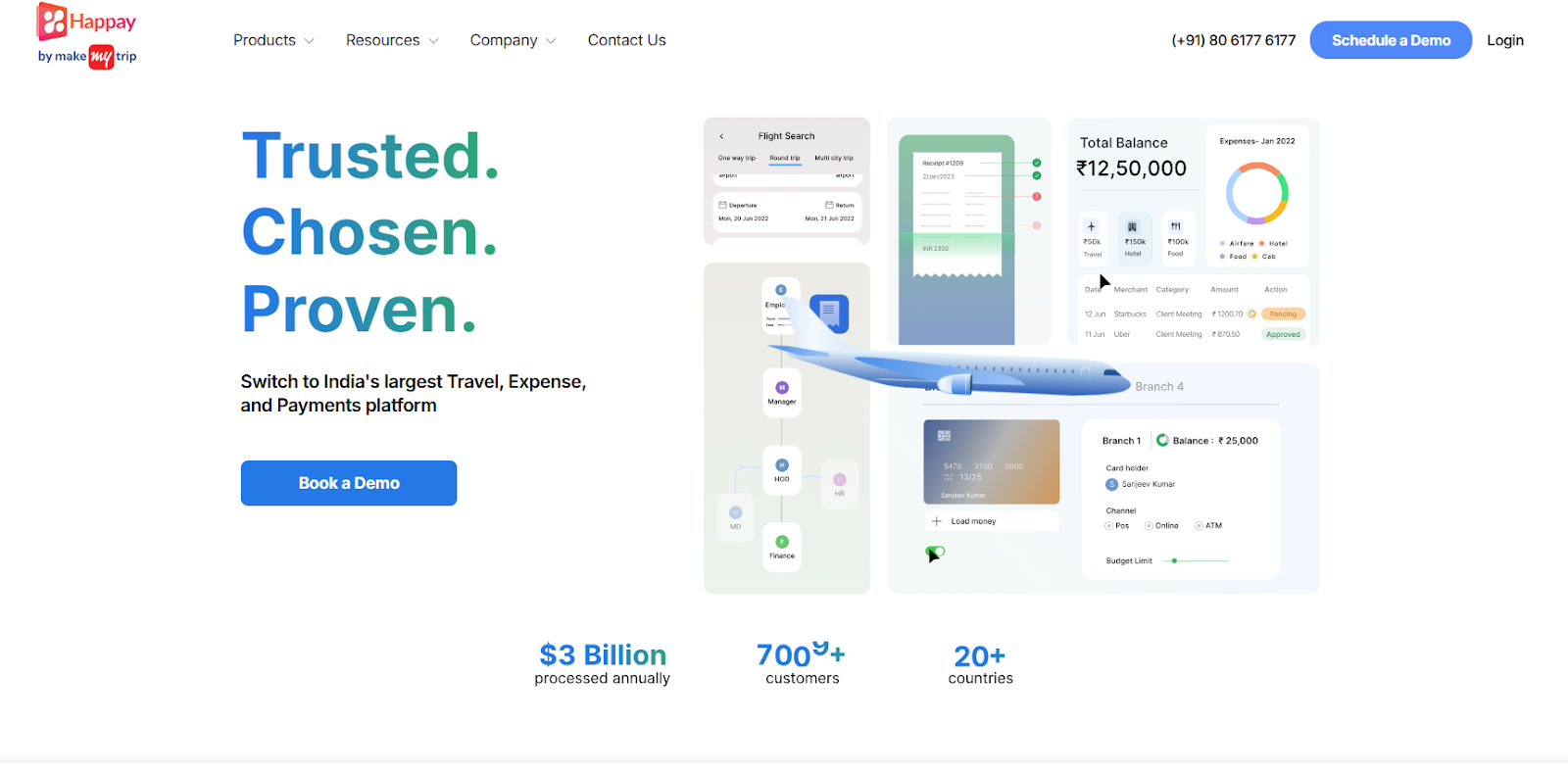
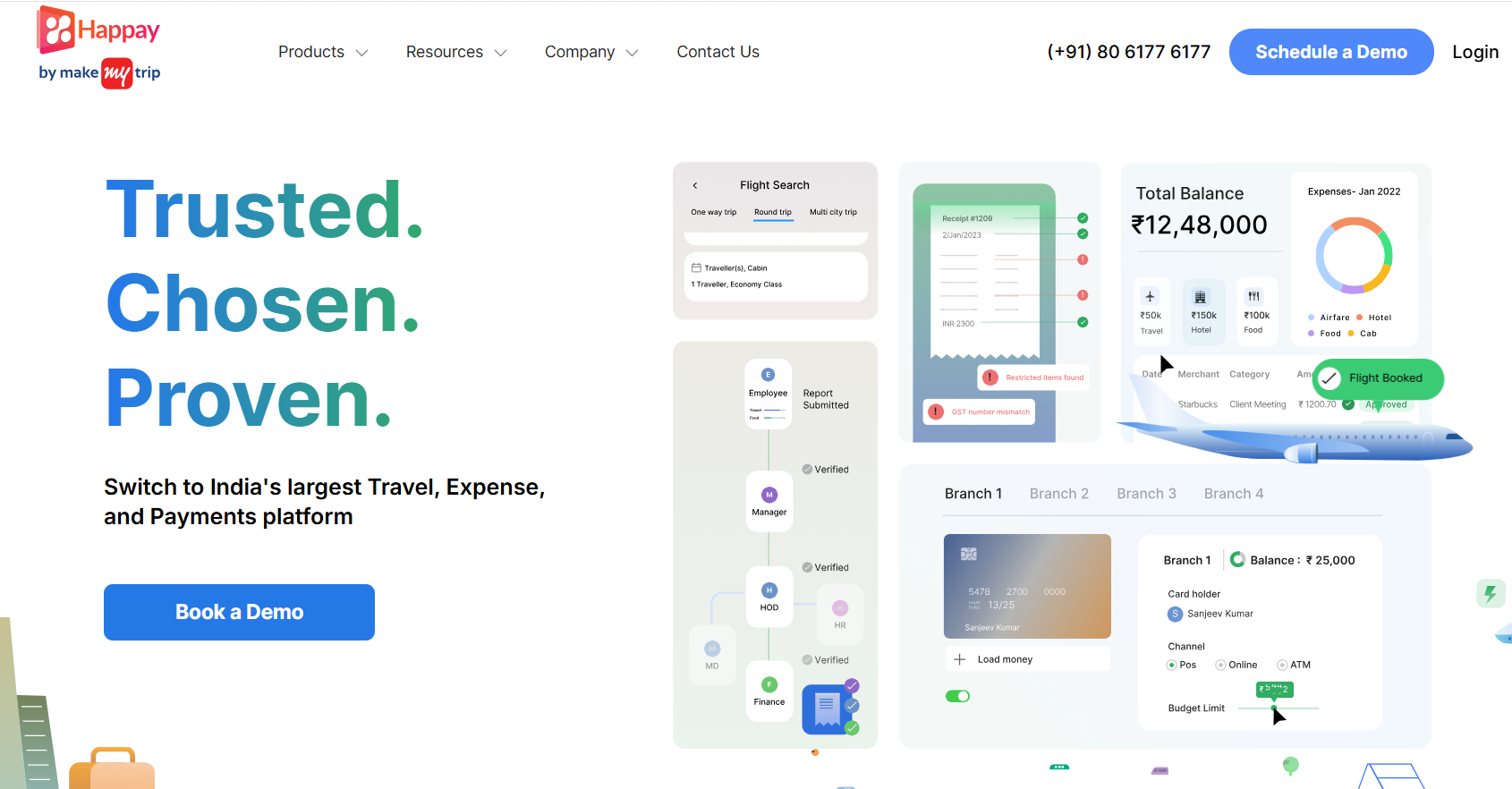
Happay is a platform built to automate the full expense lifecycle, from pre-trip booking to post-trip reconciliation.
It's designed for companies where travel expenses make up a big chunk of corporate spending, and the back-and-forth between booking, receipts, and reimbursement eats up too much time.
Features
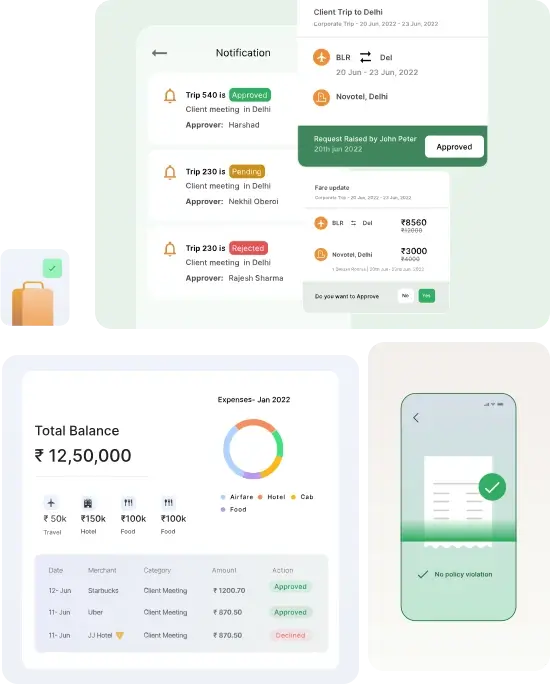
- AI-powered OCR scanning lets your team capture receipt details in under a minute by snapping a photo, no paper receipts needed.
- Smart Audit checks for employee fraud and spending anomalies, including duplicate bills, amount mismatches, and out-of-policy claims.
- Automated expense reports that employees can build by mapping expenses directly to trips booked through Happay Travel.
- ReconX gives you a single, auto-reconciled view of every trip with booking details, employee data, and payment info.
Pricing
Happay does not disclose its pricing, so you'd need to contact their team for a product demo and a quote.
Pros and Cons
✅ Good for managing travel-related expenses across your organization.
✅ Built-in fraud detection for duplicate bills and spending anomalies.
✅ Automated expense reporting that ties directly to employee trips.
❌ Pricing is not disclosed, so you have to reach out to their sales team.
#4: Tipalti
Best for: Organizations that need to automate expense reimbursements across multiple countries and currencies.
Similar to: Happay.
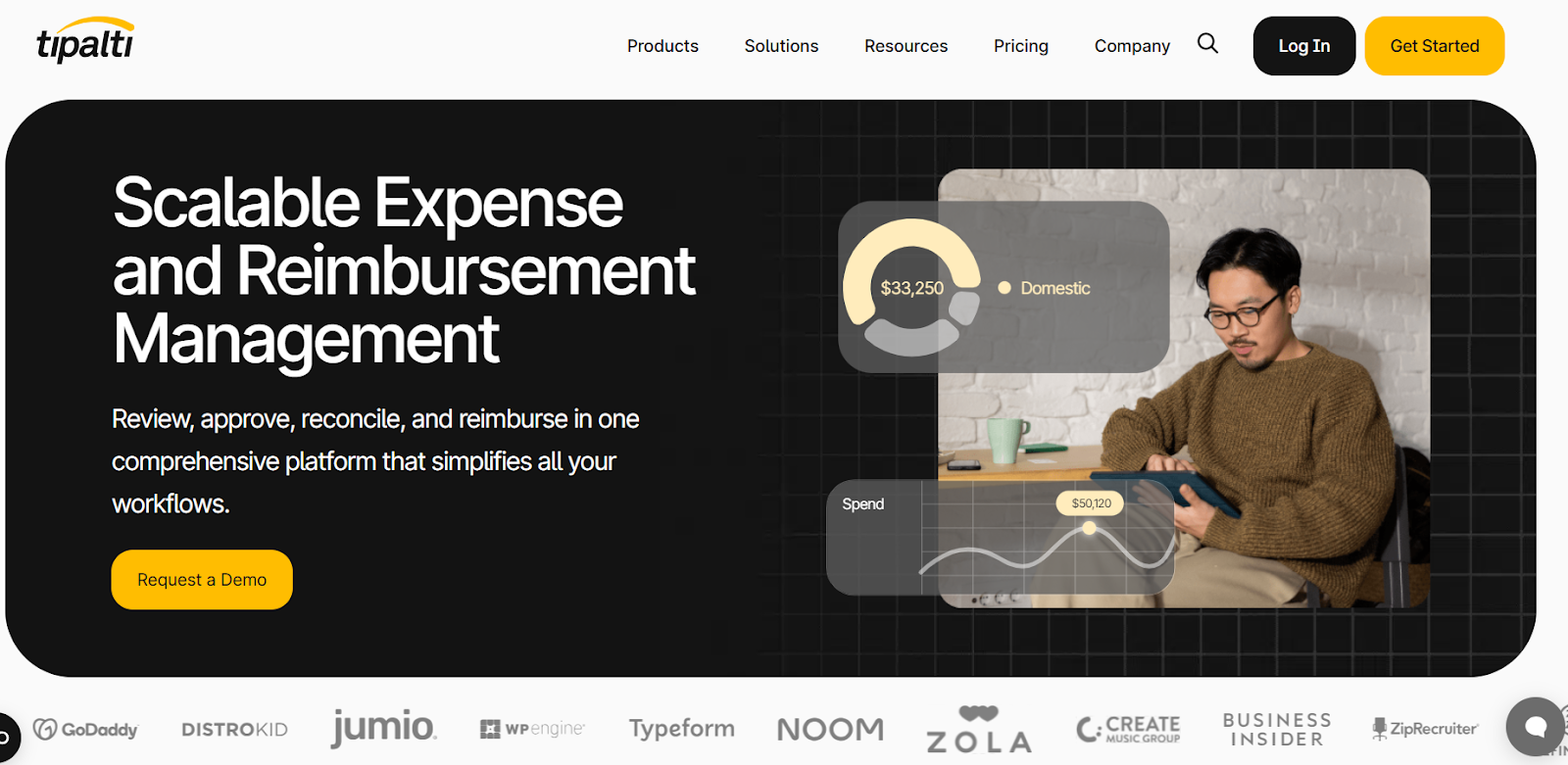
Tipalti is a finance automation platform that covers expense reimbursements, vendor payments, and accounts payable for companies operating across borders.
If your team frequently reimburses employees in different countries and you need a tool that handles the currency and compliance side automatically, Tipalti is built for that.
Features
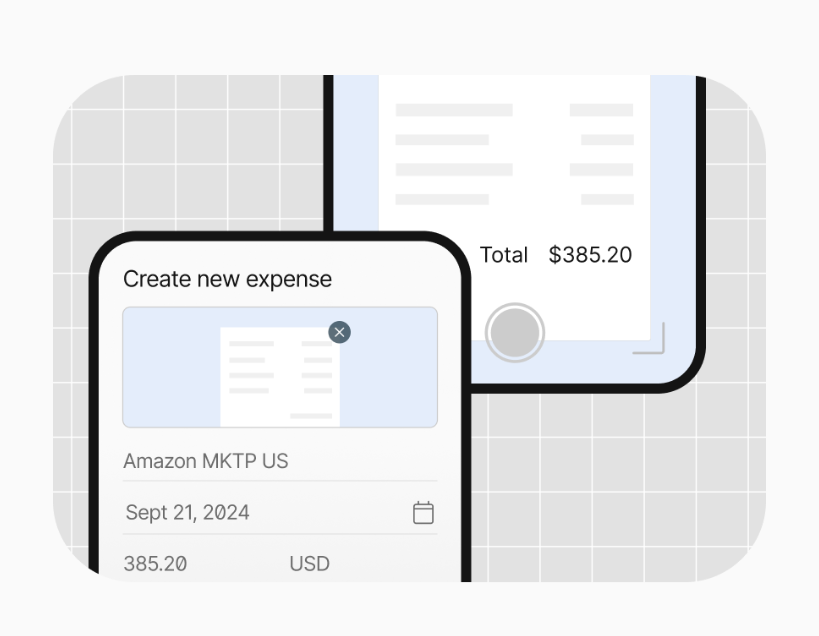
- Global reimbursements to 196 countries in over 120 currencies using more than 50 payment methods.
- Multi-card reconciliation that supports spending across Mastercard, Visa, AmEx, and Tipalti's own card.
- ERP syncing with NetSuite, Sage Intacct, and QuickBooks that speeds up your monthly close by around 25%.
- Consolidated expense tracking that brings out-of-pocket expenses and card transactions into one dashboard.
Pricing
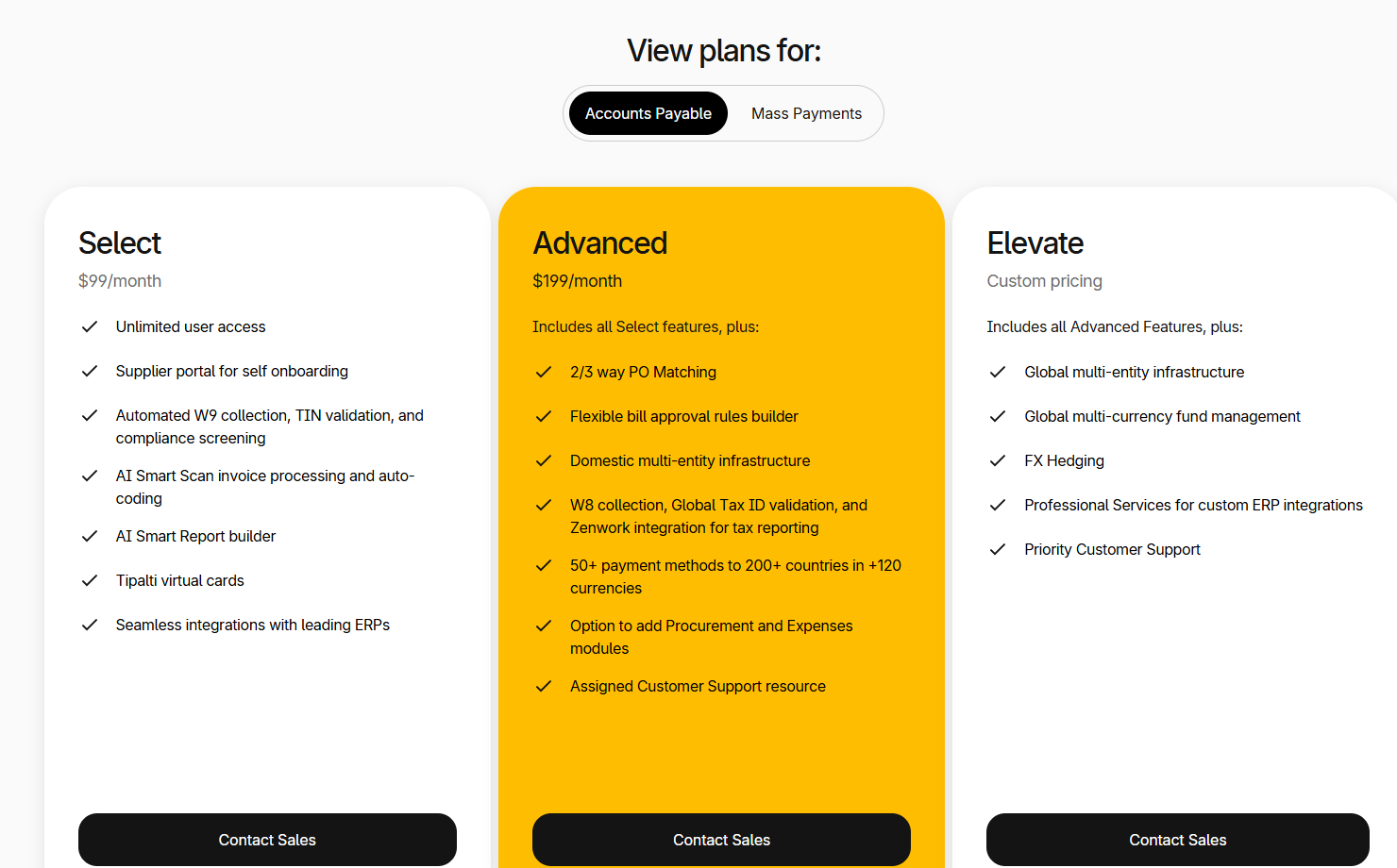
Tipalti offers three pricing tiers:
- Select: $99/month, which includes a supplier portal, AI-powered invoice scanning, flexible approval rules, and ERP integrations.
- Advanced: $199/month, which adds procurement features, multi-entity and multi-currency support, and 2 and 3-way PO matching.
- Elevate: Custom pricing, which adds a full procurement solution, budget management, and Slack integrations.
Pros and Cons
✅ Automates accounts payable and reduces manual workload.
✅ Vendors self-onboard and track their own invoices.
✅ Automatic syncing with NetSuite saves significant time.
❌ Higher starting price at $99/month than some of the other competitors on the market.
#5: BILL
Best for: Businesses that need accounts payable, accounts receivable, and spend management on a single platform.
Similar to: Xpence, Happay.
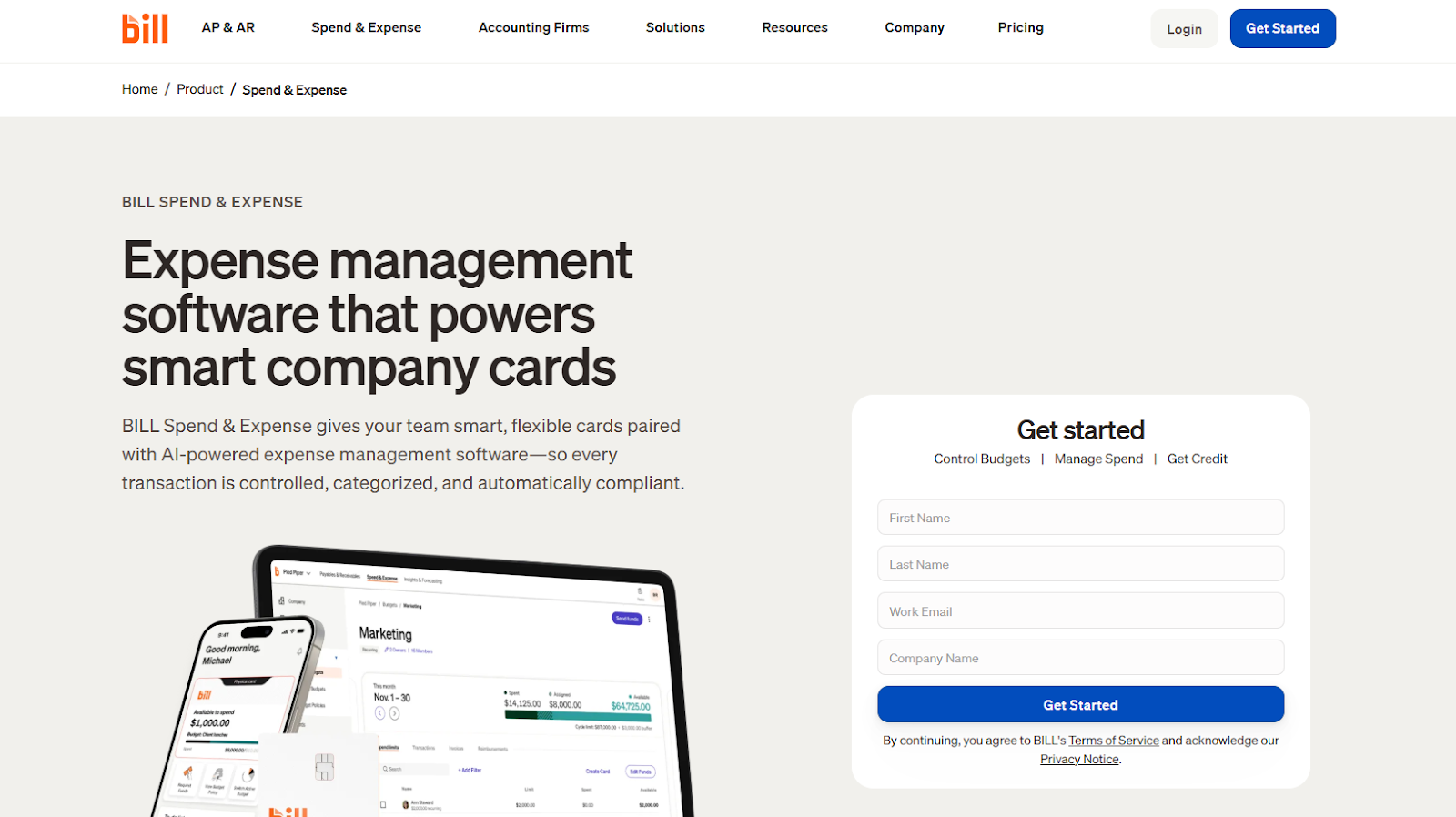
BILL is a financial operations platform that brings AP, AR, spending, and expenses together under one login.
If your finance team juggles multiple tools to manage vendor payments and employee expenses, BILL consolidates all of that into a single dashboard with the Divvy Card powered by Visa.
Features
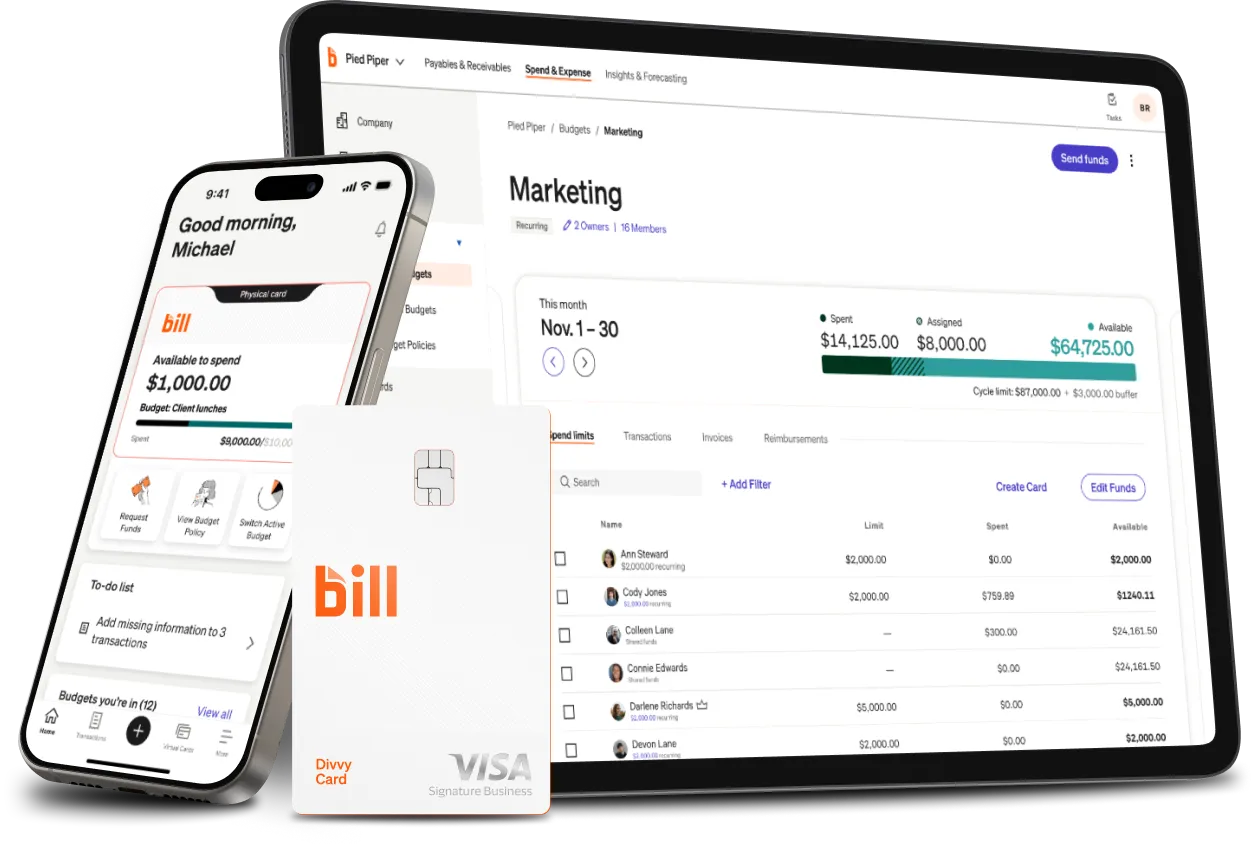
- Spend and expense management with access to credit lines from $1,000 to $5M and budgeting tools tied to the BILL Divvy Card.
- Unified financial operations that let you manage payables, receivables, and expenses from one platform with automatic syncing.
- Accounting integrations that connect with your existing tech stack for real-time data flow.
Pricing
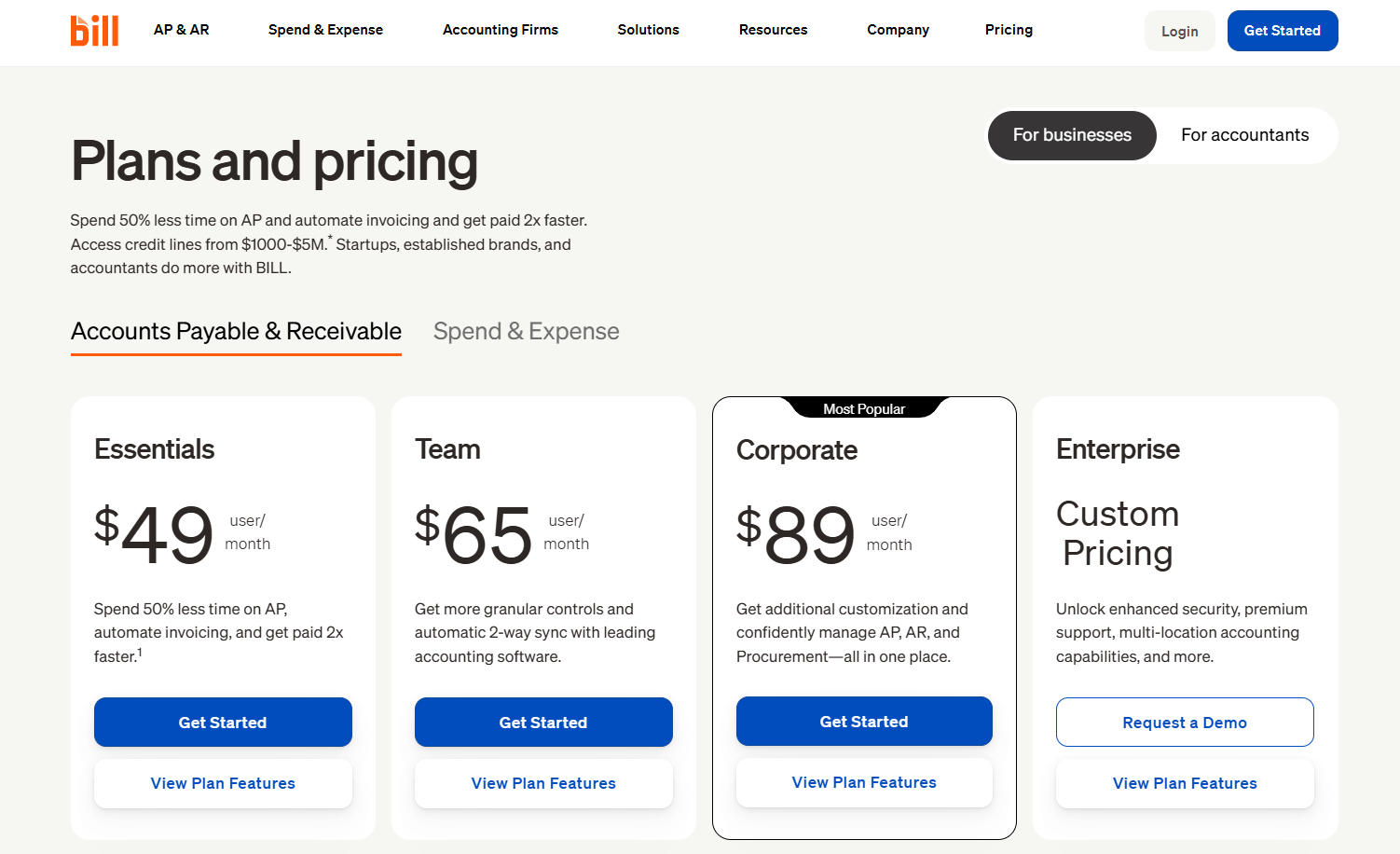
BILL offers four pricing tiers:
- Essentials: $49/user/month, which covers basic AP and AR functionality with live chat and phone support.
- Team: $65/user/month, which adds automatic 2-way sync with accounting software and custom user roles.
- Corporate: $89/user/month, which combines AP and AR management with custom approval policies.
- Enterprise: Custom pricing with premium support and multi-location accounting.
Pros and Cons
✅ All-in-one financial operations platform.
✅ Integrates with your existing accounting stack.
✅ Automates accounts payable processing.
❌ One user mentions that they find it challenging at times to map and integrate custom fields or make changes to existing fields.
#6: Xpence
Best for: Automating bookkeeping with real-time transaction categorization and spending analytics.
Similar to: Pemo.
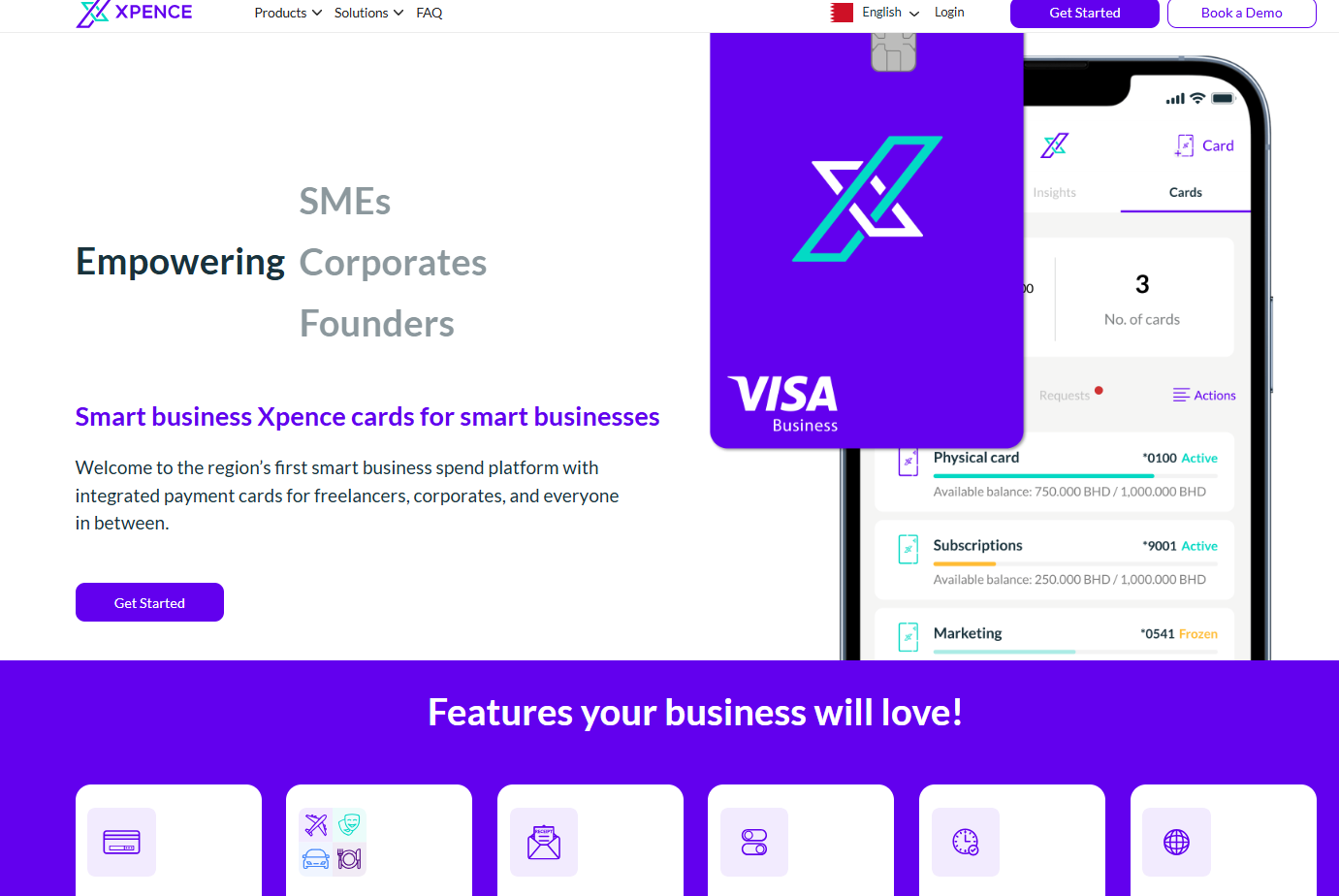
Xpence is a UAE-based spend management platform that auto-categorizes every business transaction as it happens and gives you analytics on employee spending habits.
The platform is a strong pick for teams that want better oversight of how employees use their corporate cards, with data that goes beyond basic transaction logs.
Features
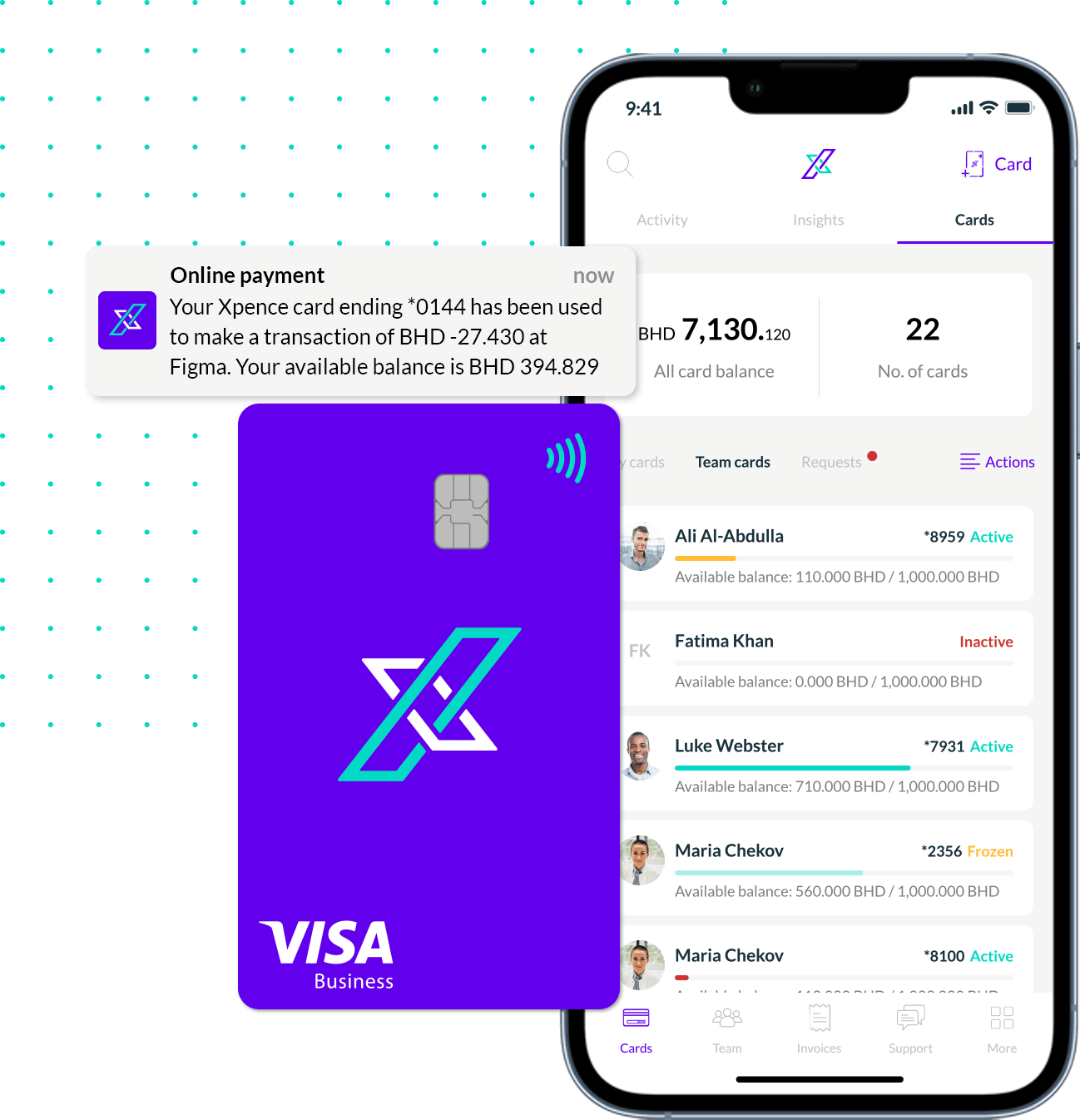
- Real-time auto-categorization of every business transaction and expense as it's made.
- Centralized spending tracking that gives you a single view of all employee expenses across the organization.
- Spending analytics that surface patterns in employee card usage to help you spot inefficiencies.
Pricing
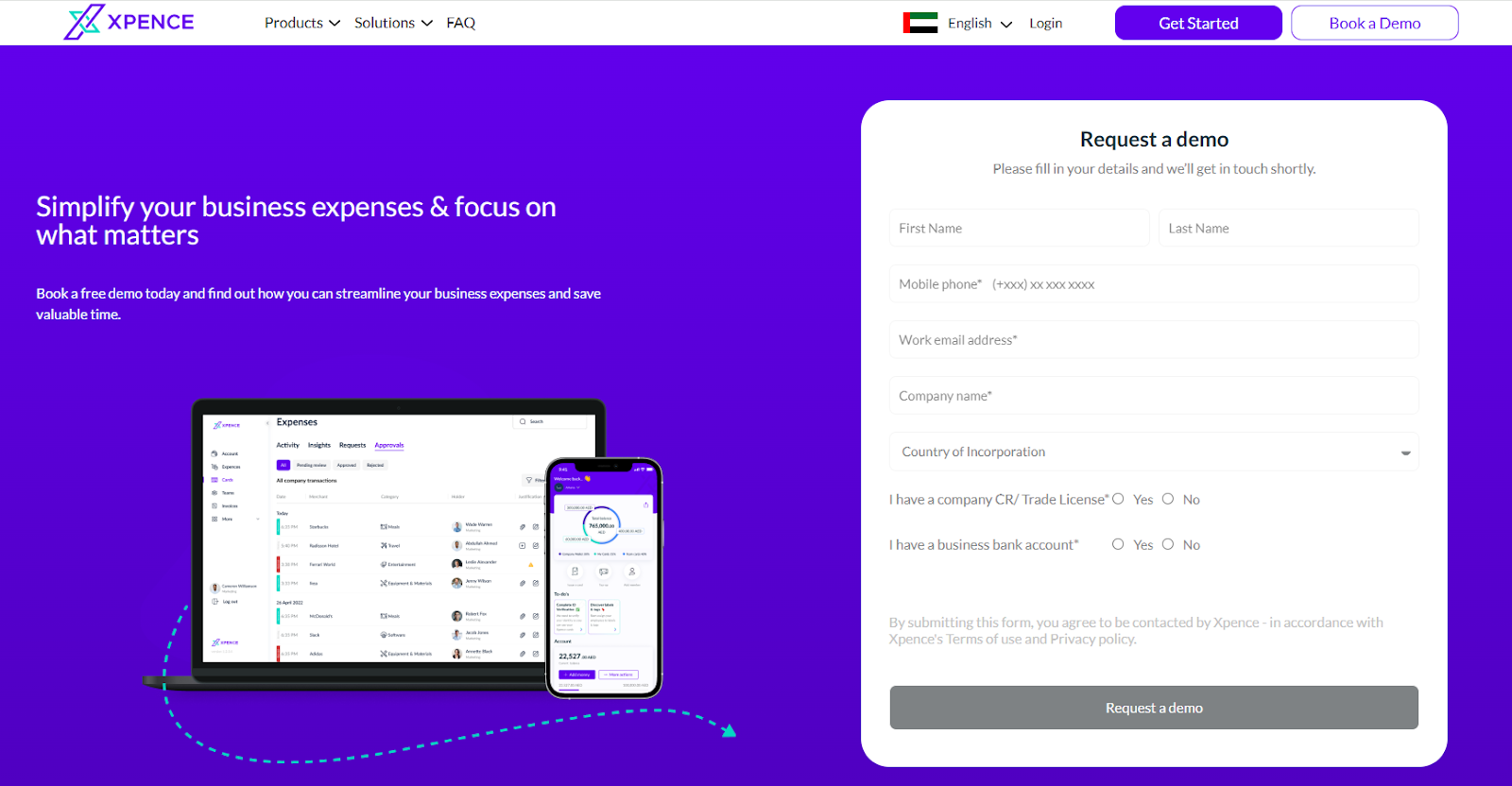
Xpence does not disclose its pricing, so you'd have to contact their team to get a demo and a quote.
Pros and Cons
✅ Solid subscription management capabilities.
✅ Real-time tracking with approval workflows.
✅ Detailed spending controls and analytics.
❌ No public pricing, unlike many Xpence alternatives.
Get started with Pemo for free
If you're looking for a spend management platform that offers:
- Automated approval flows for invoices and expenses.
- Direct integrations with QuickBooks, Xero, Zoho Books, Wafeq, and Tally.
- Real-time spending controls with per-transaction, daily, and monthly limits.
- Cashback on ad spend and up to 2% back on FX transactions.
Then you can sign up for Pemo's free plan or book a demo to see why 10,000+ businesses in the MENA region have chosen us.
⚠️ Disclaimer: This article was last updated on 8th of May, 2026, and if there's any misinterpretation of the information, please contact us, and we will fact-check it.


