
In this article, I'll go over the 8 best Pluto alternatives in 2026, covering what each one does well, where Pluto falls short, and which option fits depending on your team size and spending needs.
TL;DR
- Pemo is the best Pluto alternative in 2026 for UAE businesses that want corporate cards accepted everywhere, per-transaction spending controls, and AI-powered accounting automation.
- If your priority is employee reimbursements or managing expenses across multiple countries, Rydoo and Tipalti are built specifically for those workflows.
What are the best alternatives to Pluto in 2026?
The best alternatives to Pluto in 2026 are Pemo, Xpence, and Spendesk.
Here's my shortlist of the 8 best Pluto alternatives on the market:
#1: Pemo
Pemo is the best Pluto alternative in 2026 for UAE businesses that want corporate cards accepted everywhere, per-transaction spending controls, and AI-powered accounting automation that actually learns from your data.

Full disclosure: Pemo is our platform, but I'll give you an honest breakdown of why it stands out and where it fits.
With Pemo, you get smart virtual and physical corporate cards for your team in the UAE, with no setup fees and full visibility into every dirham spent.
Our cards sync with the MENA region's leading spend management platform to help you control employee expenses, automate your accounting, and close books faster.
Let's go over the capabilities that make Pemo the best option for teams looking to switch from Pluto: 👇
Corporate Cards That Actually Work Everywhere
Pemo cards are powered by Mastercard, which means they're accepted at millions of merchants worldwide, online and in-store.
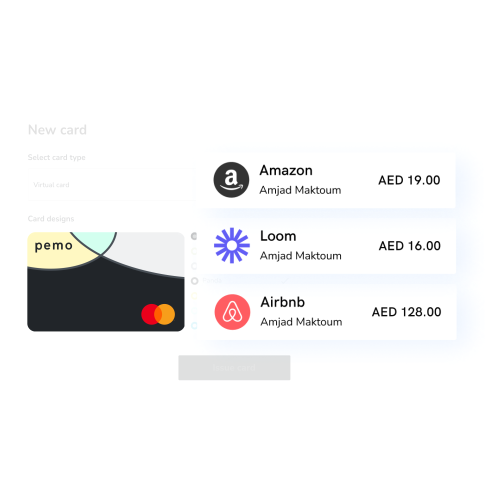
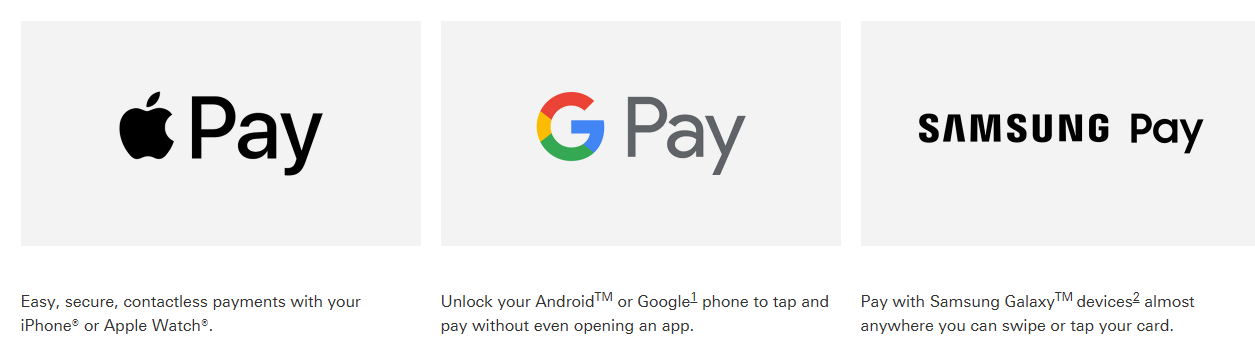
What’s more, our cards work with Apple Pay, Google Pay, and Samsung Pay right out of the box.
No more awkward checkout moments or asking employees to use their personal cards as a backup.
Here are some of the things our customers love about Pemo cards:
- Track every purchase and view live budgets from a single dashboard. Transactions appear the moment they happen, not at month-end.
- Assign cards to individual employees and set custom spending limits at the per-transaction, daily, or monthly level.
- Block or freeze any card instantly from the app if someone misuses it or it gets lost.
- Earn cashback on online advertising spend like Google Ads and Meta, and up to 2% cashback on FX transactions.
Expense Tracking That Doesn't Wait for You
Manual expense reporting is one of the biggest time sinks for finance teams.
Pemo removes the monthly scramble by capturing expense data automatically from card transactions and our mobile app.
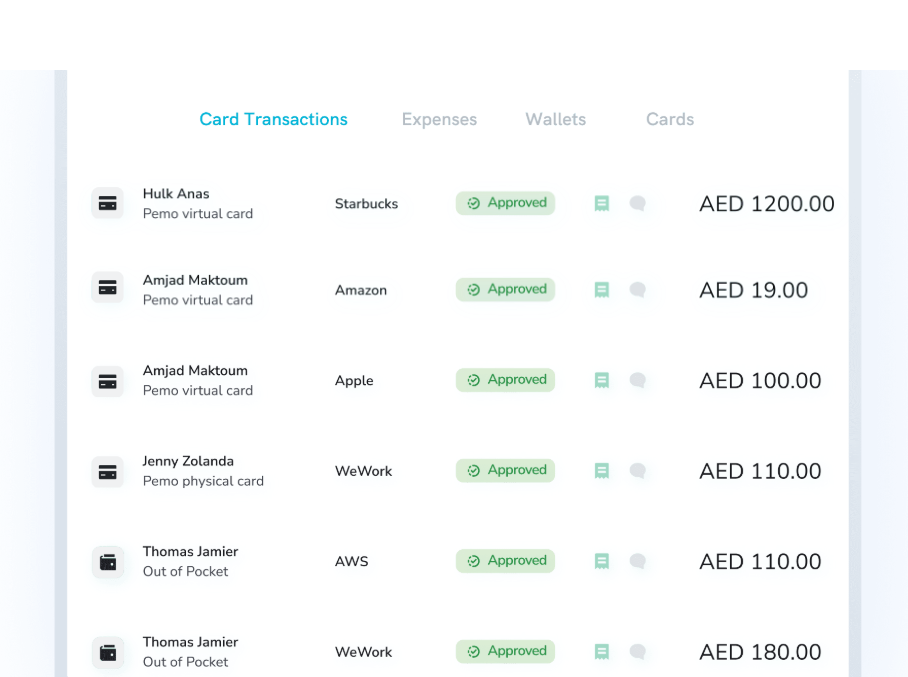
When someone on your team swipes their card, they get a push notification to snap the receipt.
Our AI matches the photo to the transaction. If they forget, the system flags it for the finance team. No more chasing 30 people for missing paperwork.
Here's what this means:
- Every card transaction instantly becomes a tracked expense, so your records stay current without anyone lifting a finger.
- Multi-level approval workflows that you can configure however you need. Marketing spend routes to the CMO. Anything above AED 5,000 goes to the CFO. Travel expenses go to the office manager.
- Out-of-pocket expenses get submitted through the same app with the same receipt-capture flow, keeping everything in one place.
- You can adjust spending limits and freeze cards on the go, giving you real-time control over employee spending.
AI-Powered Accounting That Gets Smarter Over Time
Pemo Copilot auto-categorizes every expense by your Chart of Accounts, assigns the right vendor, and tags VAT treatment.
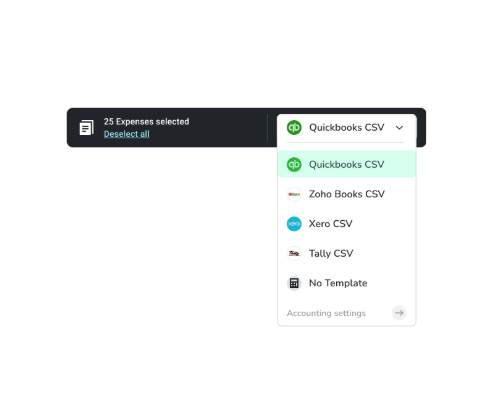
All of it is based on patterns it learns from your historical data. The more you use it, the smarter it gets.
Our direct integrations push this data straight into QuickBooks, Xero, Zoho Books, Wafeq, Tally, and Microsoft Dynamics 365. No CSV exports. No manual journal entries.
Here's why your accounting team will appreciate Pemo:
- Transaction data flows automatically between Pemo and your accounting software. No re-entry, no copy-pasting.
- Your finance team gets real-time visibility into every transaction, syncing instantly rather than lagging behind.
- Expenses are auto-categorized into your chart of accounts, which helps you close books up to 5x faster.
- VAT tracking is built-in, so corporate tax preparation stays organized year-round.
Set Your Invoice Payments on Autopilot
Pemo helps you automate the entire invoice lifecycle by collecting, approving, paying, and managing your bookkeeping for every invoice.
Each invoice routes through your approval workflow with a full audit trail. Once approved, you can pay directly from your Pemo account.
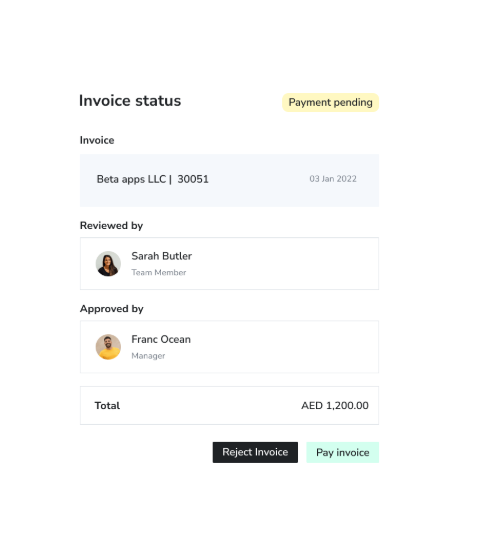
Your team can automate payments, approval flows, and transfers, saving hours every week. Approvers only receive what they need to review and stay in control of upcoming payments.
On top of that, Pemo helps you cut international transfer costs with lower fees than some competitors charge.
Pemo's Pricing
Pemo has a free plan for up to 2 card users that gives you access to unlimited virtual cards, a mobile app, expense reports, card spending limits, and Excel exports.
To access Pemo's advanced features, you'd need to be on one of our 2 paid plans:
- Essential: Starts from AED 29/month for 1 card user, which adds cashback on online advertising spend, integration with popular accounting platforms, spend analytics, and more.
- Business+: Custom pricing starting from 20 card users, which adds additional cashback on card spending, custom onboarding and training, and a dedicated CSM.

Want to learn more? You can book a demo with our team or sign up for free to see why 10,000+ companies in the MENA region have chosen Pemo.
Pemo's Pros and Cons
✅ Real-time expense tracking with instant transaction visibility.
✅ Integrations with QuickBooks, Xero, Zoho Books, Wafeq, and Tally.
✅ Automate invoice payments and their approval flows.
✅ Cashback on online advertising spend and up to 2% cashback on FX fees.
✅ Per-transaction, daily, and monthly spending controls.
✅ Generous free plan for up to 2 card users.
❌ Wallet top-ups require bank transfers and aren't available on weekends, according to some user feedback.
#2: Rydoo
Best for: AI-powered expense management with smart audit and near-accurate receipt scanning.
Similar to: Tipalti.
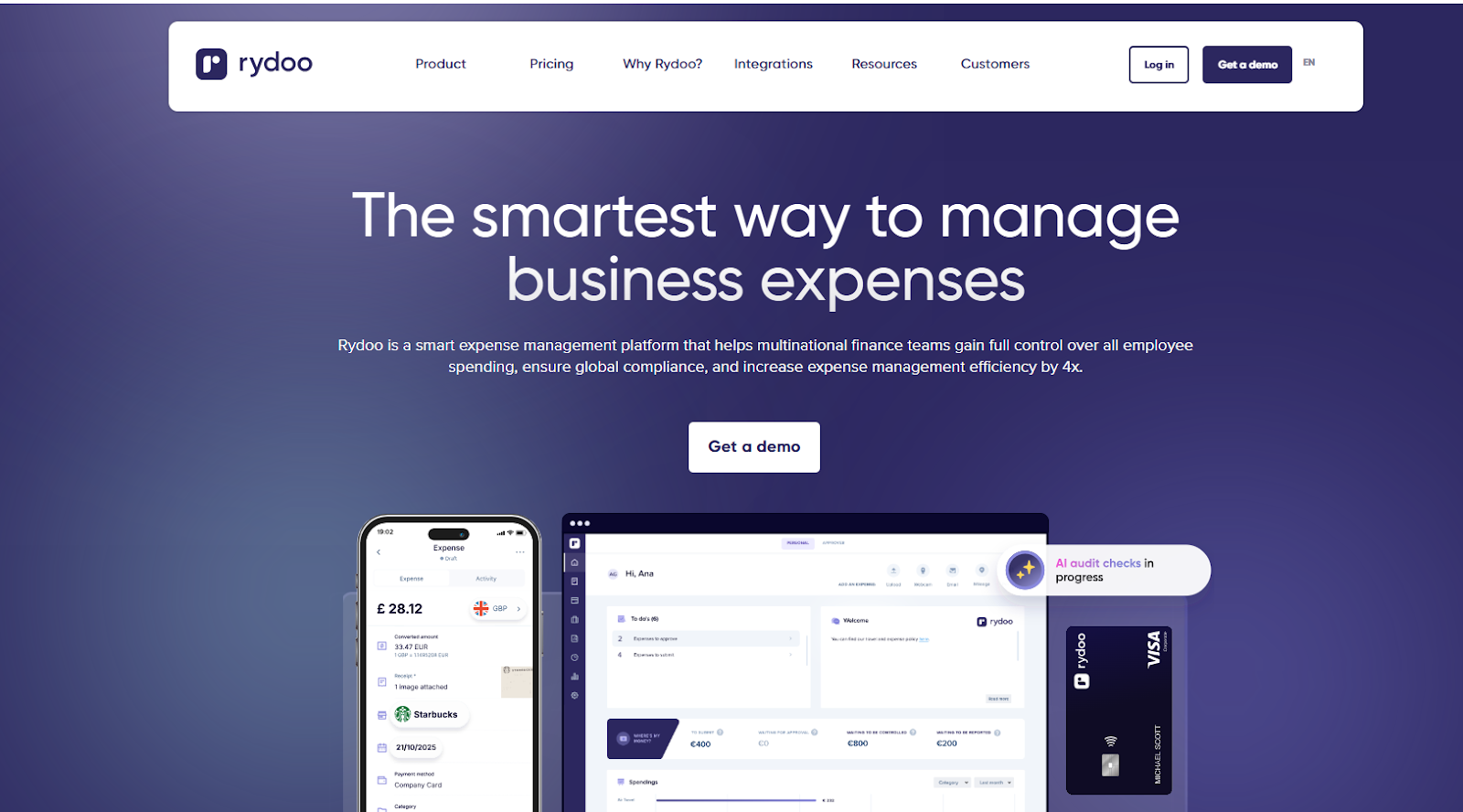
Rydoo is an AI-powered expense management tool that automates the journey from claim submission to reimbursement, giving finance teams live visibility into company spending.
Its receipt scanner claims high accuracy in auto-populating expense details, making it one of the faster tools for submitting error-free expenses.
Features

- Smart Audit that automatically analyzes employee expenses, detecting and flagging anything that's non-compliant or suspicious.
- Customizable spending policies where you set controls, define approval flows, and automate reconciliation on your terms.
- Easy scanning that lets employees submit expenses in roughly 10 seconds by snapping a photo of a receipt.
Pricing
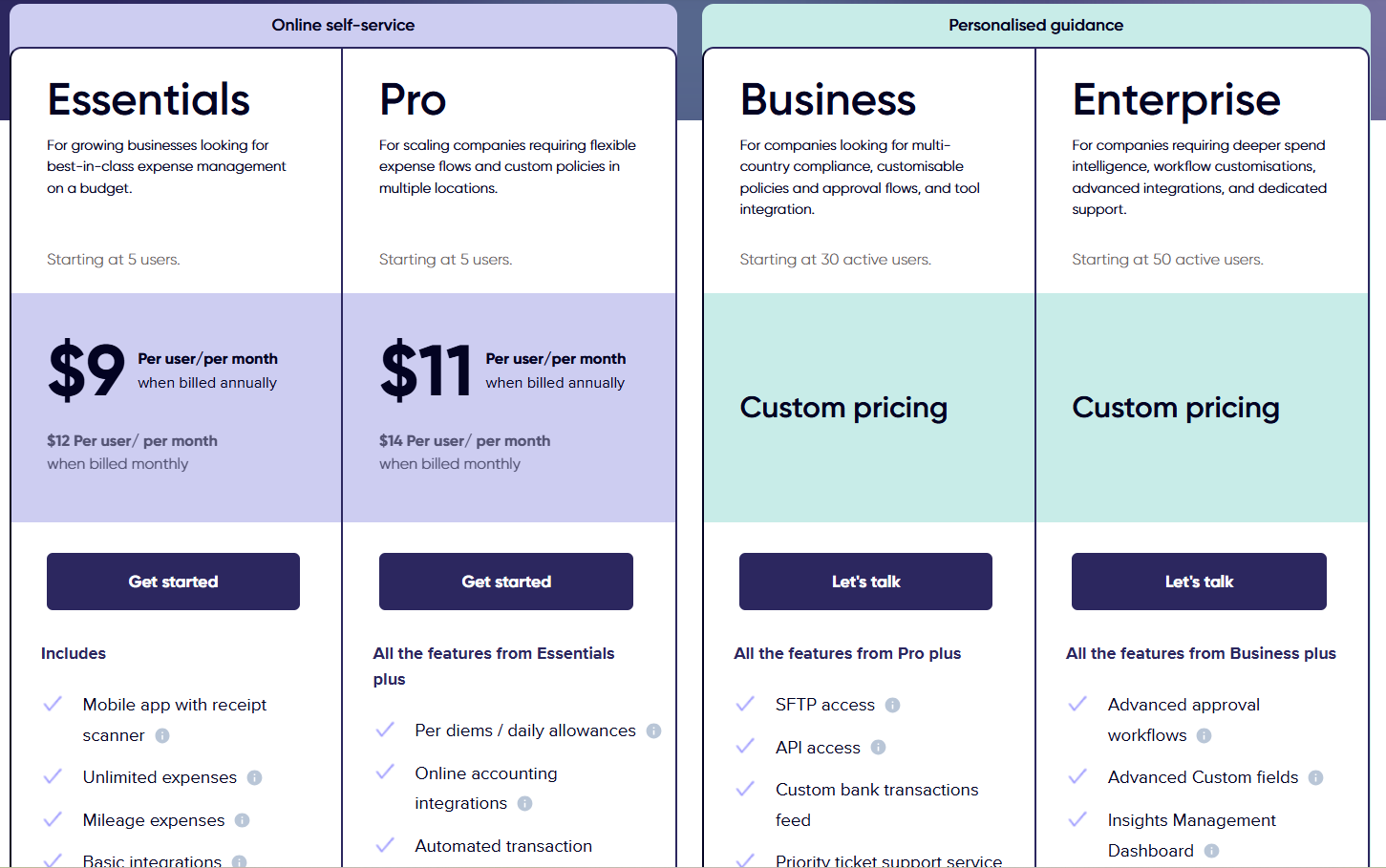
Rydoo offers four pricing tiers:
- Essentials: $9/user/month (billed annually). Mobile app with receipt scanner, unlimited expenses, and basic integrations.
- Pro: $11/user/month (billed annually). Adds per diems, online accounting integrations, and customizable policies.
- Business: Custom pricing. Adds SFTP access, API access, and priority support.
- Enterprise: Custom pricing. Advanced approval workflows, SSO, and insights dashboard.
Pros and Cons
✅ Intuitive interface that's easy to pick up.
✅ Strong expense tracking with solid spending controls.
✅ The receipt scanner genuinely saves time.
❌ Business and Enterprise plans do not have public pricing.
#3: Xpence
Best for: Automated bookkeeping with real-time transaction categorization.
Similar to: Pemo.
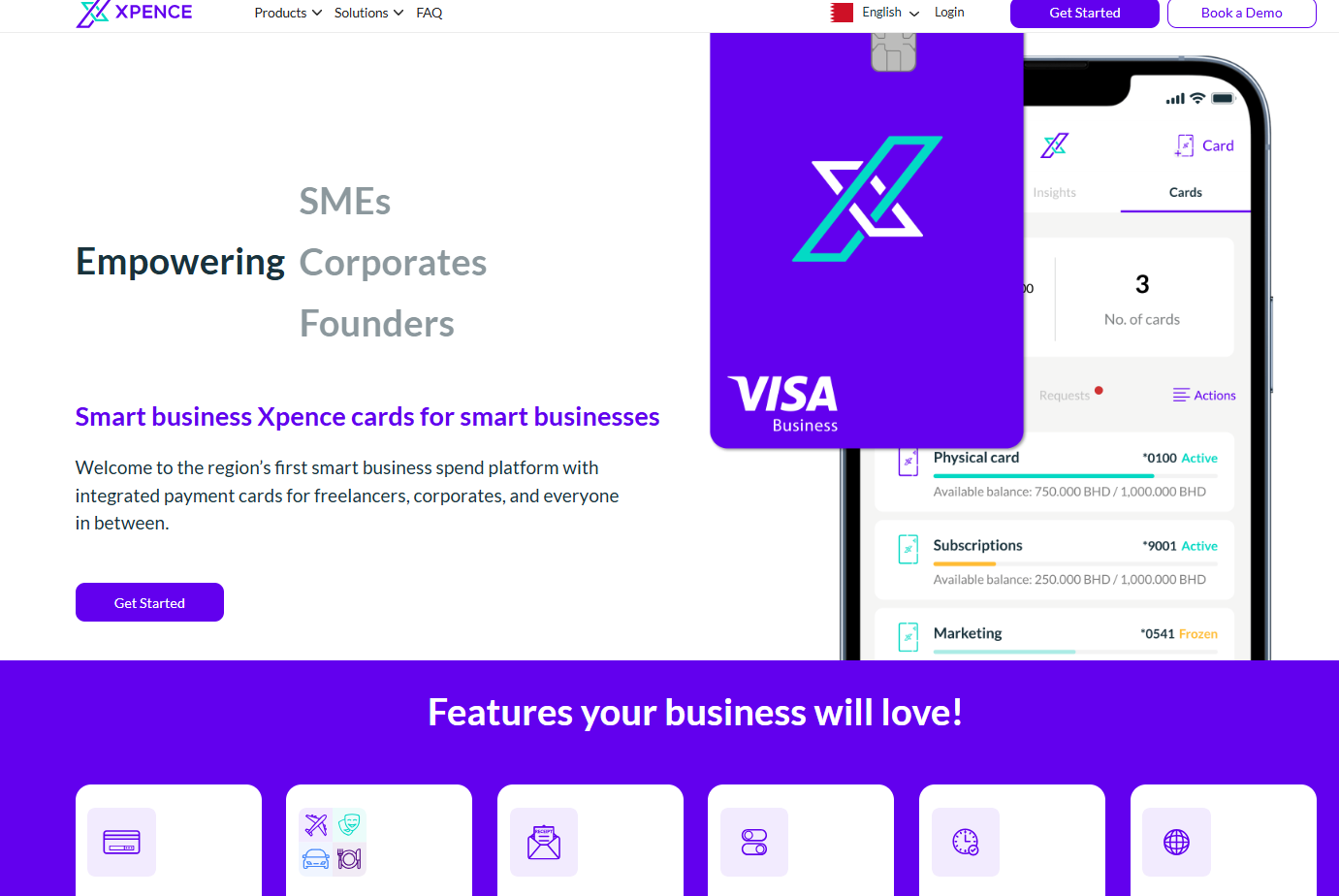
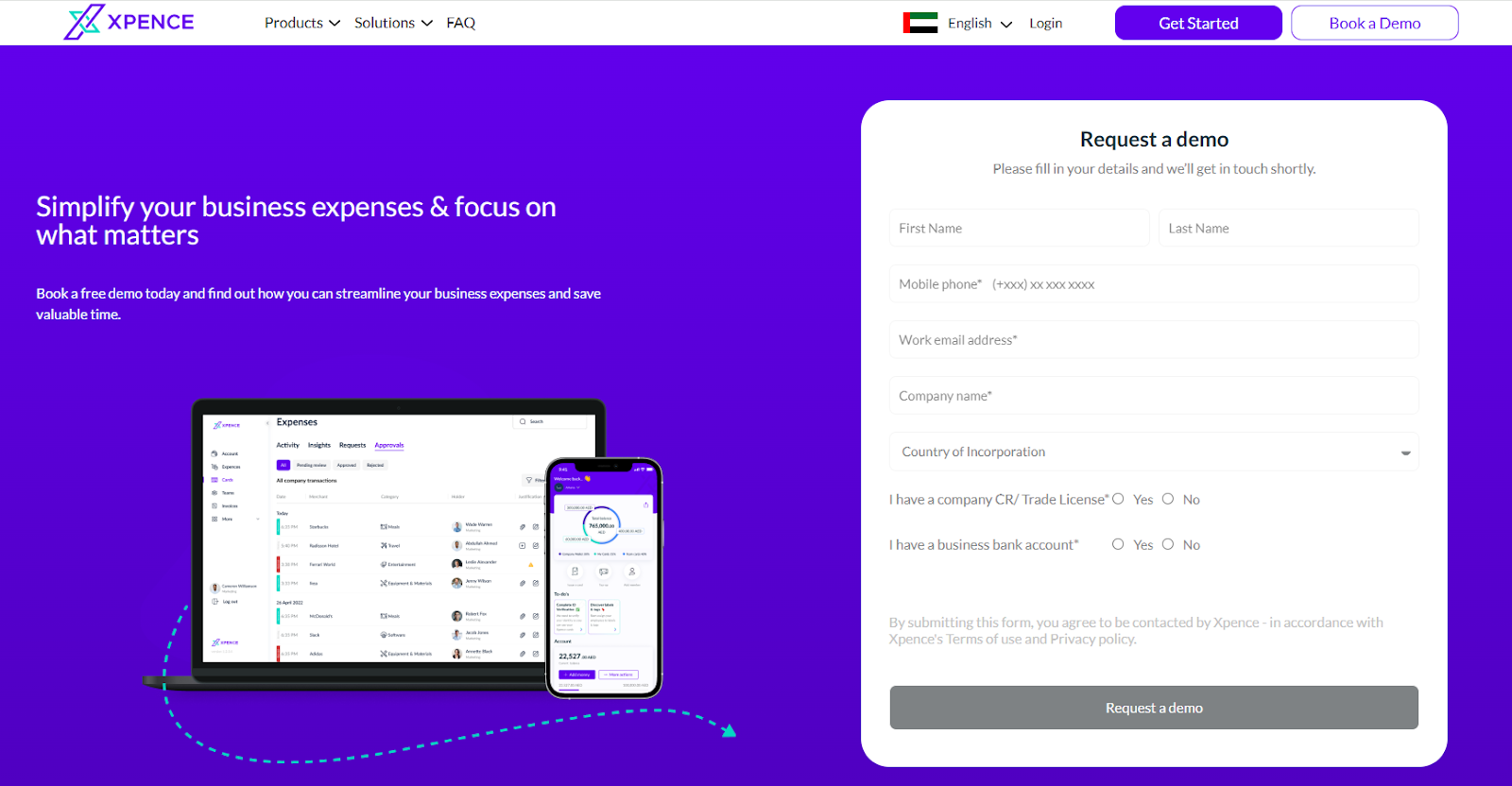
Xpence offers virtual Visa cards and spend management software for UAE businesses, with every transaction getting categorized automatically and receipts captured on the spot.
What makes it stand out is its data analytics layer that breaks down your employees' spending patterns in detail.
Features
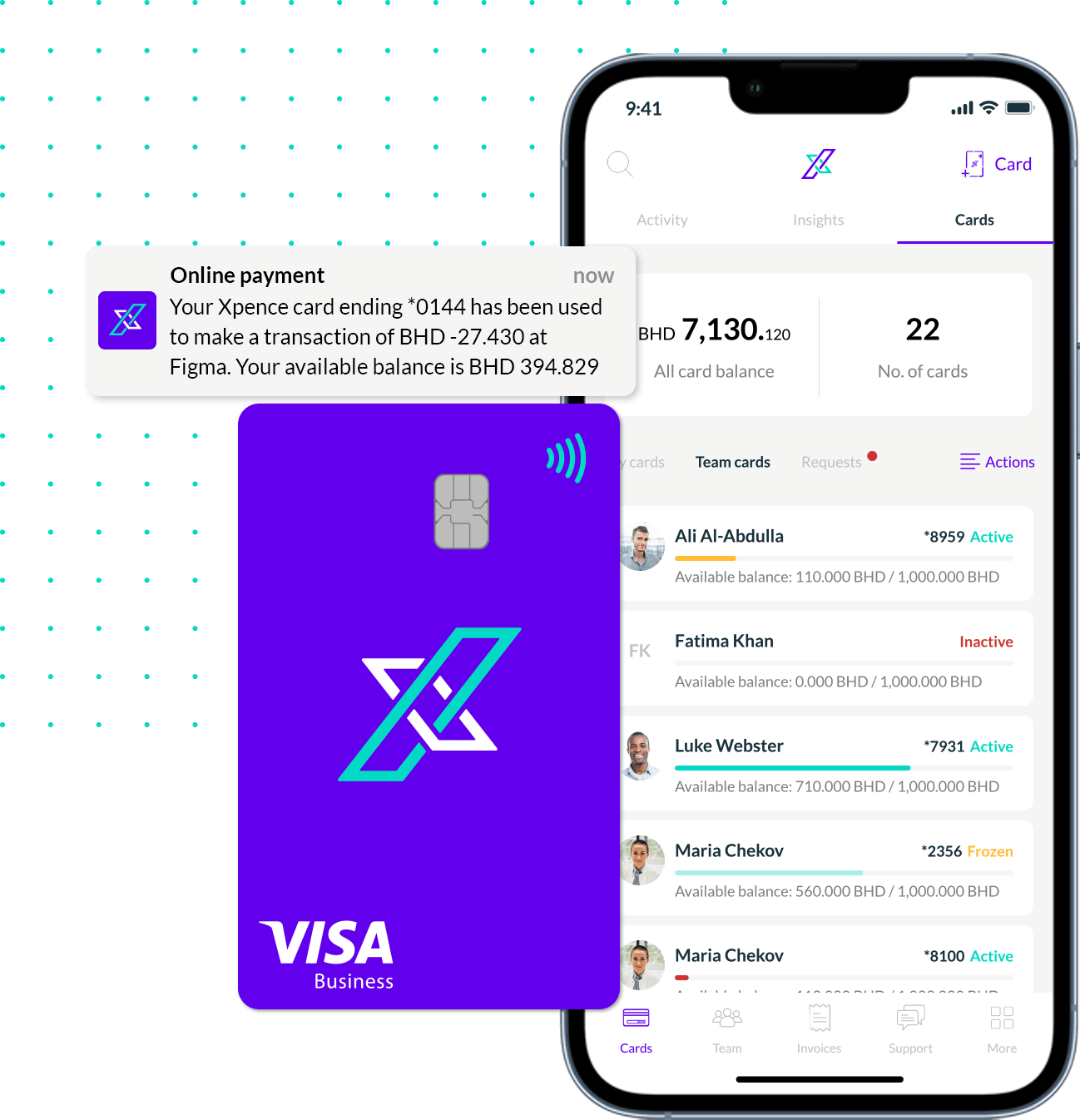
- Instant virtual card creation so your team can start using them right away for online expenses.
- Real-time automatic categorization of every business transaction and expense, keeping your books current.
- Spending analytics that give you detailed breakdowns of how employees use their corporate cards, helping you spot trends and outliers.
Pricing
Xpence does not disclose its pricing, so you'd have to contact their team to get a demo and a quote.
Pros and Cons
✅ Good for managing and tracking spend on SaaS platforms.
✅ Real-time spending tracking with built-in approval workflows.
✅ Advanced spending controls and analytics to monitor employee spending habits.
❌ No public pricing, unlike many Xpence alternatives.
#4: Spendesk
Best for: Employee expense reimbursements without the paperwork.
Similar to: N/A.
Spendesk is a spend management platform that bundles spending approvals, employee reimbursement, and invoice management for businesses operating in the UAE.
Its OCR technology captures and pulls details from receipts automatically, and the mobile app lets employees request fast reimbursements by snapping a photo.
Features
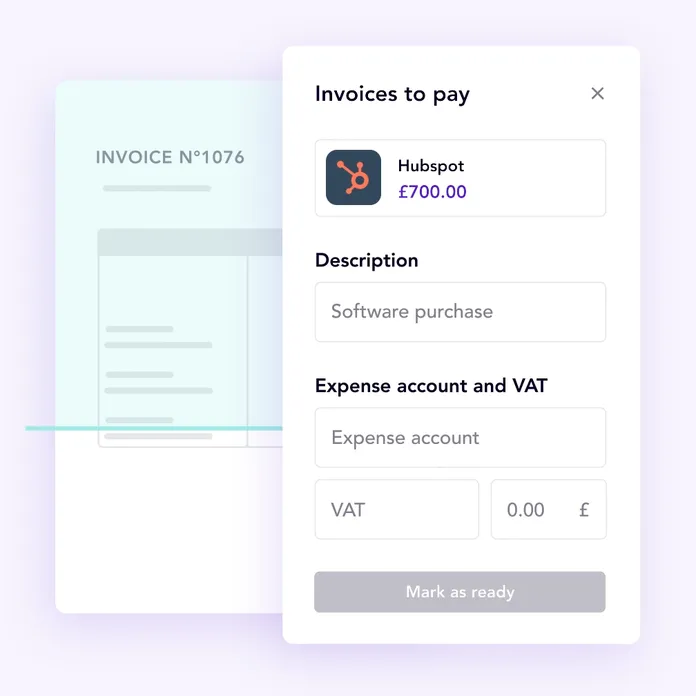
- Real-time expense monitoring so your finance team can catch errors and missing receipts before they become compliance issues.
- A mobile app for quick reimbursements. Employees photograph their receipt, and the platform handles it from there.
- Duplicate invoice detection that flags errors before they hit your books.
Pricing
Spendesk uses custom pricing, so you'd need to contact their team for a quote tailored to your team size and feature needs.
Pros and Cons
✅ End-to-end invoice management with accounting integrations on the Essentials plan.
✅ Duplicate invoice and error detection.
✅ Advanced budgeting tools for real-time spending control.
❌ Pricing is not transparent.
#5: BILL
Best for: Unified financial operations covering AP, AR, and spend management.
Similar to: Xpence, Happay.
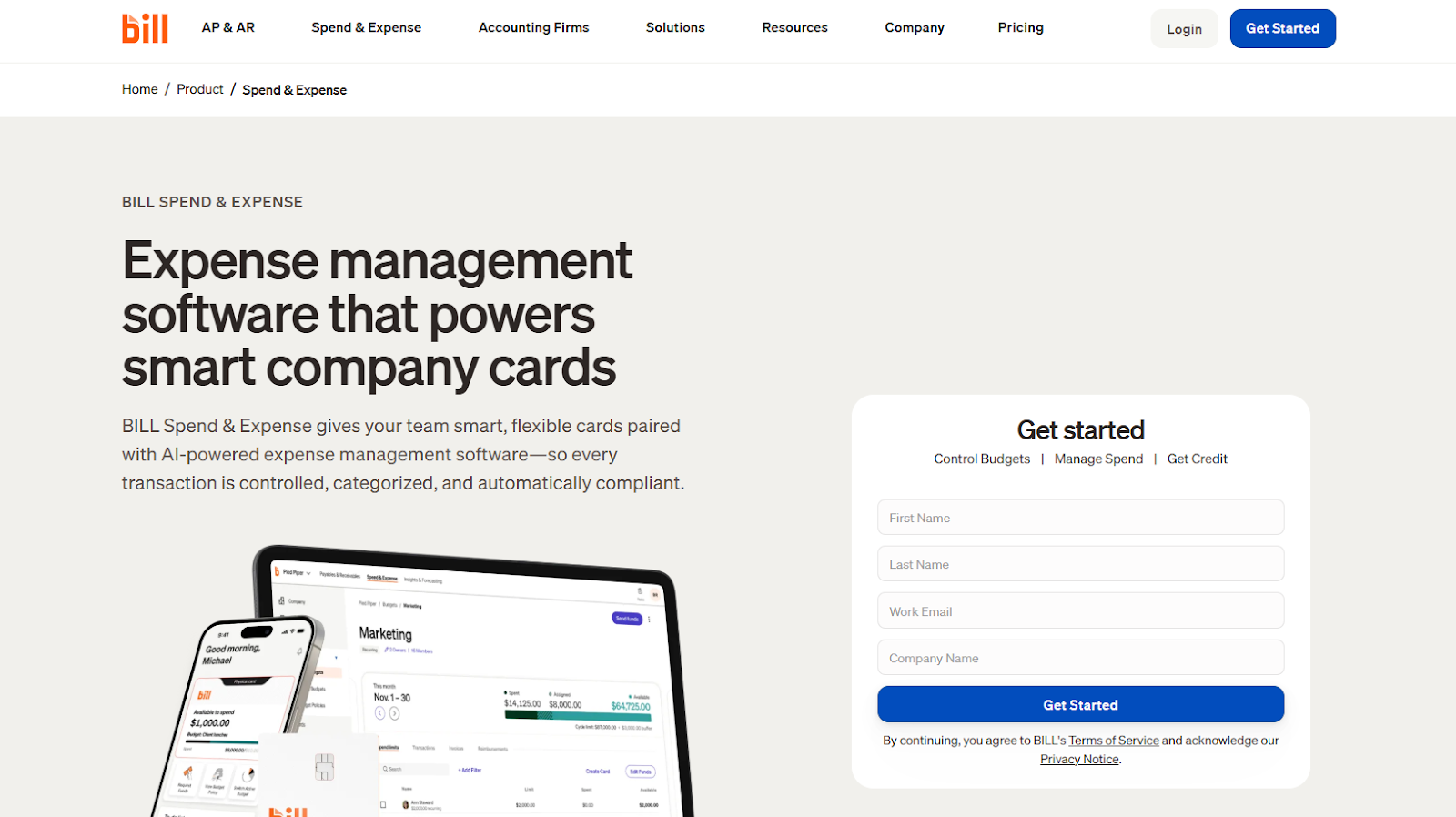
BILL is a financial operations platform that gives UAE organizations a single dashboard for accounts payable, accounts receivable, and expense tracking.
The platform connects with your existing accounting stack and offers credit lines from $1,000 to $5M through its Divvy Card, powered by Visa.
Features
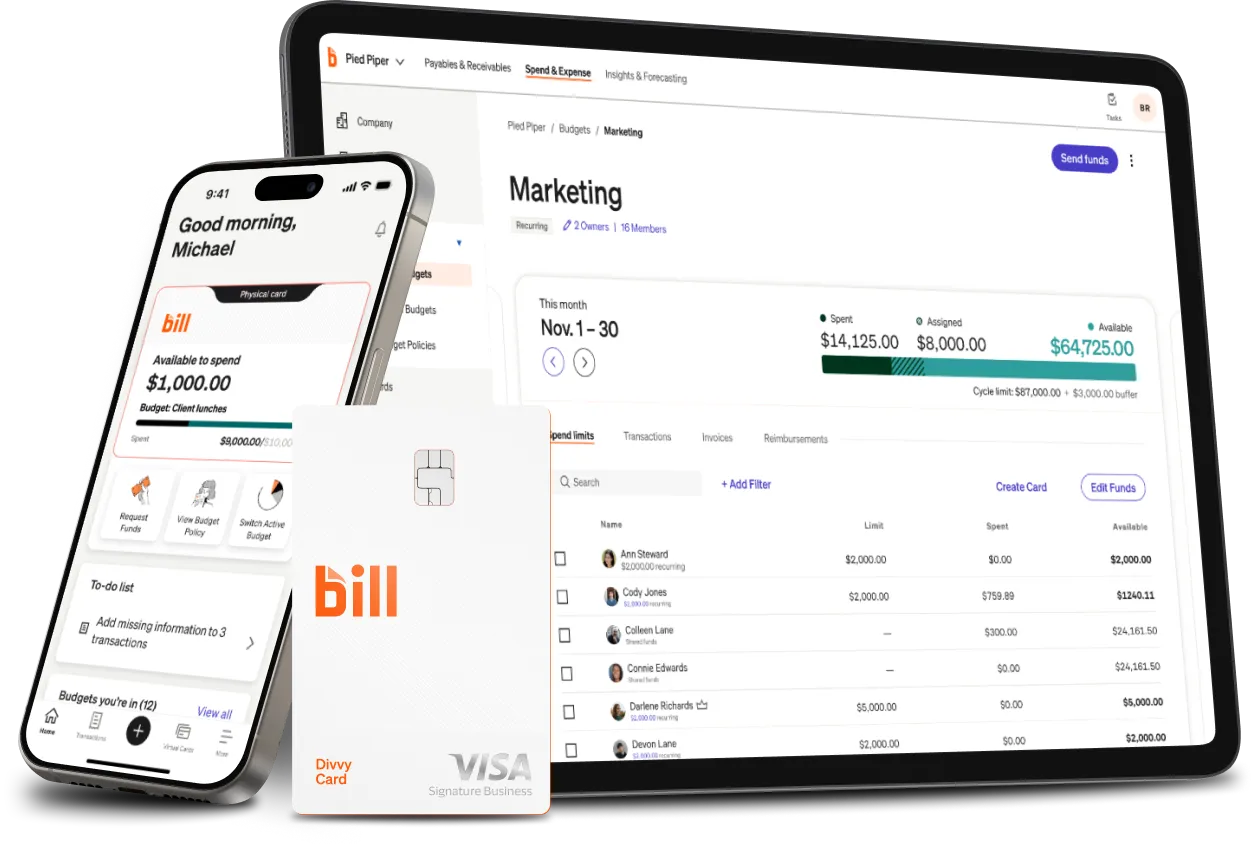
- Spend and expense management with budgeting tools and spend tracking through the BILL Divvy Card.
- A unified platform where you manage AP, AR, spending, and expenses with one login and automatic sync across modules.
- Integrations with your existing tech stack and accounting software to keep your financial operations connected.
Pricing
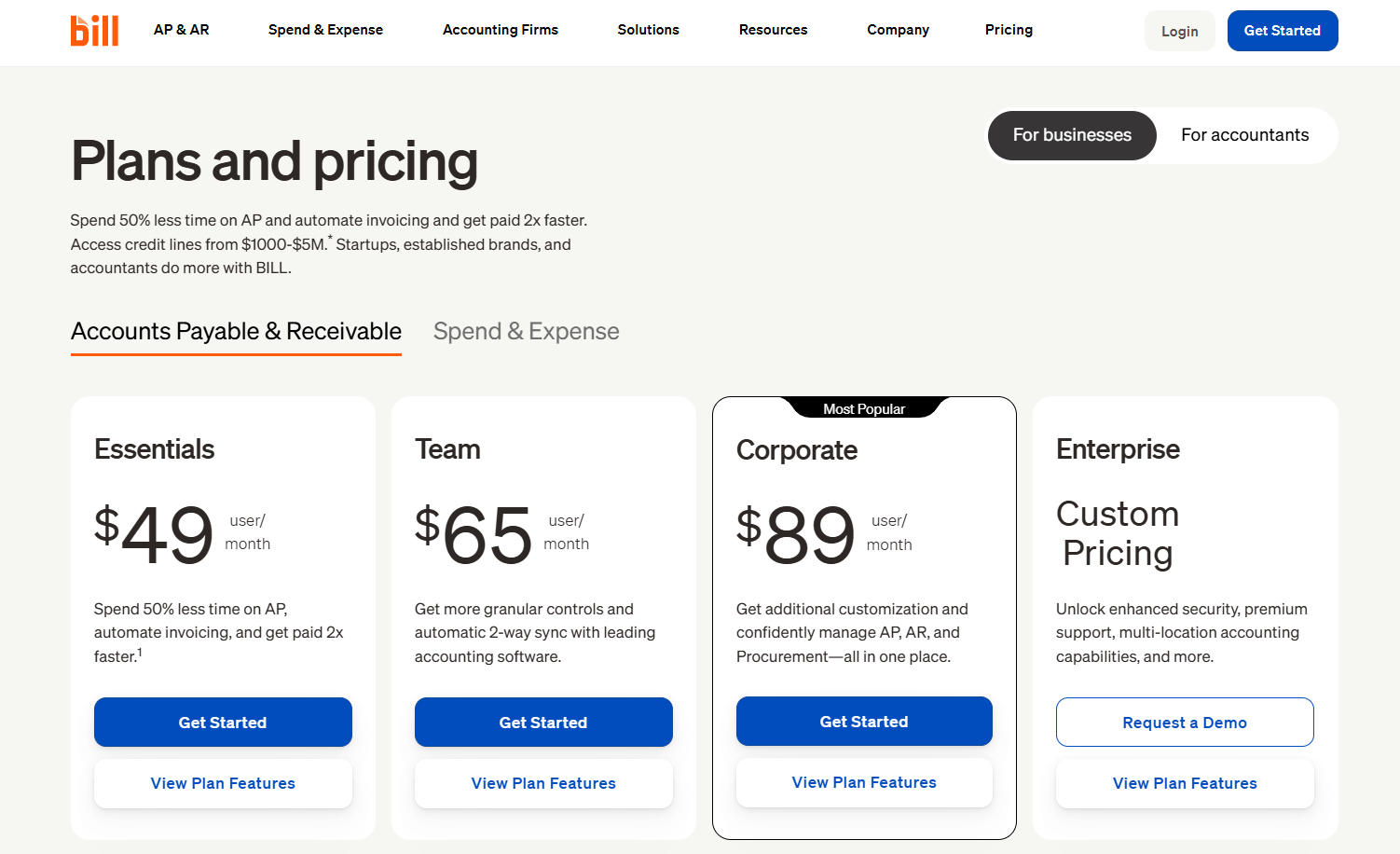
BILL offers four pricing tiers for its financial management solutions, ranging from $49 to custom pricing for enterprise-level needs.
Essentials plan: $49 per user/month.
- Reduces AP time by 50% or automates invoicing for faster payments.
- Includes basic AP and AR functionality.
- Offers live chat and phone support.
Team plan: $65 per user/month.
- Provides more granular controls.
- Features automatic 2-way sync with leading accounting software.
- Adds custom user roles.
Corporate plan: $89 per user/month.
- Offers additional customization options.
- Combines AP and AR management in one place.
- Adds custom approval policies.
Enterprise plan: Custom pricing.
- Provides premium support and access to more integrations.
- Offers multi-location accounting capabilities.
- Includes additional customization options.
Pros and Cons
✅ All-in-one platform for AP, AR, and expenses.
✅ Connects with your existing accounting stack.
✅ You can automate your accounts payable.
❌ One user mentions that they find it challenging at times to map and integrate custom fields or make changes to existing fields.
#6: Happay
Best for: Travel and expense management with AI-powered fraud detection.
Similar to: Xpence, Tipalti.
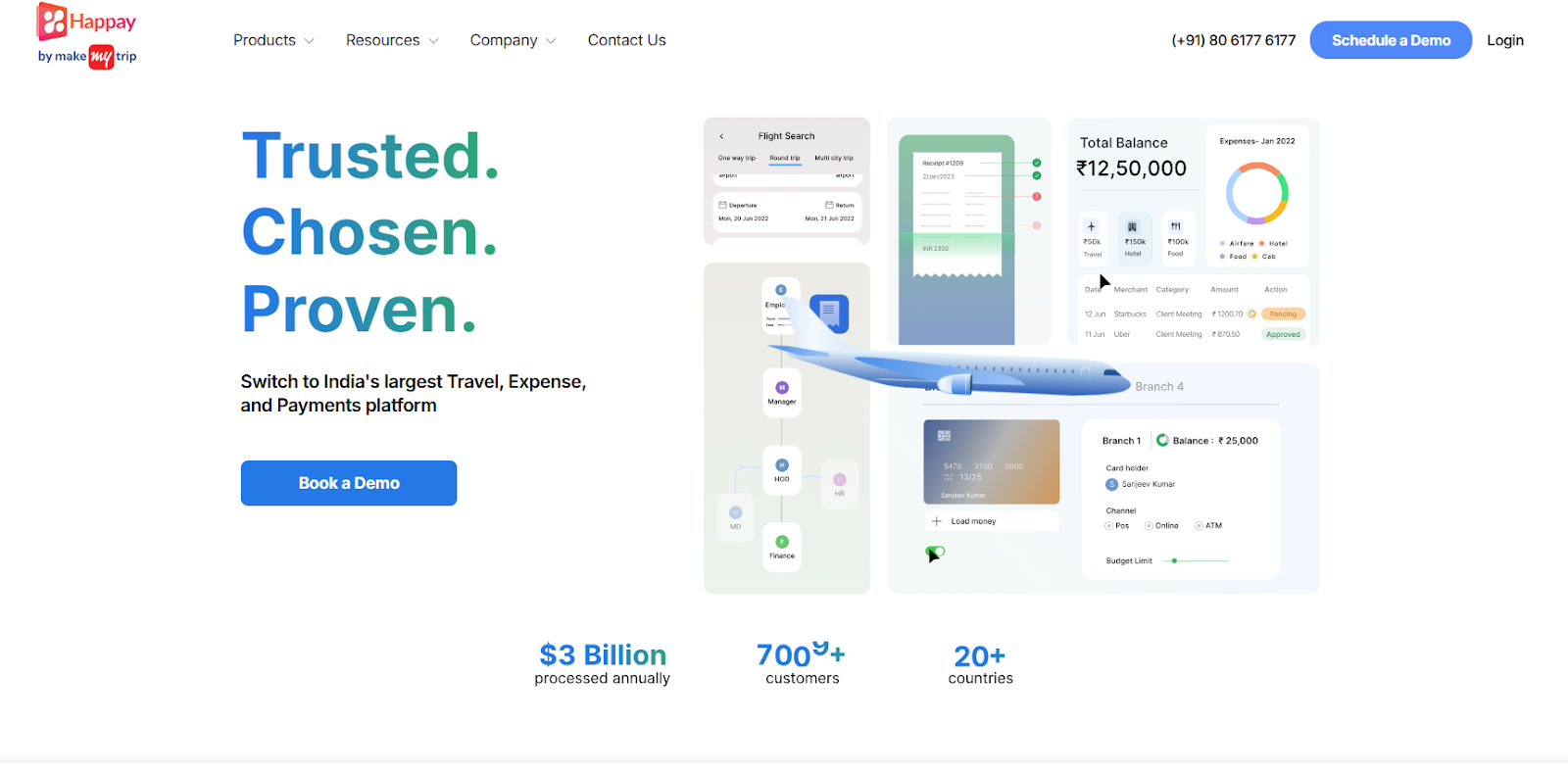
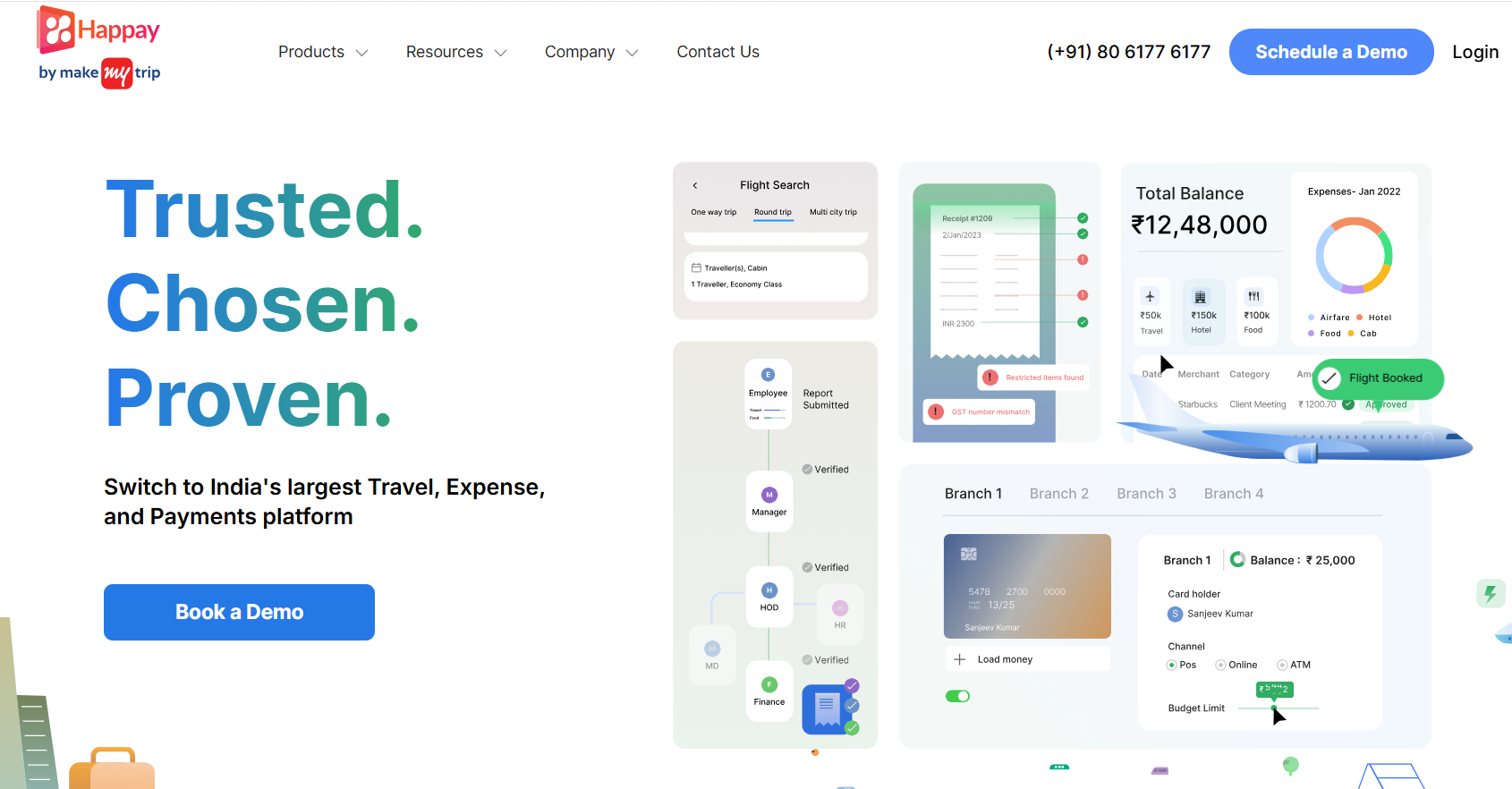
Happay automates the entire expense lifecycle, from pre-trip bookings to post-trip reconciliation, with a focus on reducing manual work for both employees and finance teams.
The platform's Smart Audit system is designed to catch things like duplicate bills, amount mismatches, and out-of-policy spending.
Features
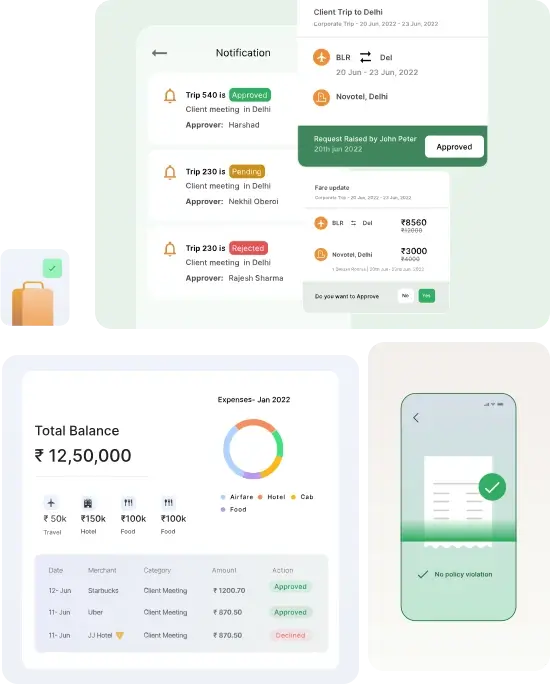
- AI-powered OCR that lets employees scan receipts and auto-capture expense fields in under a minute, removing the need for paper receipt storage.
- Smart Audit system with built-in checks for duplicate bills, amount mismatches, and policy violations.
- ReconX gives you a complete view of every trip with an on-demand reconciled statement, including travel booking details and payment data.
Pricing
Happay does not disclose its pricing, so you'd need to contact their team for a product demo and a quote.
Pros and Cons
✅ Good for managing travel-related expenses across your organization.
✅ Built-in fraud detection for duplicate bills and spending anomalies.
✅ Automated expense reporting that ties directly to employee trips.
❌ Pricing is not disclosed, so you have to reach out to their sales team.
#7: Tipalti
Best for: Global reimbursements across 196 countries in 120 currencies.
Similar to: Happay.
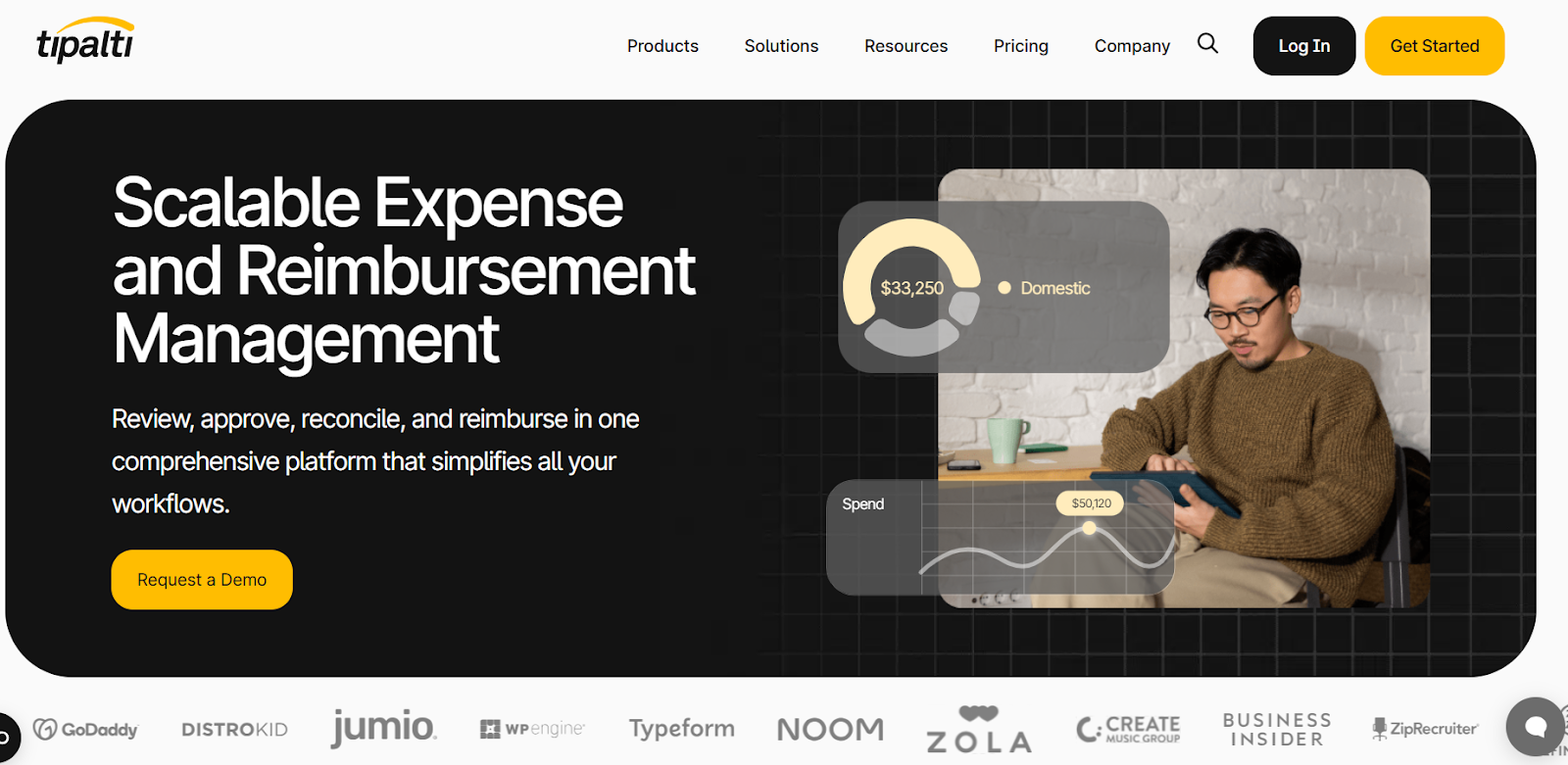
Tipalti offers a scalable expense and reimbursement platform that simplifies workflows for reviewing, approving, reconciling, and reimbursing expenses, especially for teams with international operations.
The platform supports card spending and reconciliation across Mastercard, Visa, AmEx, and its own Tipalti Card.
Features
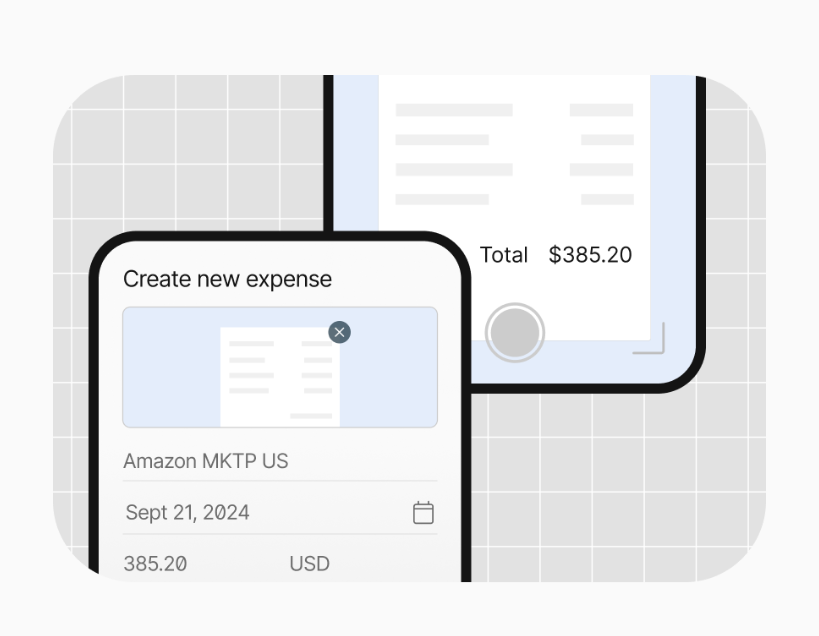
- Global reimbursements to 196 countries in over 120 currencies, using more than 50 payment methods.
- Corporate card integration that handles employee spending and transaction reconciliation across multiple card providers.
- Instant reconciliation that speeds up monthly close by 25% through connections with NetSuite, Sage Intacct, and QuickBooks.
Pricing
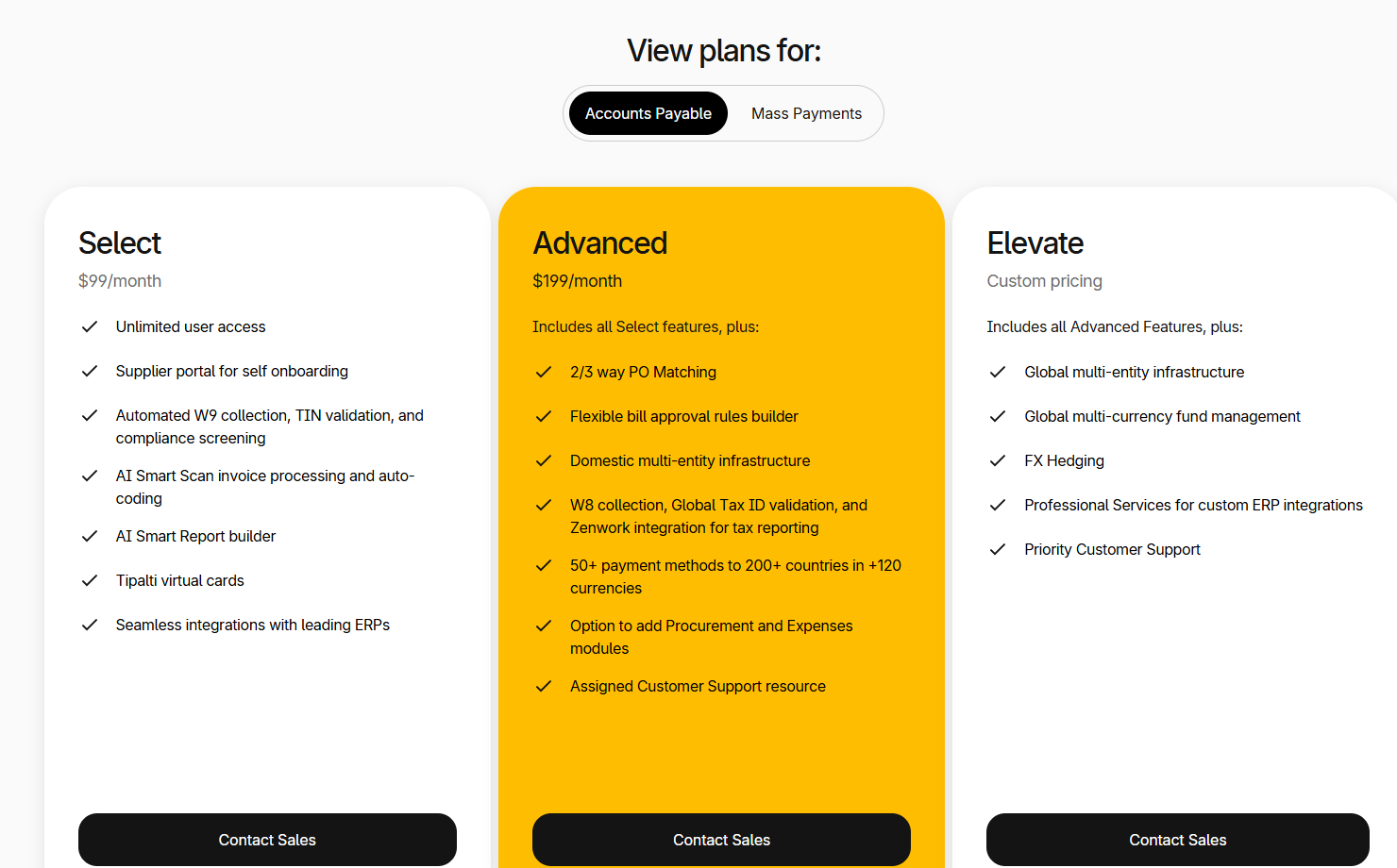
Tipalti offers three pricing tiers:
- Select: $99/month. Includes supplier portal, AI Smart Scan invoice processing, and ERP integrations.
- Advanced: $199/month. Adds global multi-entity and multi-currency infrastructure with 2 and 3-way PO matching.
- Elevate: Custom pricing. Fully featured procurement solution with Slack integrations and budget management.
Pros and Cons
✅ Automates accounts payable and cuts manual workload significantly.
✅ Suppliers can self-serve and update their own info, reducing email back-and-forth.
✅ Automatic sync with NetSuite saves hours on manual uploads.
❌ Higher starting price at $99/month than some of the other competitors on the market.
#8: HSBC Virtual Card
Best for: Managing large-value, high-volume supplier payments with bank-grade security.
Similar to: Airwallex.

HSBC offers a standalone virtual card platform where business leaders can create single-use and multi-use virtual cards for secure supplier payments.
It's a viable option for larger enterprises that need to handle high-volume repeat payments to vendors with enterprise-level fraud protection.
Features
- Generate unique account and card numbers for each transaction through HSBC's Virtual Cards Online Portal, with immediate payment processing.
- Personalized reporting and reconciliation tools that help you compare costs and keep expenses organized.
- Full compliance and security controls with fraud protection features and zero liability for unauthorized use.
Pricing
HSBC does not disclose the pricing terms for its virtual card, so you'd need to fill in a questionnaire and wait for the bank to follow up.
Pros and Cons
✅ Advanced fraud detection and transaction security capabilities.
✅ Online reporting insights that help you compare costs and control expenses.
✅ Streamlined payment processing for high-volume supplier payments.
Sign up for Pemo for free
The reason I believe Pemo is the best alternative to Pluto is that it removes some of the frictions that SMEs in the UAE face every day:
- Chasing employees for missing receipts at month-end.
- Manually categorizing every transaction before syncing to accounting software.
- Paying hundreds of dollars a month just to unlock features that you can get for free with other solutions.
Pemo helps finance teams shift their focus from manual reconciliation to strategic financial planning.
Sign up for Pemo's free plan or book a demo to see why 10,000+ businesses in the MENA region have chosen us.
⚠️ Disclaimer: This article was last updated on 26th of August, 2026, and if there's any misinterpretation of the information, please contact us, and we will fact-check it.


