
Below, I've pulled together 7 platforms UAE finance leaders are realistically choosing between when they look for an Airbase alternative, with notes on what each does best and the kind of team it suits.
TL;DR
- Pemo is the best Airbase alternative in 2026 for UAE SMEs seeking corporate cards, real-time expense management, and AI-driven accounting automation in a single product, with regional integrations and AED-native pricing.
- BILL, Tipalti, Spendesk, and Rydoo are worth a closer look if your priority is global AP automation, multi-country reimbursements, or procurement workflows that reach beyond cards and expenses.
What are the best alternatives to Airbase in 2026?
The best alternatives to Airbase in 2026 are Pemo and BILL.
Here's my shortlist of the 7 best Airbase alternatives on the market:
#1: Pemo
Pemo is the best Airbase alternative in 2026 for UAE finance teams that want cards, AP, expenses, and accounting automation inside a platform built around UAE accounting tools, AED pricing, and regional payment rails.

Full disclosure: Pemo is our platform, but I'll keep the breakdown honest about where we win and where we don't.
At a high level, Pemo gives you Visa and Mastercard corporate cards, AI-driven receipt capture, configurable approval flows, and a Copilot that pushes clean transaction data into QuickBooks, Xero, Zoho Books, Wafeq, Tally, and Microsoft Dynamics 365.
The whole product is shaped around how UAE businesses actually run, from the AED wallets to the interface.
Here's what I think makes Pemo a sharp fitfor UAE companies. 👇
Cards your team can actually use on day one
Issuing a corporate card in the UAE is supposed to be the easiest part of running a business. With most banks, it isn't.
With Pemo, every employee who needs to spend gets a card (virtual or physical) within minutes.
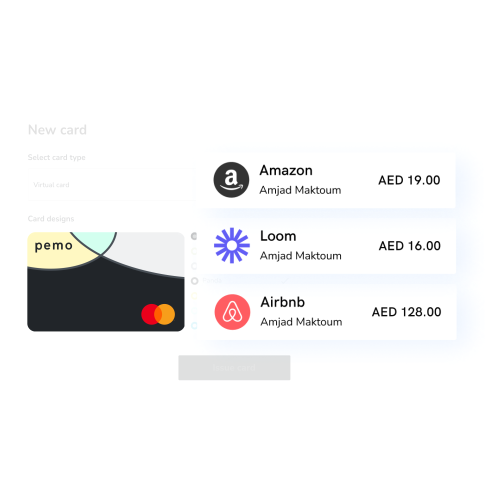
A few things our customers tend to notice early:
- Both card networks on one platform: Pemo issues Visa and Mastercard, which matters when certain merchants, government portals, or international vendors only accept one network.
- Unlimited virtual cards across every plan: Even on the free Kickoff plan, your team can spin up as many virtual cards as needed, ad spend, SaaS subscriptions, vendor payments, anything.
- Single-use cards for one-off purchases: Generate a card with an exact amount, use it once, and watch it auto-expire. Useful when you don't want a recurring charge sneaking in next month.
- Spend rules baked into every card: Daily, weekly, monthly, or yearly limits, plus restrictions by merchant category, vendor, or location. Cards can be frozen from the app the moment something looks off.
The cards work in stores, online, on Apple Pay, on Google Pay, and on Samsung Pay, with the standard Mastercard or Visa FX rates you'd expect anywhere else.
Expenses that don't pile up at month-end
The hardest part of spend management isn't the spending. It's everything that has to happen after.
UAE finance leads coming from Airbase often say the same thing: the platform handles US workflows well, but the receipt-chasing, VAT tagging, and approval routing weren't designed for how local teams actually close their books.
Pemo flips that around.
The moment a card is swiped, or a virtual card is used online, the transaction lands in the dashboard, and the cardholder gets a push notification asking for the receipt.
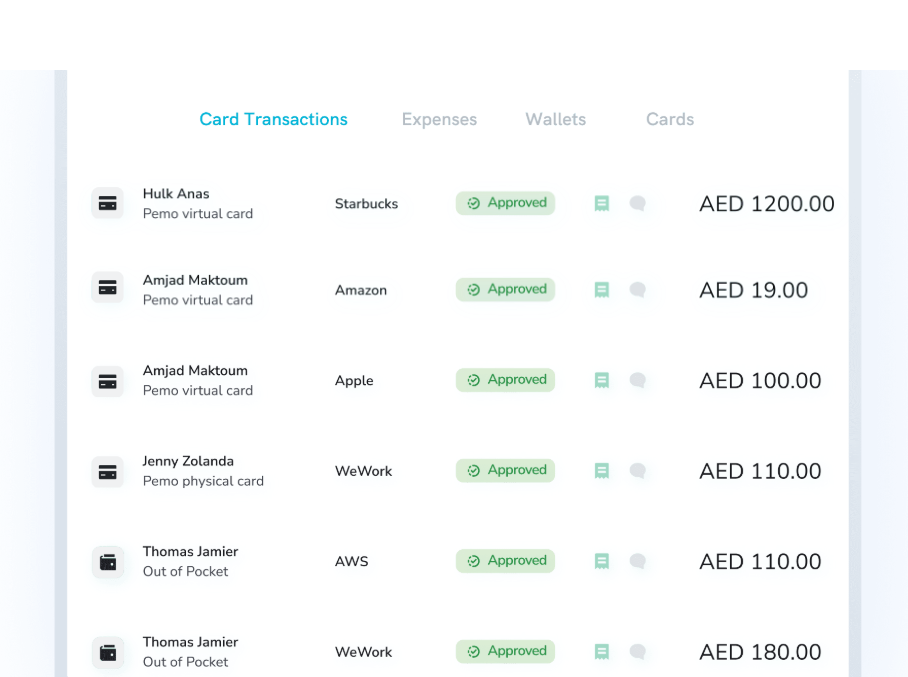
Inside that workflow:
- AI receipt matching: Snap a photo, and Pemo attaches it to the right transaction automatically. No manual coding.
- Approval flows that match your hierarchy: Marketing spend goes to the CMO, anything above AED 5,000 routes to the CFO, travel approvals head to the office manager, all configurable.
- Out-of-pocket claims in the same app: When someone pays with a personal card, they file the claim through the same flow and the same approval chain.
- VAT captured at the line level: Every receipt comes in with its VAT details already attached, so the monthly close turns into a review, not a data hunt.
For a 25-person team, the practical result is a finance lead going from 10 hours a month on receipts to roughly 30 minutes on exceptions.
Accounting automation built around the UAE stack
Pemo is engineered for the accounting tools UAE finance teams run on:
- Native integrations with QuickBooks, Xero, Zoho Books, Wafeq, Tally, and Microsoft Dynamics 365: Pemo Copilot pushes categorized, VAT-tagged transactions straight into your ledger.
- Auto-categorization that learns your Chart of Accounts: The longer you use it, the more accurate the GL coding, vendor assignment, and department tagging gets.
- Zero CSV exports and zero manual journals: Books stay current in real time, so closing becomes a sanity check instead of a project.
- Arabic interface and GCC VAT logic from day one: Built into the product, not added as an afterthought once a US team noticed the region existed.
Cashback and partner perks that turn spending into savings
Most spend management platforms don't compete on this, which is exactly why it's worth flagging.
Pemo gives up to 2% cashback on business transactions and access to a network of 300+ partner discounts, including Careem, Booking.com, talabat, CAFU, Carrefour, Google Ads, and Meta.

For an agency burning through AED 50,000/month in ad spend, the cashback alone covers the platform fee several times over.
Pemo's Pricing
Pemo's free Kickoff plan gives you up to 2 card users, unlimited virtual cards, single-use cards, expense management, AI receipt matching, invoice capture and payment, and accounting integrations.
For more cardholders and advanced features, Pemo has 2 paid plans:
- Essential: AED 29/month per cardholder, adds approval workflows, spend analytics, multiple wallets, advanced card controls, and 0.5% cashback on online ads.
- Business+: Custom pricing starting at 20 card users, with up to 2% cashback, a dedicated CSM, custom onboarding, priority support, and unlimited physical cards.

Want to learn more? You can sign up for Pemo's free plan or book a demo to see it in action.
Pemo's Pros and Cons
✅ Real free plan, not a demo.
✅ AED 29/month per cardholder is one of the most competitive entry points in the UAE.
✅ Direct integrations with QuickBooks, Xero, Zoho Books, Wafeq, Tally, and Microsoft Dynamics 365.
✅ Visa and Mastercard issued from the same platform, which many regional competitors don't offer.
✅ Invoice management with multi-level approval workflows included in every plan.
✅ Up to 2% cashback on business transactions and a 300+ partner discount network across Careem, Booking.com, talabat, and others.
❌ Top-ups go through bank transfers and aren't processed on weekends, which can create timing issues if your spending is unpredictable.
❌ Cards are prepaid, so there's no built-in credit line if your business needs spend-now-pay-later flexibility.
#2: BILL
Best for: Businesses that want a free corporate card and budget tool, paired with paid AP automation.
Similar to: Tipalti, Spendesk.
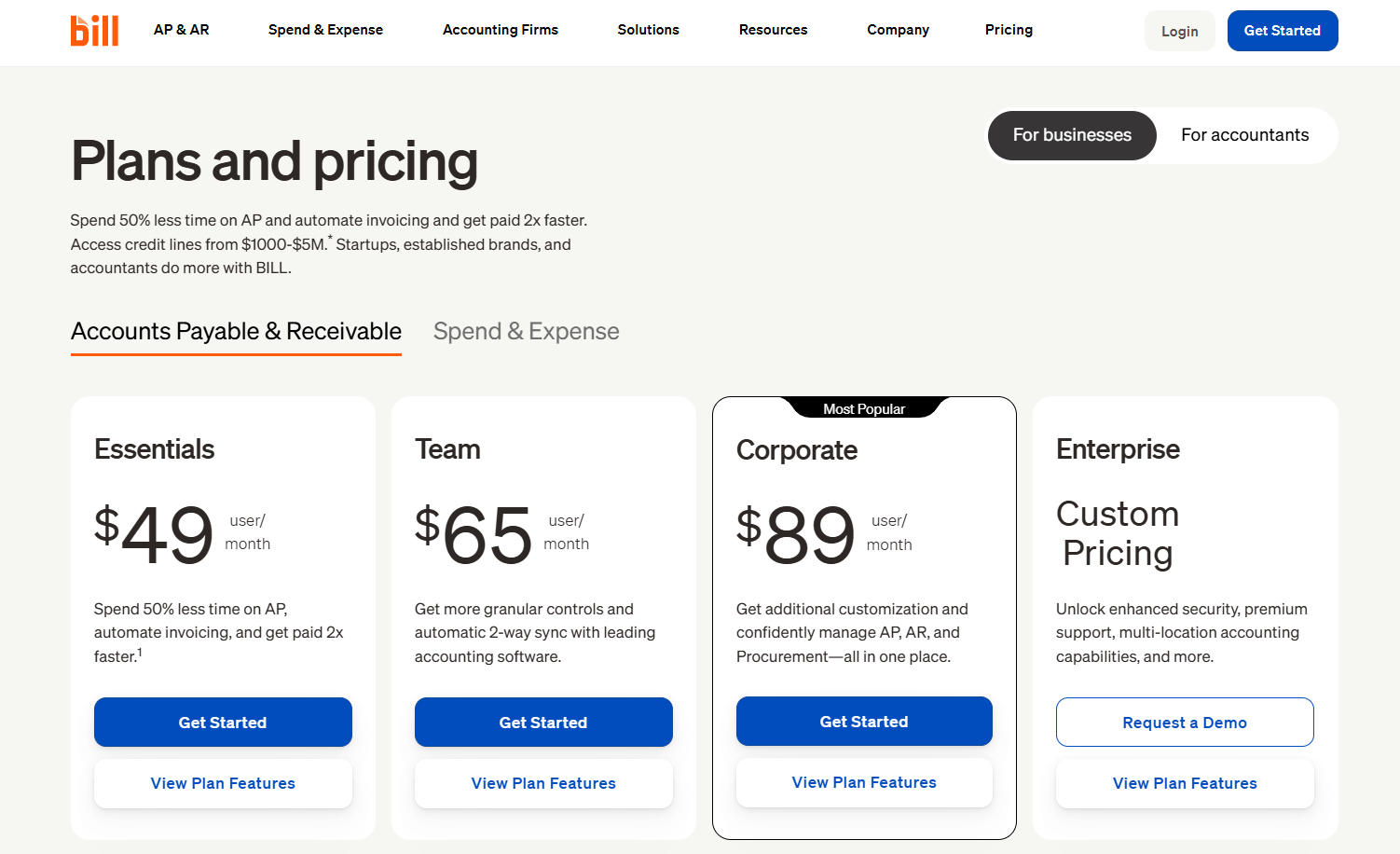
BILL is a US-listed financial operations platform that combines accounts payable, accounts receivable, and a free corporate card and expense management module called BILL Spend & Expense (formerly Divvy).
Where most platforms in this category bundle everything into one paid tier, BILL splits it. The card-and-budget side is free for qualifying businesses, while the AP automation sits behind a per-user subscription.
Features
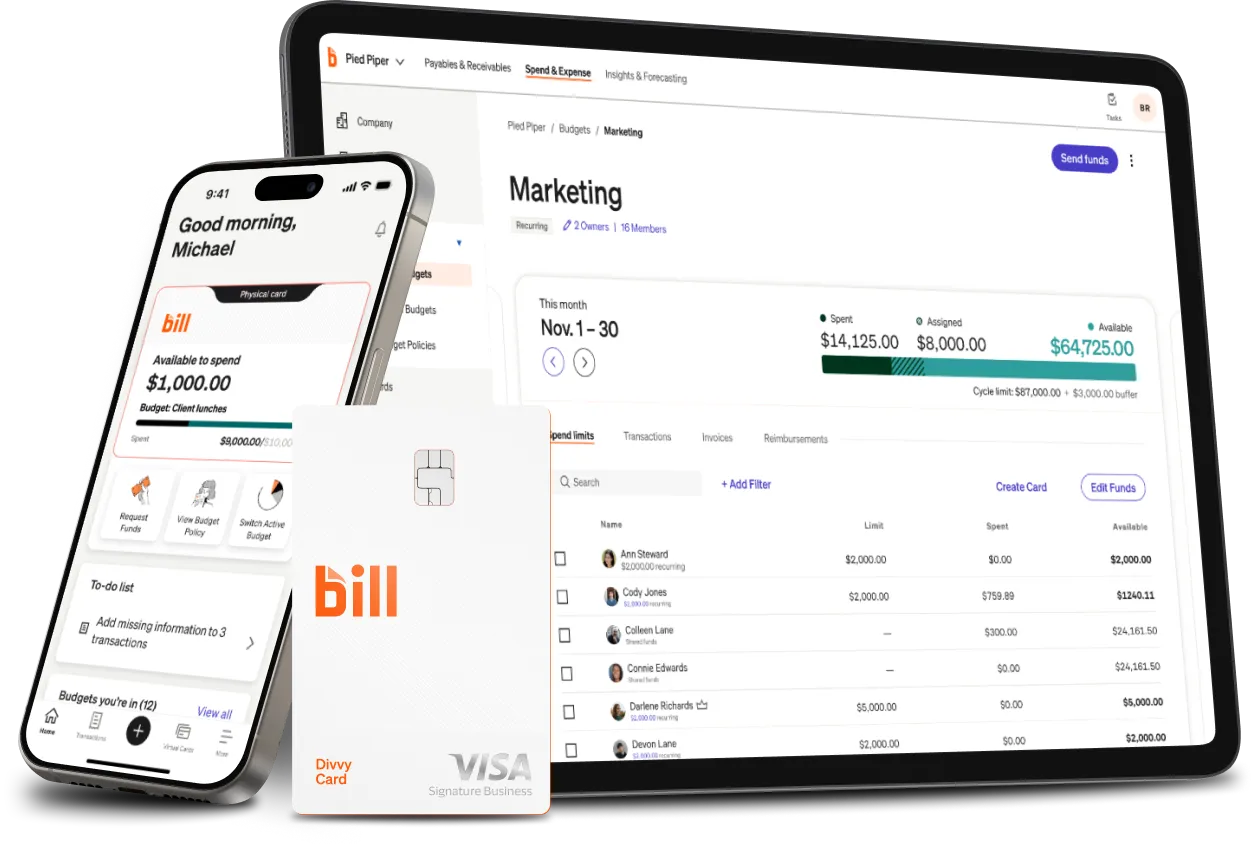
- BILL Spend & Expense: The free arm of the platform, formerly known as Divvy, which gives you corporate cards, budget controls, and access to credit (capped between $1,000 and $5 million for qualifying businesses).
- AP automation: Two-way sync with QuickBooks, Xero, Sage Intacct, NetSuite, and Microsoft Dynamics 365, plus configurable approval workflows.
- AR automation: Send digital invoices, accept payments, and track receivables inside the same dashboard.
- Accountant partner program: Multi-client management tools for accounting firms supporting AP and AR for small business clients.
Pricing
BILL Spend & Expense is free for qualifying businesses, with no monthly platform fee.
The AP and AR side of the product has 4 plans:
- Essentials: $45/user/month for core AP or AR automation, live chat and phone support, and basic approval workflows.
- Team: $55/user/month, adds two-way accounting sync, custom user roles, and more granular controls.
- Corporate: $79 to $89/user/month (depending on configuration), adds combined AP and AR, custom approval policies, and more advanced customization.
- Enterprise: Custom pricing for multi-location accounting, premium support, and additional integrations.
Pros and Cons
✅ Free Spend & Expense module.
✅ Strong AP automation with deep ERP integrations.
✅ Earns rewards on spending.
❌ Best fit for US-based businesses, so UAE companies may run into payment rail and currency limitations.
#3: Spendesk
Best for: European-style procure-to-pay needs.
Similar to: Airbase.
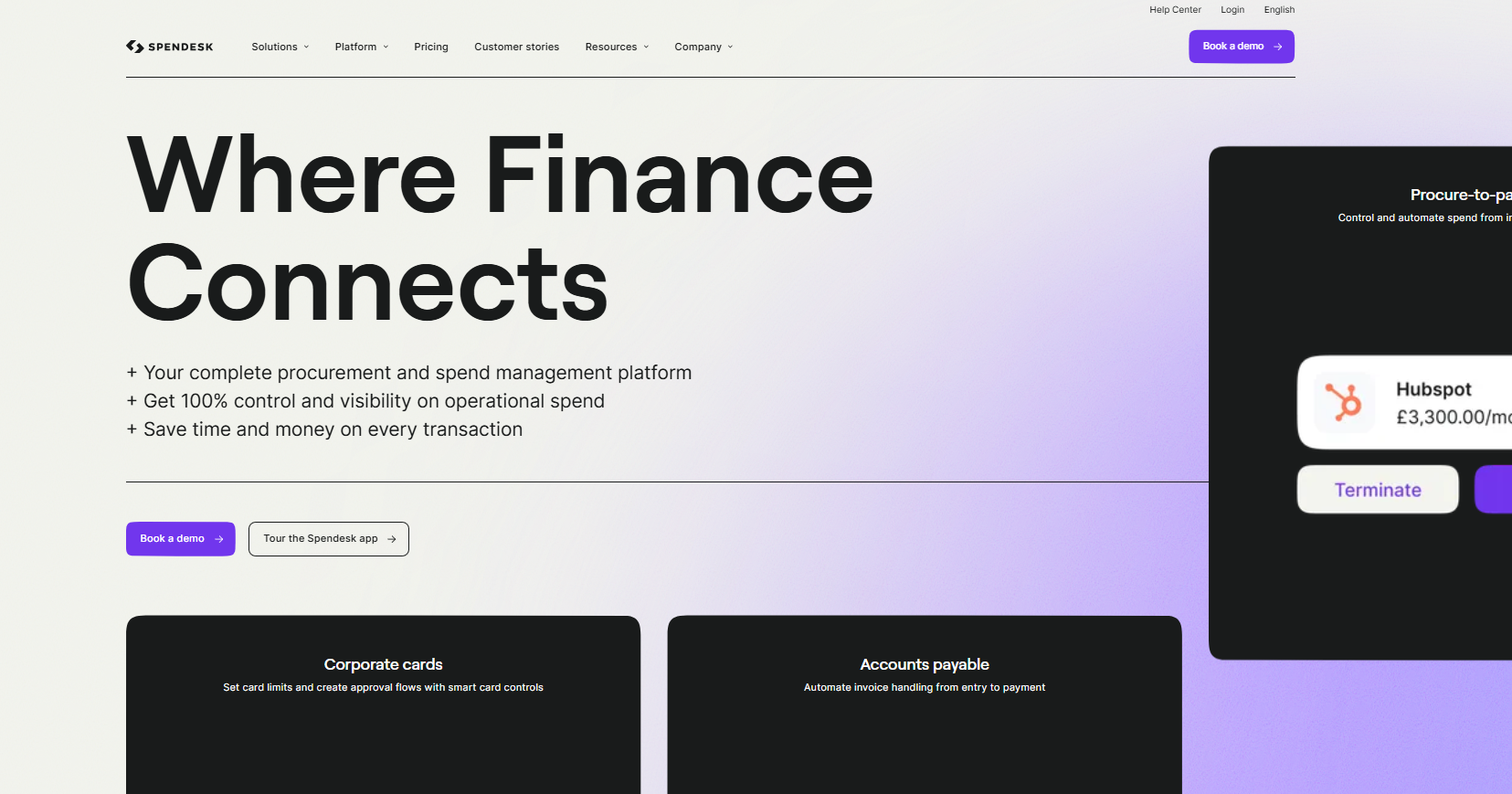
Spendesk is shaped around how mid-market finance teams across the EU run procurement, expenses, and AP.
Their main marketing claim is being the first European platform to fully combine procurement with spend management, and that integration is what makes Spendesk relevant for UAE teams with European subsidiaries or finance leadership coming from European companies.
Features
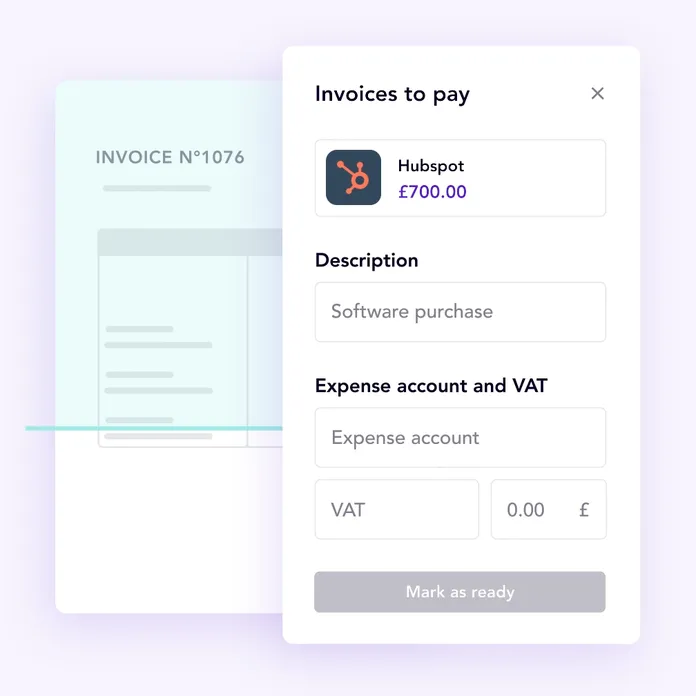
- Corporate cards with single-use options: Virtual and physical cards, plus support for Apple Pay and Google Pay.
- AI-powered receipt and invoice automation: OCR captures invoice details, flags duplicates, and routes everything through configurable approvals.
- Procure-to-pay module: Dynamic purchase requests, contract renewals, supplier management, and multi-step approvals in one workflow.
- Real-time budget controls: Pre-approval limits and decentralized spending policies at the team and project level.
Pricing
Spendesk doesn't publish pricing publicly. The platform has 3 plans (Essentials, Scale, and Premium), and the team will quote you based on company size and feature requirements.
Pros and Cons
✅ Strong AI automation across receipts, invoices, and approvals.
✅ Procurement and spend management in one platform.
✅ Used widely across European mid-market finance teams.
❌ A Trustpilot reviewer mentions that Spendesk’s support team took more than a week to get a reply and another week to get another reply.
#4: Tipalti
Best for: Global mass payments and multi-entity AP automation.
Similar to: BILL, Airbase.
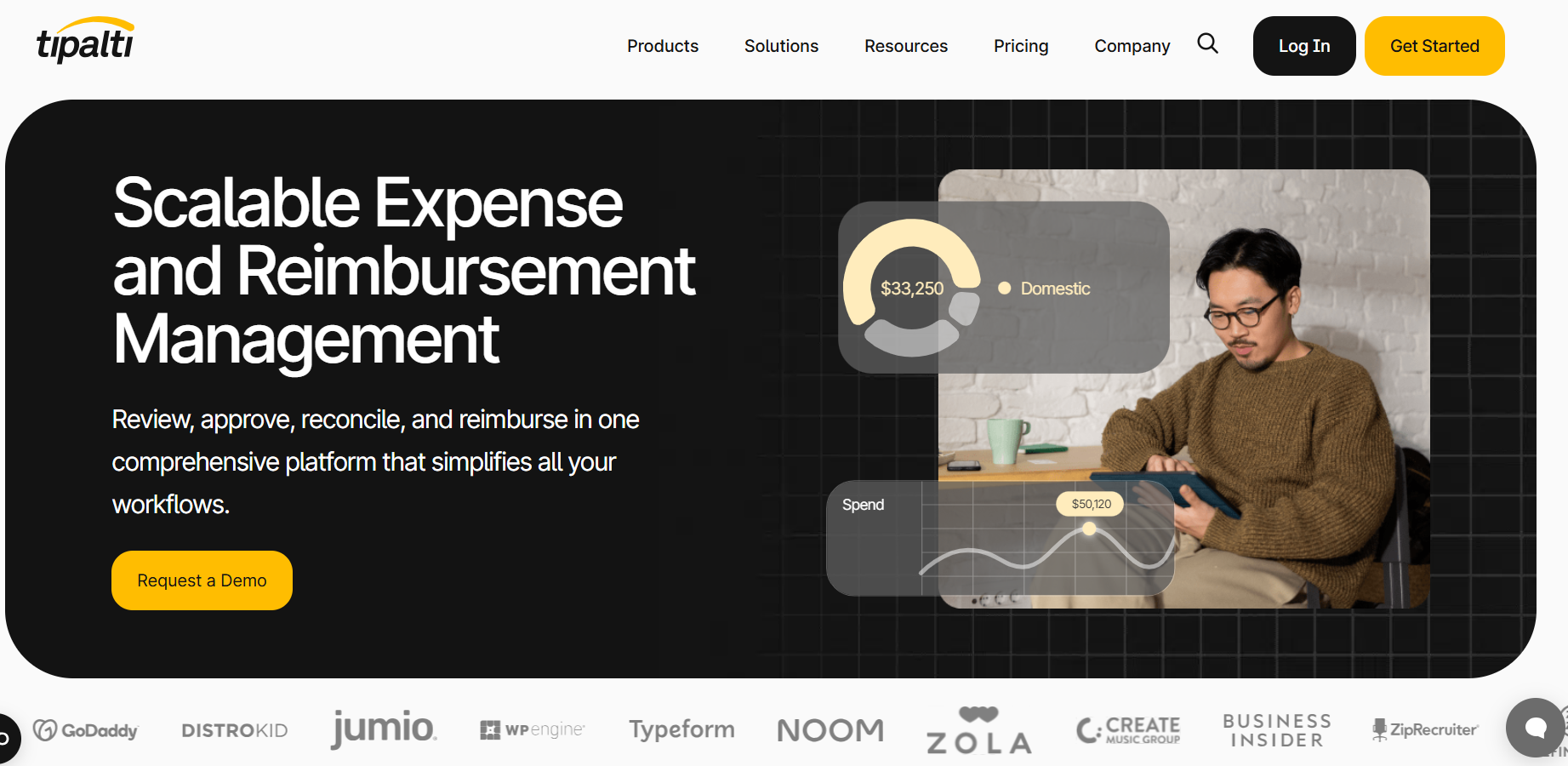
Tipalti is the heaviest, most enterprise-leaning option on this list. It's not a corporate card platform with AP bolted on. It's an AP and mass payments platform with cards bolted on.
Finance teams running multi-entity operations, paying contractors across dozens of countries, or handling tax compliance for international suppliers tend to land on Tipalti for those exact reasons.
Features
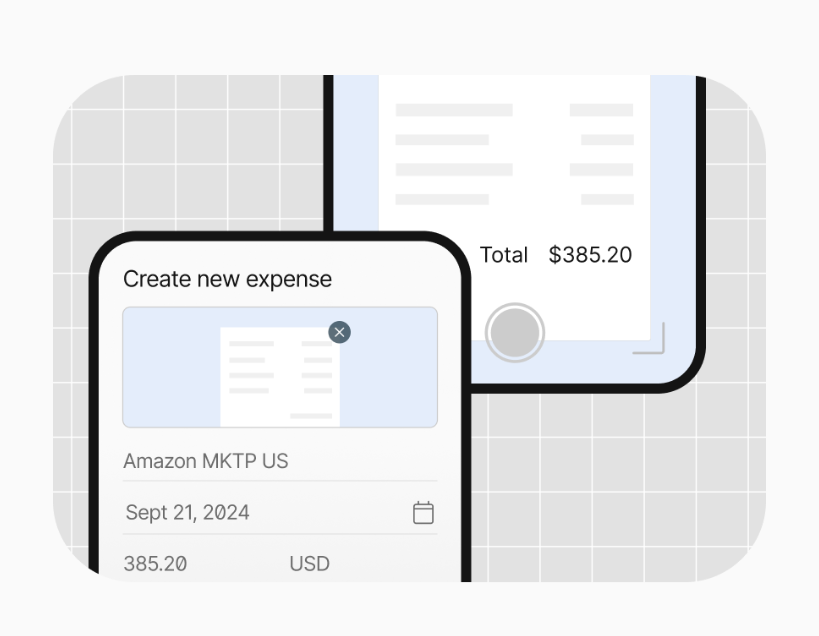
- Tax compliance built in: KPMG-approved tax engine that collects W-8 and W-9 forms, validates TINs, and handles self-billing inside the same workflow.
- Reach across 200+ countries: 120+ currencies and 50+ payment methods supported, so paying suppliers or partners in unusual jurisdictions stops being a manual exercise.
- Vendors onboard themselves: A branded portal lets suppliers fill in banking details, choose their payout method, and update info without finance touching it.
- AI-driven invoice intake: Smart Scan pulls fields off PDFs, applies your approval logic, and matches against POs to cut down on manual review.
Pricing
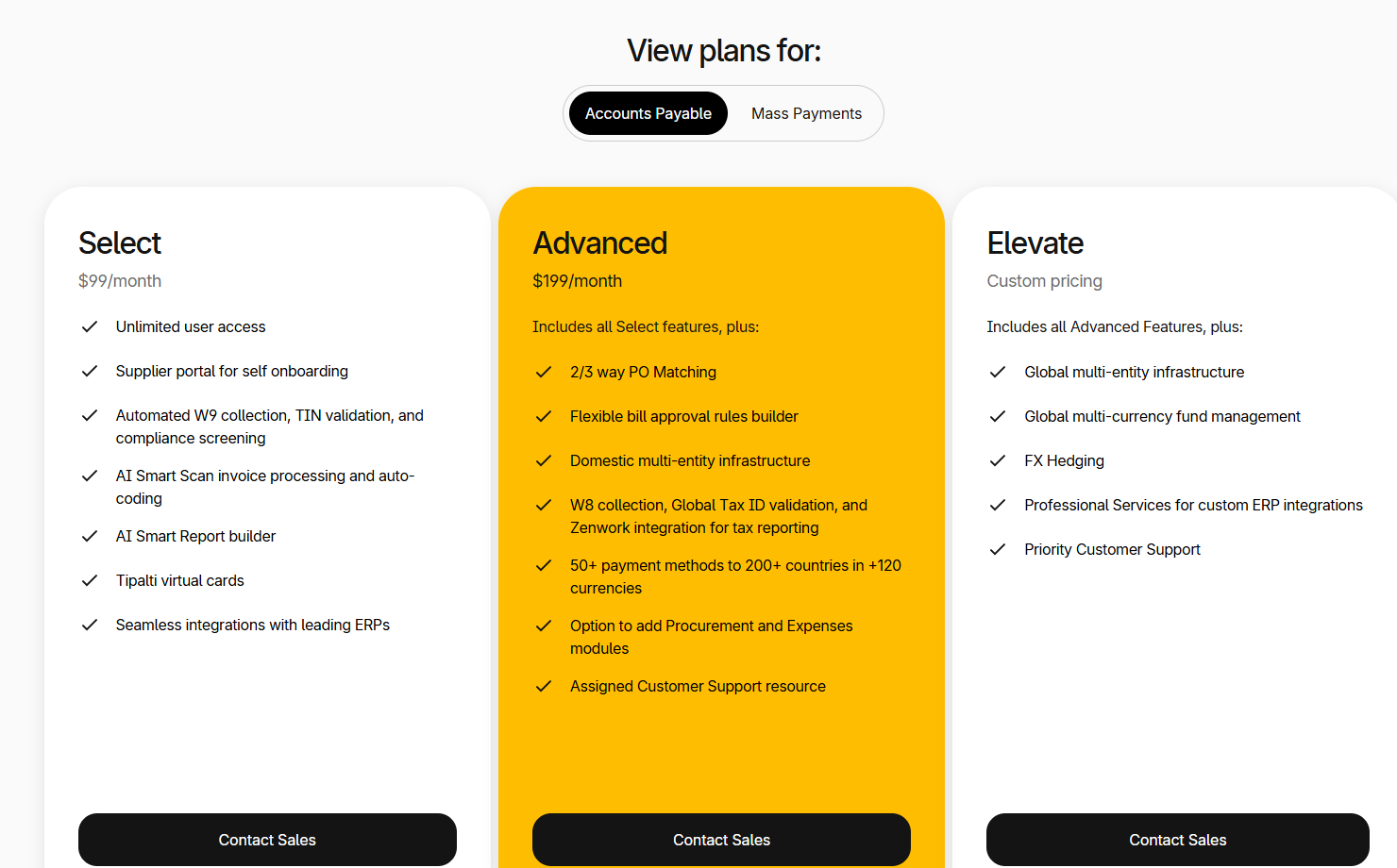
Tipalti has 3 AP plans, plus 2 mass payment plans:
- Select: $99/month, with self-service supplier onboarding, AI Smart Scan, flexible bill approval rules, and ERP integrations.
- Advanced: $199/month, adds basic procurement, multi-entity infrastructure, multi-currency support, and 2-way or 3-way PO matching.
- Elevate: Custom pricing for full procurement functionality, budget management, Slack integration, and 30+ workflow apps.
- Accelerate: Custom mass payments tier with payee self-onboarding and ERP API sync.
- Plus: Custom pricing, adds Tipalti Detect fraud monitoring, FX hedging, and self-billing.
Pros and Cons
✅ One of the deepest global payment networks on the market.
✅ Strong tax compliance and supplier onboarding tools.
✅ Two-way ERP sync with NetSuite, Sage Intacct, and others.
❌ Higher starting price at $99/month than some of the other competitors on the market.
#5: Rydoo
Best for: Finance teams focused on automating travel and employee expense workflows.
Similar to: Happay, Spendesk.
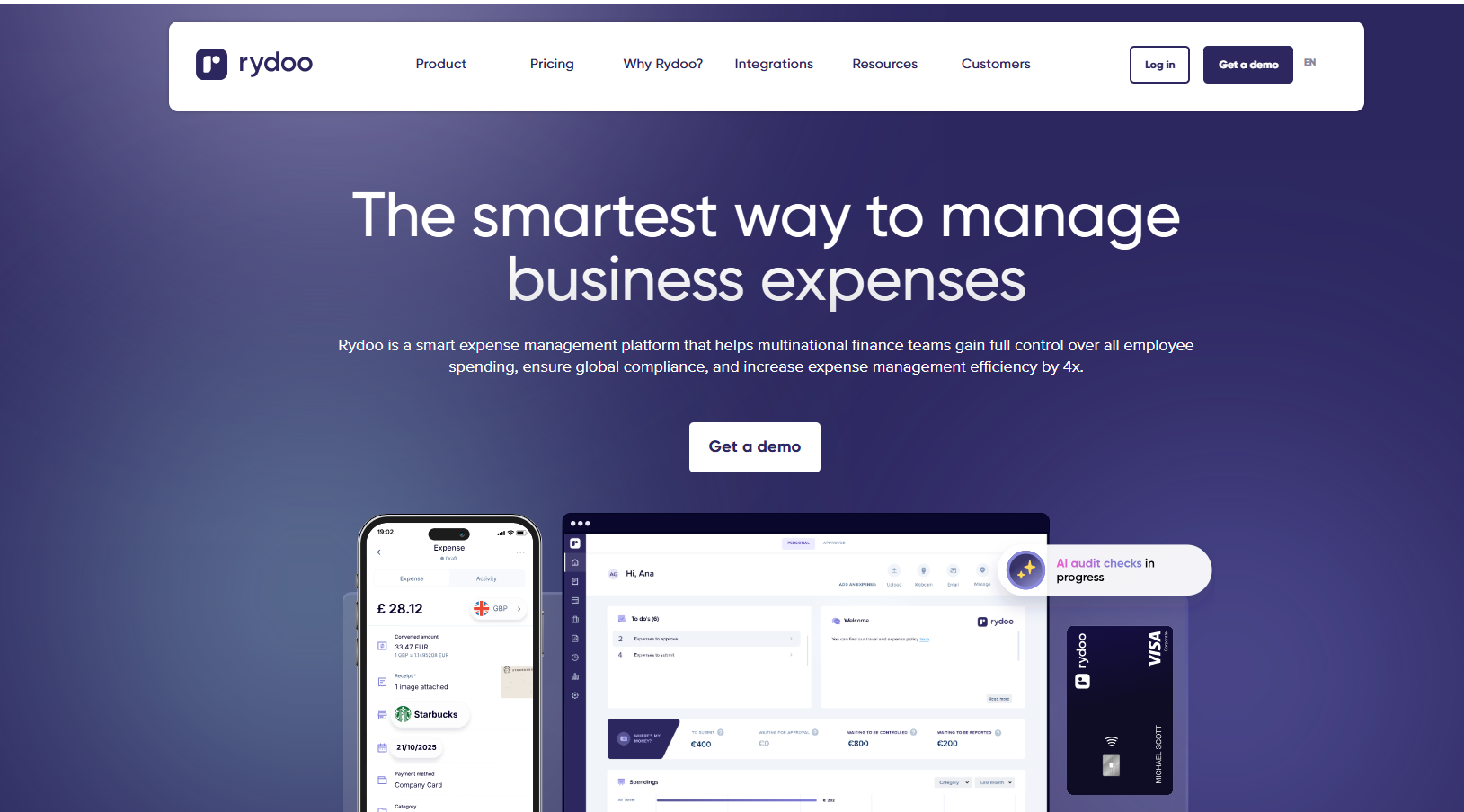
Rydoo isn't trying to be everything. It's an expense management product, full stop, with a strong AI layer for receipts, audits, and reimbursement workflows.
If your problem isn't corporate cards or vendor payments, but the manual cycle of submit-review-reimburse that runs every month, Rydoo is built around solving exactly that.
Features

- Smart Audit: AI-powered expense monitoring that flags non-compliant or suspicious claims automatically.
- Customizable policies: Configure spending controls, approval flows, and reconciliation rules per team or country.
- Fast receipt capture: A photo of the receipt populates the expense fields with 95%+ accuracy in around 10 seconds.
- Real-time reporting: Up-to-date financial data for monthly close and budget reviews.
Pricing
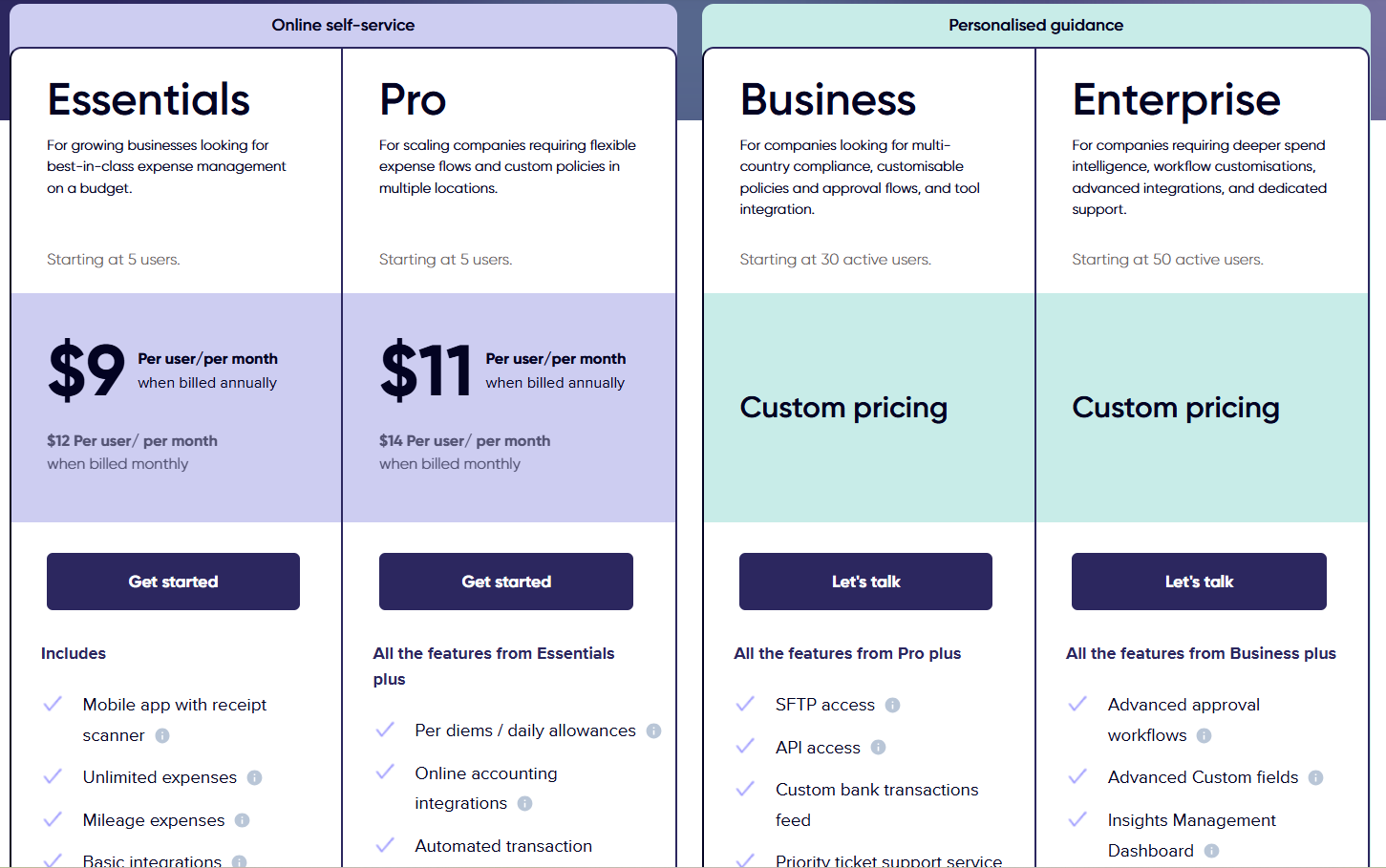
Rydoo has 4 pricing tiers, billed annually:
- Essentials: $9/user/month, includes the mobile app with receipt scanning, unlimited expenses, basic integrations, and local tax compliance.
- Pro: $11/user/month, adds per diems, online accounting integrations, customizable policies, and multi-country compliance.
- Business: Custom pricing, with SFTP and API access, custom bank transaction feeds, and priority ticket support.
- Enterprise: Custom pricing, adds advanced approval workflows, SAML SSO, an Insights Management Dashboard, and extended Sandbox access.
Pros and Cons
✅ Receipt scanning is fast and accurate.
✅ Clean mobile app that employees actually use.
✅ Per-user pricing scales smoothly with team size.
❌ Business and Enterprise plans do not have public pricing.
#6: Happay
Best for: Businesses that need travel-and-expense management with built-in audit checks.
Similar to: Rydoo, Tipalti.

Happay comes out of India and was built around a specific finance pain: travel claims at scale.
The product covers booking, in-trip spending, post-trip submission, and the audit checks that wrap around all three, which is why it tends to attract finance leads in industries where employees travel constantly and reimbursement volume is high.
Features
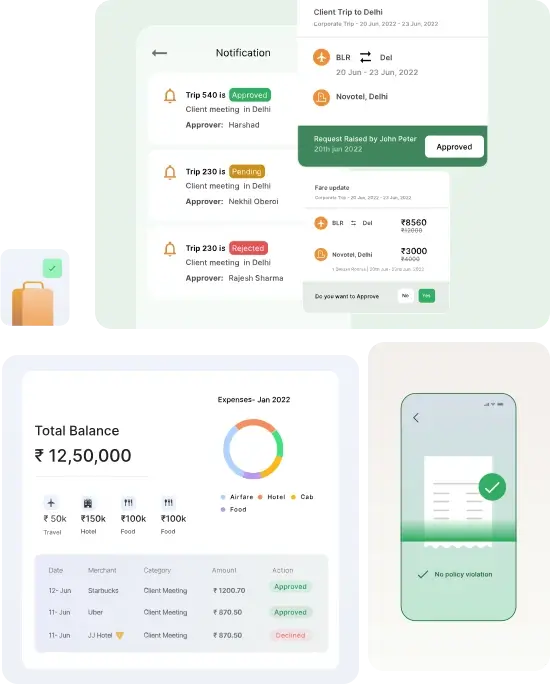
- AI-powered OCR: Scan receipts and capture expense fields in under a minute.
- Smart Audit: Built-in checks for duplicate bills, amount mismatches, and out-of-policy spend (different from Rydoo's Smart Audit despite the shared name; Happay's leans more travel-specific).
- Travel and expense integration: Map expenses against trips booked through Happay Travel for end-to-end reconciliation.
- ReconX: Automatically reconciled trip statements with travel, employee, and payment data in one view.
Pricing
Happay does not publish pricing.
You'd need to contact their team to get a demo and a custom quote based on team size and modules.
Pros and Cons
✅ Strong fit for travel-heavy finance workflows.
✅ Audit and fraud-detection layer is more mature than most expense tools.
✅ Automated expense reporting tied to trip data.
❌ Happay is quite limited as it's not able to handle transactions in foreign currency, according to one G2 review.
#7: Mamo
Best for: UAE small businesses that want a flexible payments platform with light expense management.
Similar to: N/A.
Mamo is a UAE-based payments platform with a different center of gravity from the rest of this list.
Where most spend management products start with cards and add expenses, Mamo started with payment acceptance (the ability to take payments from customers) and added corporate cards and expense management on top.
That makes it a fit for small businesses and freelancers who need a payments-first solution and want some expense management included.
Features
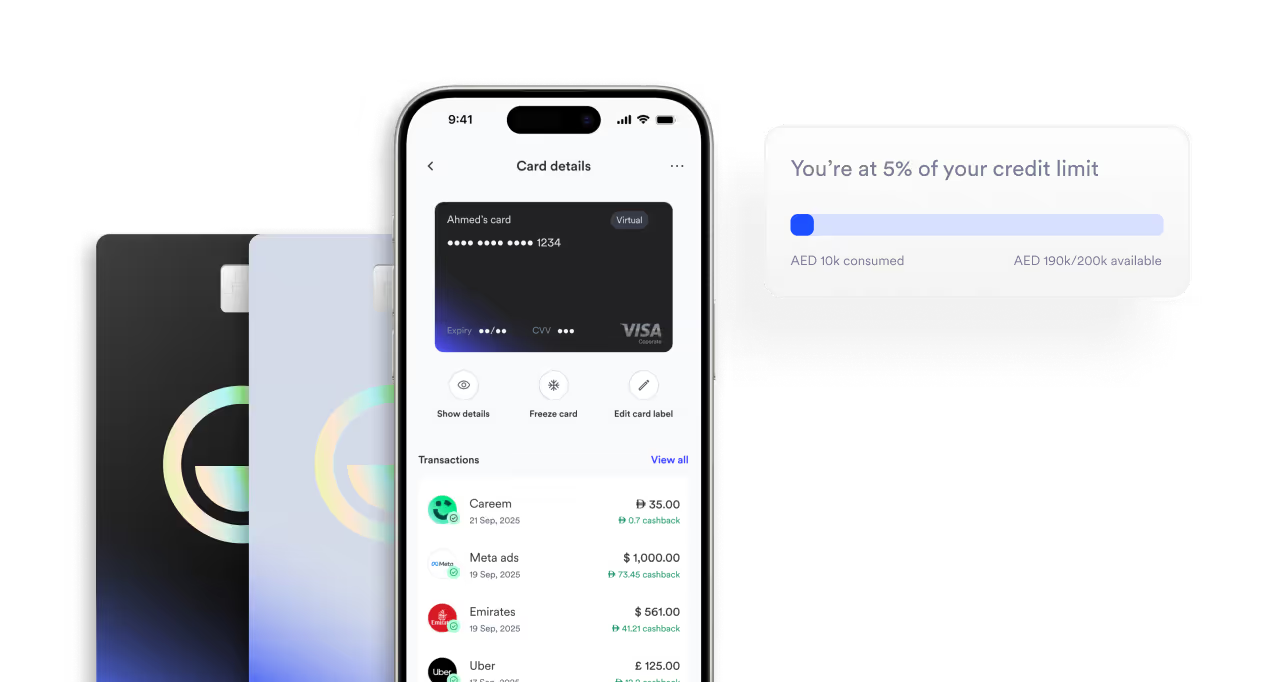
- Unlimited virtual and physical cards: With spending limits and category controls.
- Cashback on non-AED transactions: Up to 2% on cross-border spending.
- Payment APIs and e-commerce integrations: For businesses accepting customer payments alongside managing their own.
- PCI-DSS certified security: Real-time transaction monitoring, instant card freezing, and live updates.
Pricing
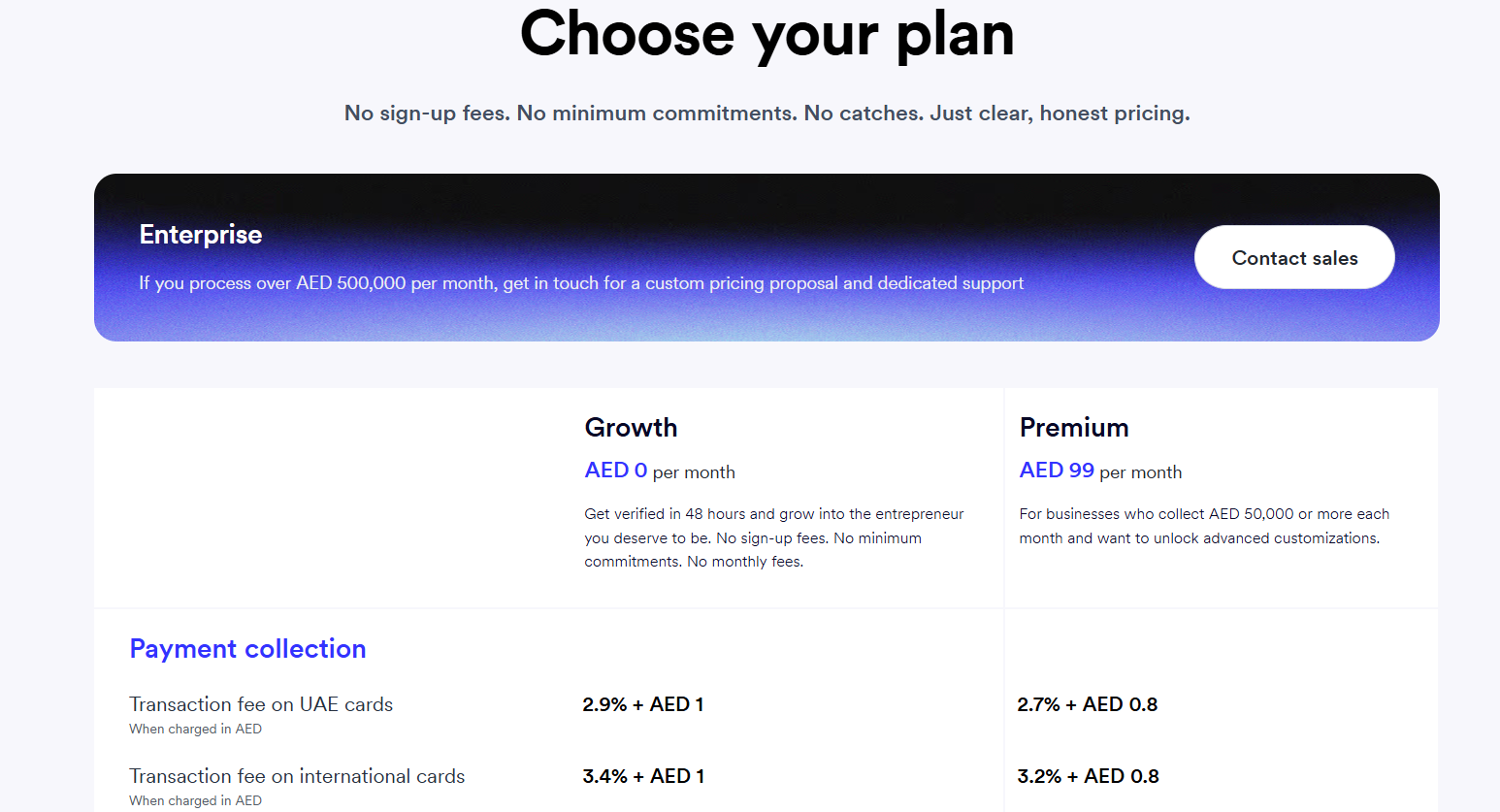
Mamo offers 3 pricing tiers:
- Growth: Free monthly fee, with 2.9% + AED 1 per transaction, includes corporate cards, payment APIs, and basic e-commerce integrations.
- Premium: AED 99/month, with 2.7% + AED 0.8 per transaction, adds free UAE ATM withdrawals and branded payment links.
- Enterprise: Custom pricing for businesses processing over AED 500,000/month, includes a dedicated customer success manager.
Pros and Cons
✅ Useful blend of payments acceptance and corporate cards.
✅ Cashback on cross-border transactions.
✅ Solid security with PCI-DSS certification.
❌ 2.9% plus AED 1 per transaction on the free plan can add up with heavy usage.
Try Pemo for free
Pemo is built the way UAE businesses actually run.
You issue Visa and Mastercard cards in minutes, capture VAT-tagged receipts at the moment of purchase, route approvals through workflows that match your hierarchy, and push clean transaction data into QuickBooks, Xero, Zoho Books, Wafeq, Tally, and Microsoft Dynamics 365 without lifting a finger.
Here's what comes with Pemo:
- A free Kickoff plan with up to 2 cardholders, unlimited virtual cards, AI receipt matching, invoice capture, and accounting integrations.
- AED-native pricing from AED 29/month per cardholder on the Essential plan, with no setup fees and no per-swipe charges.
- Up to 2% cashback on business transactions, plus 300+ partner discounts including Careem, Booking.com, talabat, CAFU, Carrefour, Google Ads, and Meta.
- An AI accounting layer (Pemo Copilot) that learns your Chart of Accounts and gets sharper the longer you use it.
Sign up for the free Kickoff plan or book a demo to see why over 10,000 businesses across the MENA region run on Pemo.
⚠️ Disclaimer: This article was last updated on the 8th of May, 2026, and if there's any misinterpretation of the information, please contact us, and we will fact-check it.


