
What follows is the deliberate version for 2026: the layers a UAE business needs and the tools we recommend for each.
TL;DR
- Pemo anchors the spend management layer end to end: corporate cards, receipt capture, invoice handling, travel expenses, and reimbursements in one platform.
- The ledger layer takes one of four tools: Wafeq for UAE-first books, with QuickBooks Online, Xero, and TallyPrime as the alternatives.
- Two tools cover the day-to-day for most UAE businesses: a spend platform synced straight into a ledger, from AED 57/month for the pair excluding VAT. E-invoicing is the third piece, and it needs an accredited service provider on top.
What is a finance stack?
A finance stack is the group of connected tools a business runs its money through, from the card that pays a supplier to the ledger that files the VAT return.
The word to watch is connected.
A card platform and an accounting package that never exchange data are not a stack.
They're two subscriptions and a re-keying job for whoever closes the month.
For a UAE business, the stack has two core layers.
Spend management and corporate cards handle the money going out, plus the receipts and travel expenses attached to it.
The accounting ledger records everything for VAT and corporate tax.
Receipt capture and travel expense tracking once needed their own tools; in 2026 the spend layer absorbs both, which is why the stack below runs shorter than the usual tool lists.
How do you build a finance stack for a UAE business?
You want to build the spend layer first, then work outward from it.
The order below avoids expensive rework: 👇
- Step 1, pick the spend layer: this is the layer that touches every dirham leaving the company, which makes it the wrong place to compromise.
- Step 2, choose the ledger it feeds: the layer your accountant works in and the one the FTA will eventually examine.
- Step 3, test the sync between the two: a direct integration on a sales page still deserves a live check with your own chart of accounts before you commit.
- Step 4, stop before tool sprawl: anything that duplicates the spend layer's capture or reporting adds a subscription without adding information.
Five criteria apply at every layer if you’re a business in the UAE:
- UAE availability: confirm the vendor serves UAE-registered businesses before shortlisting, since plenty of well-known global platforms don't.
- Billing currency: some tools display dirham prices yet bill in dollars, which moves your real cost with the exchange rate.
- FTA-ready records: the stack should produce tax invoices and VAT records in the shape a return needs, without a manual rebuild.
- ASP readiness: UAE e-invoicing routes through a Ministry of Finance Accredited Service Provider, and no ledger can report to the FTA on its own. Check whether your ledger is on the MoF accredited list, or whether you will be appointing an ASP alongside it.
- Layer-to-layer sync: every tool you add must push data into the ledger unaided, or the stack quietly turns back into data entry.
Here's the full map before the detail:
Pemo: the spend layer of the perfect UAE finance stack
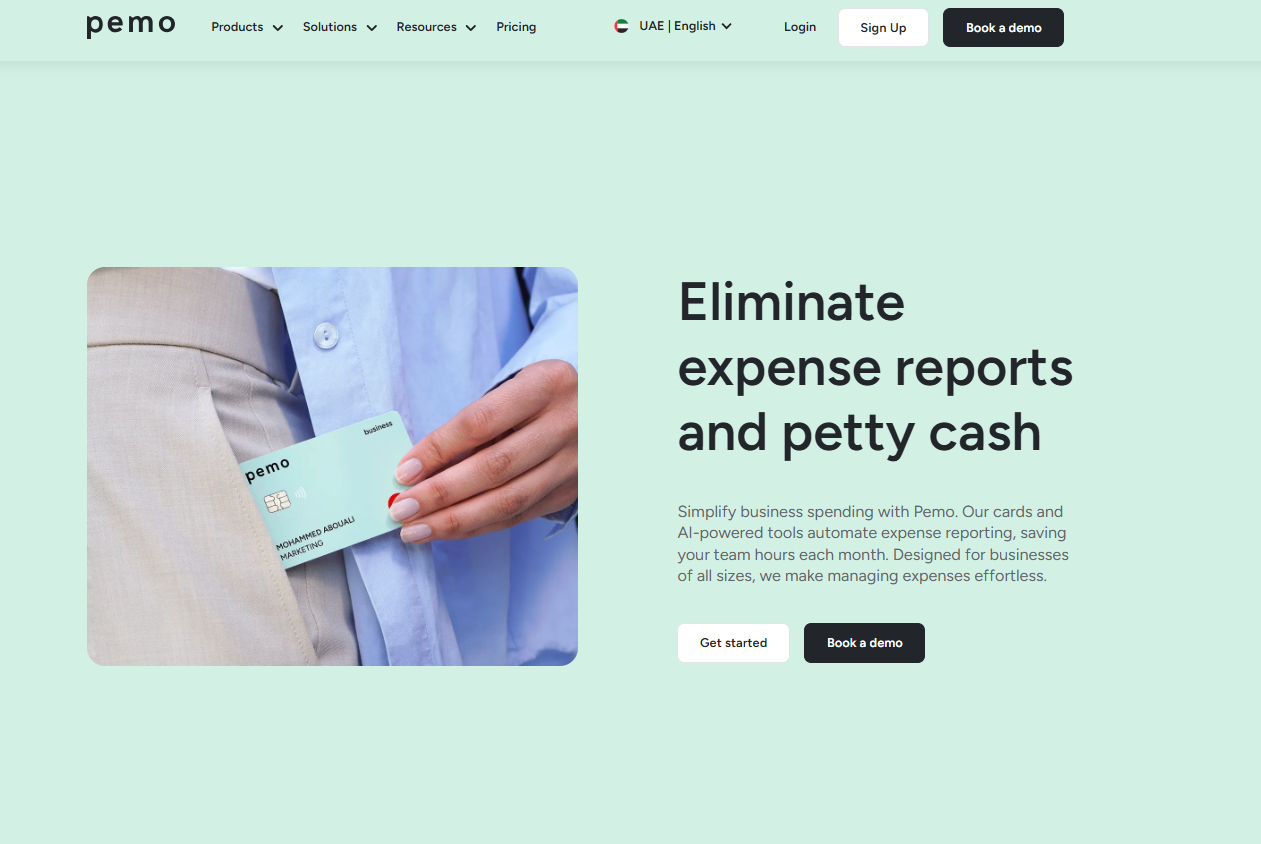
Pemo anchors the spend layer because the payment and its paperwork start in the same place, at the moment the card is used.
Here is how that works: 👇
Cards carry their rules before anyone pays
A written expense policy only works if something enforces it.
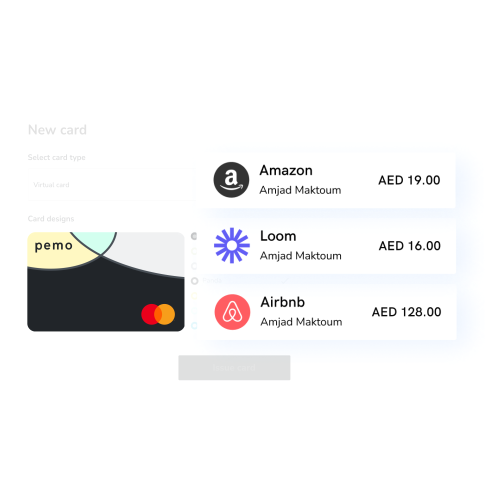
Pemo's answer is to attach the rules to the card itself, at the moment it's issued:
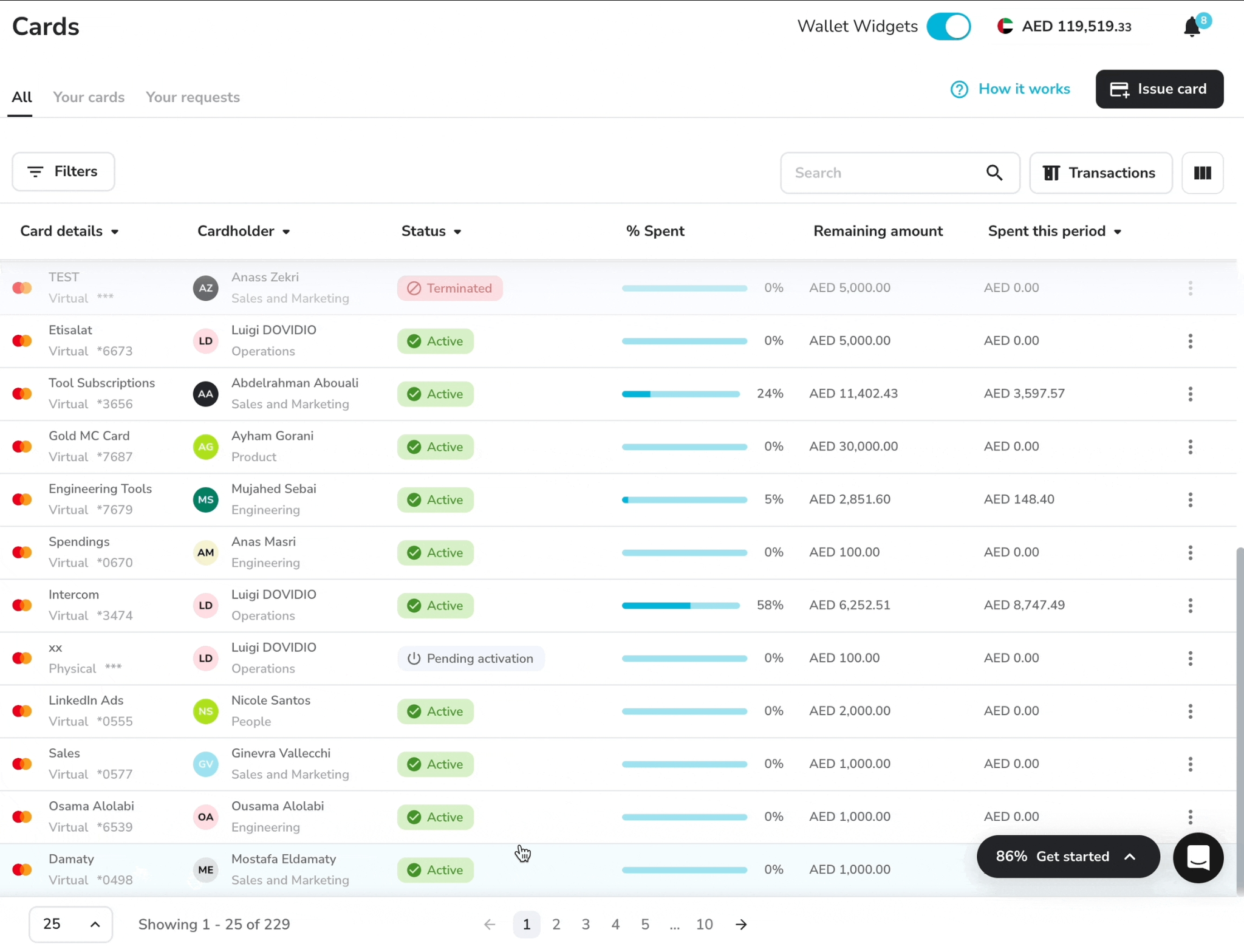
- Unlimited issuing: every plan includes unlimited cardholders, with physical and virtual cards uncapped too.
- One funding account: cards draw on a pre-funded wallet with a dedicated IBAN attached, money in and money out in one place.
- Limits at creation: a single-purchase cap, or ceilings across a daily, weekly, monthly, or yearly window.
- Category locks: Premium restricts a card to a merchant category, fuel-only or ads-only for example.
- Single-use cards: virtual cards built for one payment, expiring once it runs.
- Mobile wallets: Apple Pay, Google Pay, and Samsung Pay all work.
Receipts and coding happen without the chase
Most month-end pain is really paperwork lag: the money moved weeks before anyone documented it.
Pemo closes that lag at the moment of purchase:
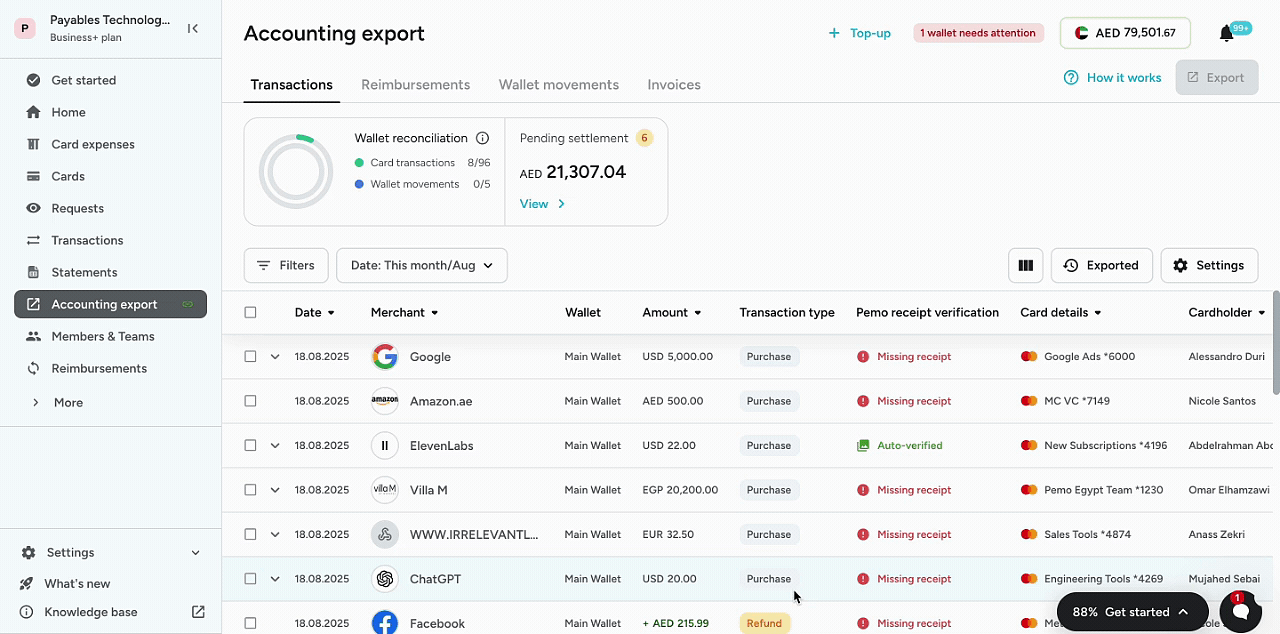
- Prompt at purchase: a push notification asks the spender for the receipt right at the point of sale.
- Two ways in: a photo from the phone or an email forward, either one landing in the same place.
- Copilot matching: each receipt pairs to its transaction, no search involved.
- Missing-receipt flags: anything unaccounted for gets surfaced, with reminders and duplicate detection on Premium.
- Coding written for you: category, vendor, VAT details, and financial dimensions filled in, sharpening with every month of history.
- Vendors created automatically: unrecognised suppliers get set up without a manual step.
Approvals run in layers, before the money leaves
Approval flows usually review spending that already happened.
Pemo puts the sign-off in front of the payment:
- Approval-based cards: a purchase holds until someone signs off, with pre-approval cards for decisions made ahead of time.
- Multi-layer workflows: on Premium, a large commitment collects several sign-offs before it clears.
- Maker-checker: the person requesting a card change and the person confirming it can't be the same, also a Premium control.
- Sub wallets: the balance splits by team, three on Premium, uncapped on Enterprise.
- Instant freeze: any card locks from the app in seconds.
Travel expenses run on the same rails
Business travel is where expense tools usually fall apart, since the spending happens far from the office and the receipts come home crumpled.
On Pemo, a trip is just another set of cards with rules attached:
- Trip cards: issued per traveller or per booking, with the budget set before departure.
- Category rules: a travel card can hold to travel and dining, with anything else declining at payment.
- Vendor locks: a card can authorise a single supplier only, handy when one airline or hotel group carries the whole trip.
- Single-use bookings: prepaid flights and hotels run on a card that closes once the charge clears.
- Live visibility: trip spend builds in real time, split by traveller and by category, before anyone lands back home.
- Out-of-pocket capture: cash and personal-card costs log with a receipt photo attached, part of the Premium tier.

Companies with constant multi-country travel sometimes add a dedicated booking system on top, though most UAE SMEs won't need one.
The ledger receives coded entries
None of the above helps if a bookkeeper still re-keys it all at month-end.
The hand-off into accounting is direct:
- Native sync: QuickBooks, Xero, Zoho Books, and Wafeq connect directly, with Odoo, Tally, and Mazeed covered too.
- ERP reach: premium plans connect Microsoft Dynamics 365 Business Central, Microsoft F&O, Oracle NetSuite, and SAP.
- Everything else: a custom API build or a configurable CSV export handles systems outside that list.
- Wallet forecast: every plan sets committed outflows against the current balance.

💡 Pemo customers report closing their books up to 5 times faster once this pipeline replaces manual entry.
Pemo's pricing
Pemo moved to its current three-plan structure on 1 July 2026, priced per company.
Users and cards stay unlimited on every plan.
- Starter: AED 0/month, free of SaaS fees, with nothing locked in. Cards, real-time expense records, receipt matching, and accounting sync come included.
- Premium: AED 399/month for the whole company, covering reimbursements, non-card expenses, merchant category restrictions, and layered approvals.
- Enterprise: from AED 1,500/month, adding budgets, developer API access, custom ERP work, unlimited sub wallets, and cards for staff based outside the UAE.
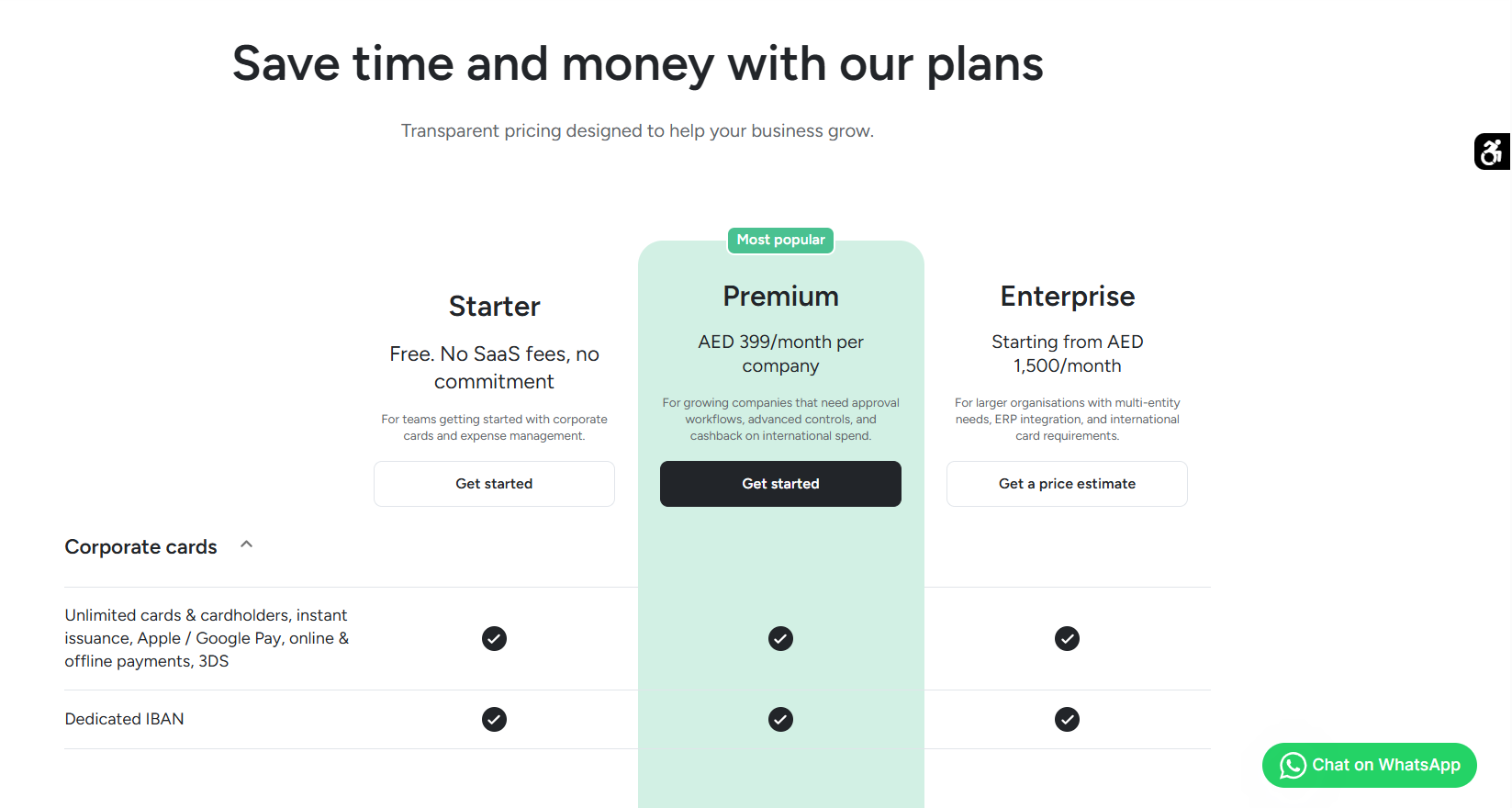
International spend pays cashback at 0.5% on Starter, rising to as much as 2% on Premium.
Weigh the FX side first: accounts with KYB approved from 1 July 2026 pay a 3.68% FX fee including VAT, which can outweigh the cashback.
Which accounting software anchors the ledger layer in the UAE?
Wafeq is the closest fit for a UAE-first ledger, with FTA-compliant invoicing built in from the start.
QuickBooks Online, Xero, and TallyPrime round out the layer, each suiting a different working style.
Every ledger below connects to Pemo without manual exports.
Wafeq
Best for: A ledger built for UAE and Saudi books, with bilingual FTA-compliant invoicing.
Similar to: QuickBooks Online, Zoho Books.
Stack fit: Wafeq holds a direct Pemo integration, backed by a partnership between the two companies.
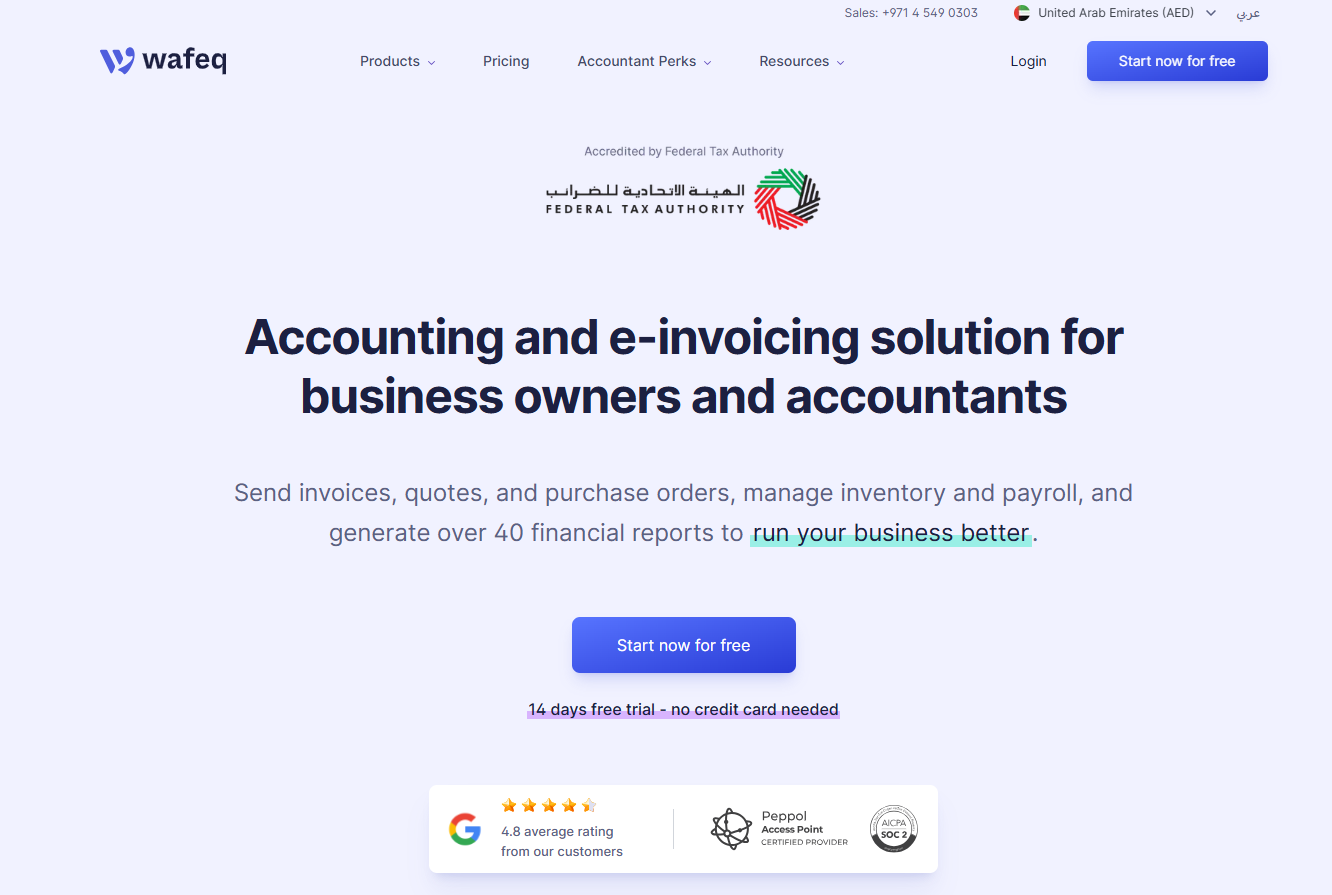
Most accounting products treat the UAE as a localisation project.
Wafeq began here, with a separate edition for the UAE and for Saudi Arabia, which shows in what comes as standard:
- Bilingual invoicing: Arabic and English, on formats the FTA accepts.
- Returns from the ledger: VAT and corporate tax filings assemble from records already in the books.
- AI bill scanning: documents arrive by upload or over WhatsApp, singly or in batches.
- Bank reconciliation: connection and matching included on the entry plan.
- Claims and payroll: employee expense claims and payroll join at the Premium tier.
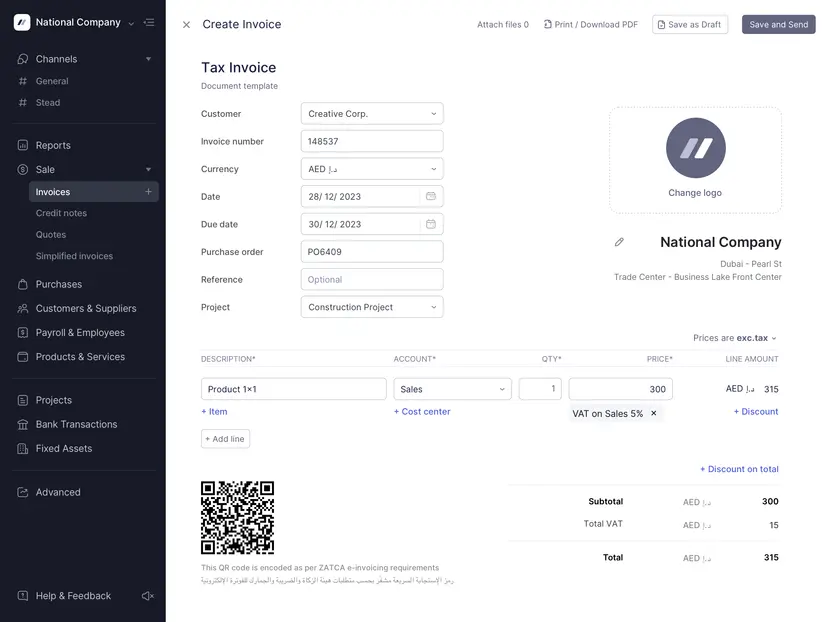
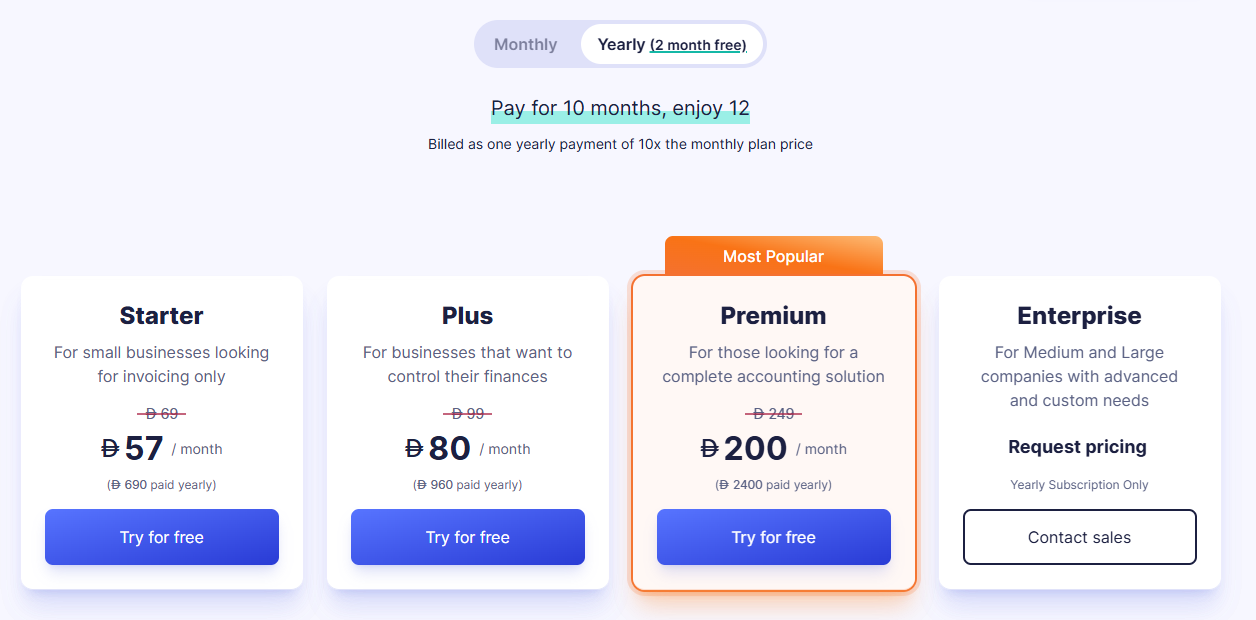
And here’s Wafeq's UAE pricing, in dirhams:
- Starter: AED 57/month billed annually, or AED 69 monthly, for invoicing and core bookkeeping.
- Plus: AED 80/month billed annually, or AED 99 monthly, adding purchase invoices, purchase orders, recurring invoices, and branch management.
- Premium: AED 200/month billed annually, or AED 249 monthly, adding payroll, employee expense claims, inventory, and consolidated reporting.
- Enterprise: custom pricing for larger organisations.
QuickBooks Online
Best for: Teams whose accountant already works in QuickBooks.
Similar to: Xero, Wafeq.
Stack fit: A direct Pemo connection, with bank-feed matching and VAT tracking for FTA returns inside the ledger.
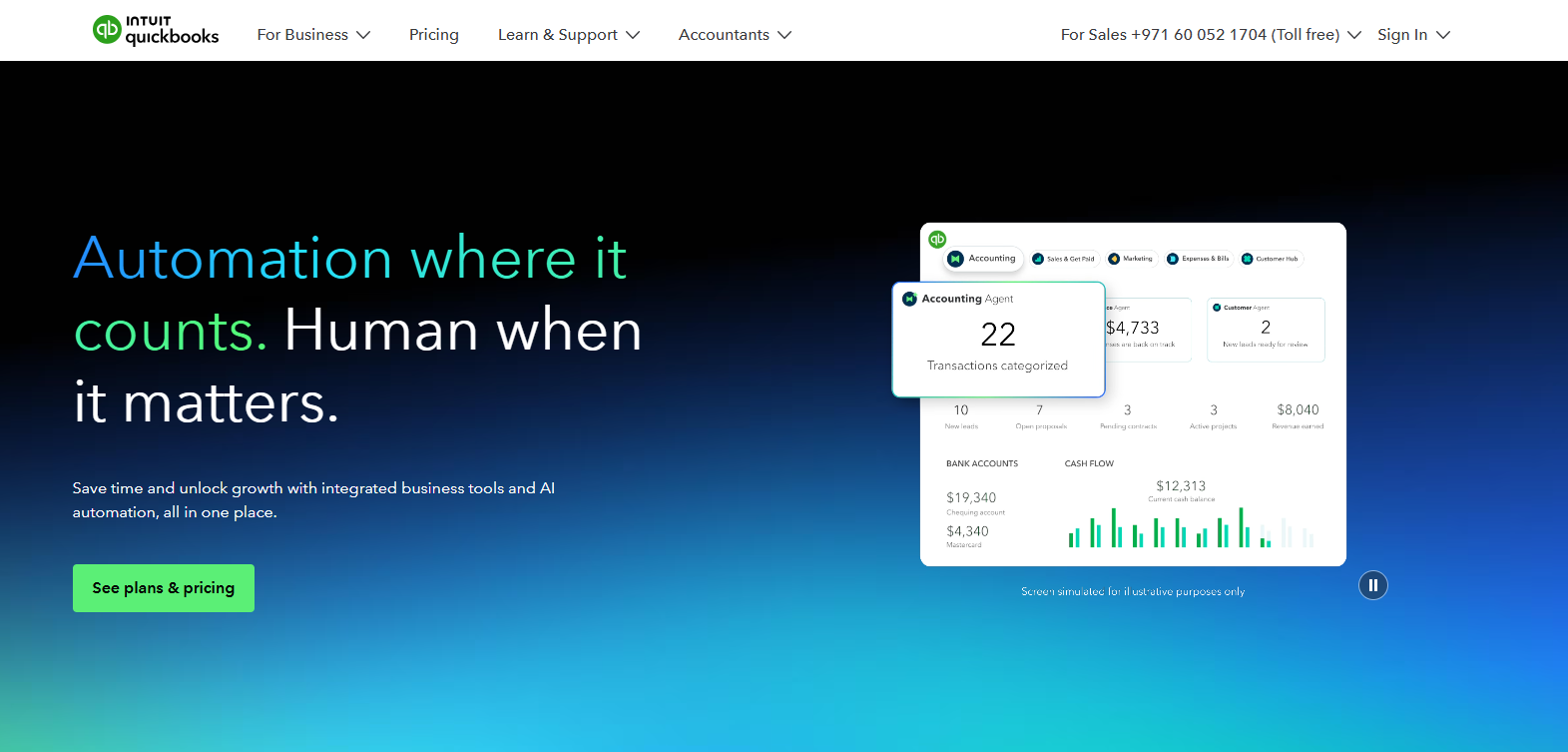
The case for QuickBooks usually starts with the accountant.
QuickBooks reports 7 million customers worldwide, which means most external bookkeepers already know the product cold:
- Accountant seat: every plan gives the accountant access of their own, separate from the paid user count.
- Receipt capture: built into the mobile app, attaching photos to their transactions.
- Smart categorisation: AI coding that learns your patterns, flagging anomalies for review.
- Bank feeds: bank transactions flow in automatically, then match against captured receipts.

QuickBooks prices the UAE regionally, with a discount across the first 3 months:
- Simple Start: AED 77/month for income and expense tracking, unlimited invoices and quotes, and a bank connection.
- Essentials: AED 114/month for up to 3 users, adding time tracking and bill management.
- Plus: AED 169/month for up to 5 users, adding inventory tracking and budgets, plus recurring transactions and bills.
- Advanced: AED 327/month for up to 25 users, adding workflow automation and Excel data sync.
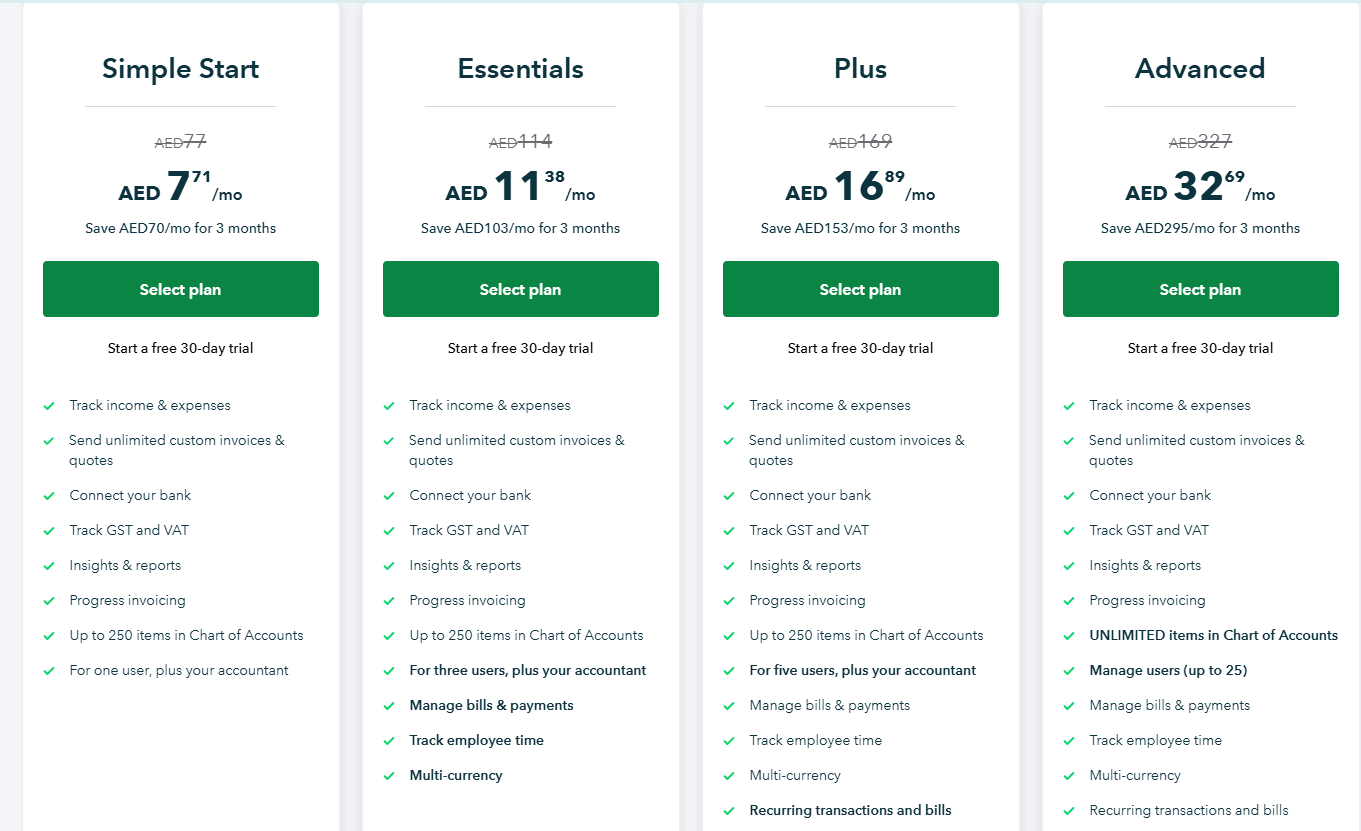
One thing to budget for: prices display in dirhams, yet billing processes in US dollars.
Xero
Best for: Running several currencies through one set of books.
Similar to: QuickBooks Online.
Stack fit: A direct Pemo sync, plus a direct UAE bank feed for Wio Business customers.
Xero is the pick when the supplier list stretches past the UAE.
The feature set leans international, with one budgeting quirk worth knowing:
- Multiple currencies: unlocked on the Premium plan, run through a single ledger.
- Claims as an add-on: employee expense and mileage claims cost a separate fee from $4/month, on top of the plan.
- Document capture: emailed bills and receipts turn into draft entries waiting for review.
- Role permissions: who creates a record and who signs it off are controlled separately.

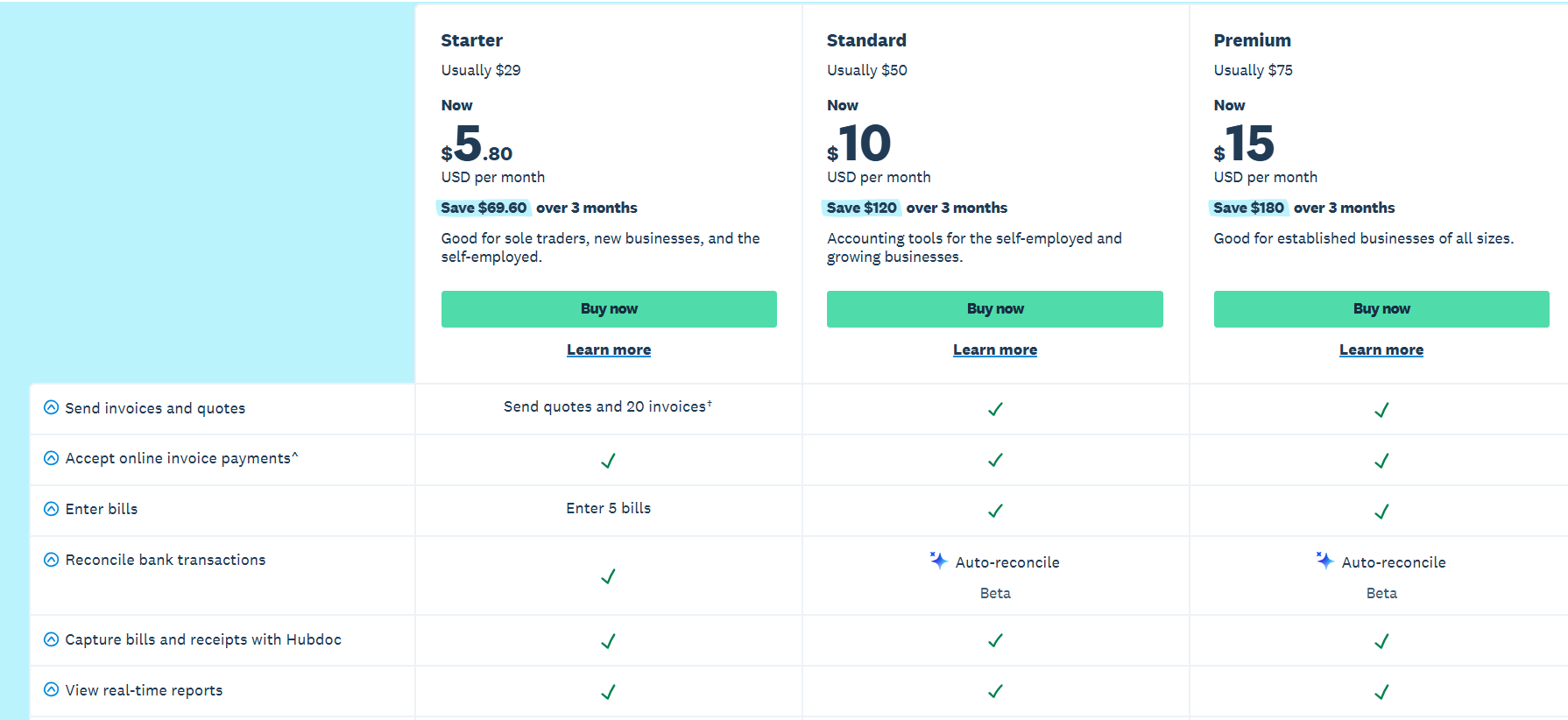
Xero's four main plans bill in US dollars:
- Lite: $7/month for 5 invoices and quotes, online invoice payments, bank reconciliation, and bill capture through Hubdoc.
- Starter: $29/month for 20 invoices and 5 bills.
- Standard: $50/month, adding auto-reconciliation and customisable dashboards.
- Premium: $75/month, adding cash flow forecasting and multiple currencies.
TallyPrime
Best for: Businesses that want the ledger installed on a PC they own.
Similar to: Wafeq.
Stack fit: Pemo syncs to Tally natively, feeding voucher-based ledgers without re-entry.
TallyPrime is the odd one out here, on purpose: desktop software you install and own, closer to classic bookkeeping than to any cloud app on this list.
The working style follows from that:
- Voucher entry: expenses post as vouchers against ledgers, with cost centres for allocation.
- Deep inventory: stock movement tracked alongside purchases, the reason trading businesses pick it.
- Reports ready-made: financial and inventory reports come built in, with nothing to construct.
- TallyDrive: the local company data file backs up to the cloud.

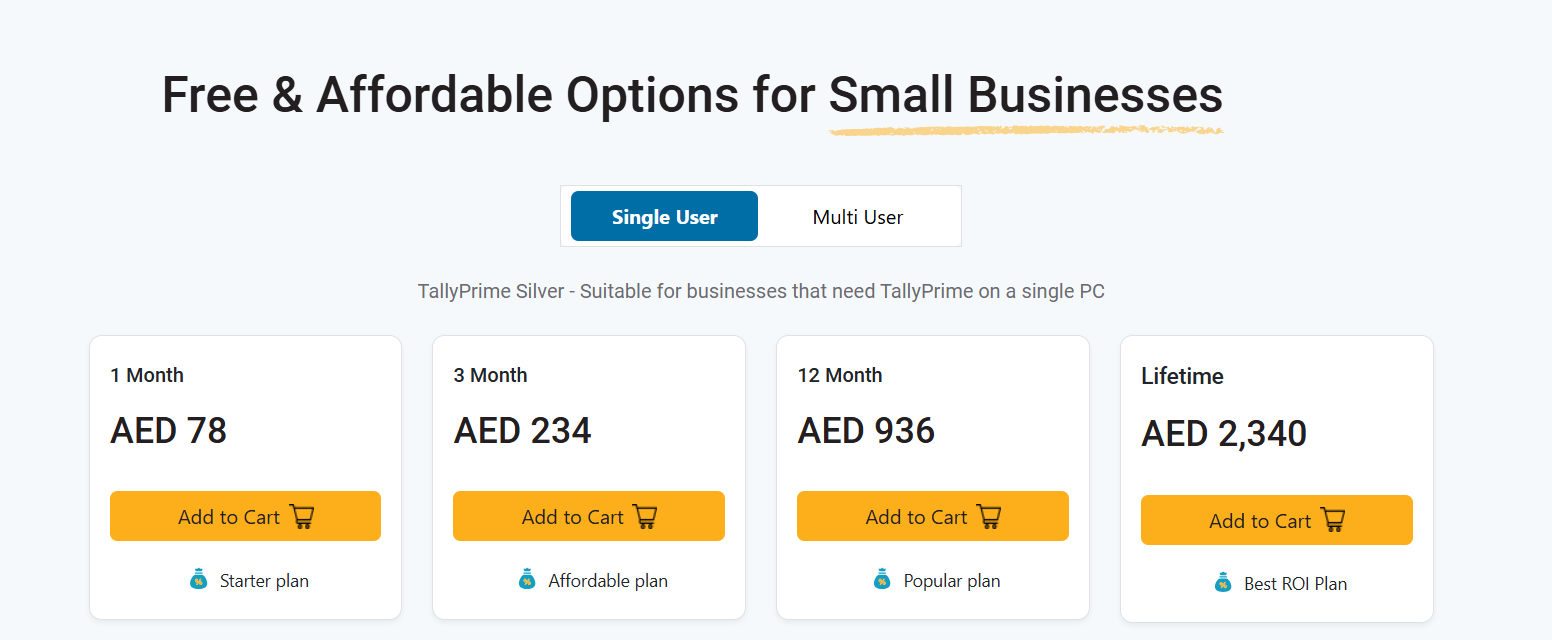
Silver single-user licences are priced in dirhams:
- One month: AED 78.
- Twelve months: AED 936.
- Lifetime: AED 2,340, including one year of Tally Software Services.
- Multi-user: quoted through a Tally partner.
What does a working UAE finance stack look like?
I’ll go over 2 scenarios below, an SME and a large organisation, both priced at 2026 rates:
What does the stack cost for a UAE SME?
From AED 57/month at the smallest end, rising to AED 479/month once the company needs approvals and reimbursements.
The pairing stays the same at both stages: Pemo on the spend layer with one ledger behind it.
What does the stack cost for a large organisation?
From AED 1,500/month for the spend layer, with the ledger conversation usually turning into an ERP conversation.
Between 75 and 200 staff, the shape changes more than the logic does:
Next steps: build the spend layer first
A finance stack that stays under evaluation is a stack you don't have.
The spend layer is the cheapest place to start, since Pemo's Starter plan costs AED 0 with no commitment.
Cards and receipt matching come included, with the ledger sync ready for whichever accounting software you pick next.
You can start on the free Starter plan, or book a demo and we will walk it through on your own numbers.
⚠️ Disclaimer: This article was last updated on the 27th of August, 2026. It covers general information, not tax, accounting, or legal advice, so confirm anything affecting your filings with a qualified adviser. Product features, pricing, and plan availability change, so check current details before relying on them. If you spot something that needs correcting, contact us, and we will review it.
FAQs
Can one tool cover the whole UAE finance stack?
No. Pemo, paired with a ledger such as Wafeq, handles cards, receipts, invoices and the books between them. Live e-invoicing sits outside both, since the FTA only accepts invoices routed through an accredited service provider.
Do you need a receipt scanner if the spend layer captures receipts?
Not for card spend, where capture and matching already happen on the spend platform.
Dedicated OCR tools still make sense for accounting practices running capture across many clients.
Our guide to the best receipt scanners in the UAE goes deeper on that niche.
How do you handle business travel expenses in this stack?
On the spend layer.
A trip card with a preset budget and category rules keeps the spending inside policy, with receipts captured as each payment happens.
How many tools does a small UAE business need?
Two.
A spend platform and a ledger cover a business under roughly 15 staff, with everything else added only when a gap shows up in practice.


