
A three-day trip to Riyadh leaves a trail of receipts in two currencies. Finance usually meets them for the first time a month later.
Below are the 10 best travel expense management software options a UAE company can use in 2026, with live pricing and the plan each travel feature belongs to.
TL;DR
- Pemo is the best travel expense management software for UAE businesses in 2026, as the spending rules go onto the card before departure and each purchase turns into a matched expense while the traveller is still away.
- AirPlus and American Express are payment layers for companies that want travel billed centrally, paying flights and hotels from one account and passing the data to whichever expense tool you already run.
- SAP Concur, Zoho Expense, and Happay bundle booking, per diems, and expense claims for teams that want the whole trip inside one system.
- Rydoo, Expensify, Mamo, and Xpence cover narrower jobs: claims from travellers who paid themselves, and UAE-issued cards that work abroad.
What are the best travel expense management software in the UAE in 2026?
Pemo is the best travel expense management software for a UAE business in 2026, followed by AirPlus and American Express for centrally paid travel, with SAP Concur, Zoho Expense, and Happay covering booking and per diems.
Here are the 10 tools, grouped by the stage of the trip they handle best:
Every tool passed four checks before it made the list.
- A UAE-registered company can sign up for it.
- At least one feature exists for travel specifically.
- The pricing is either published or the quote process is clear.
- The vendor's own pages back up every feature described.
Which travel expense tools control the spend before the trip starts?
Pemo, AirPlus, and American Express control travel spend at the payment itself. The policy is applied when the flight is booked, or the hotel is paid, long before any expense report exists.
The three take different routes to get there.
Pemo puts the rules on a prepaid card the traveller carries.
AirPlus bills the whole trip centrally. American Express does the same through its Business Travel Account, alongside individual corporate cards for the people travelling.
#1: Pemo
Pemo is the best travel expense management software for UAE businesses in 2026. It fixes the travel policy on a prepaid company card, then matches each receipt to its charge while the traveller is still abroad.
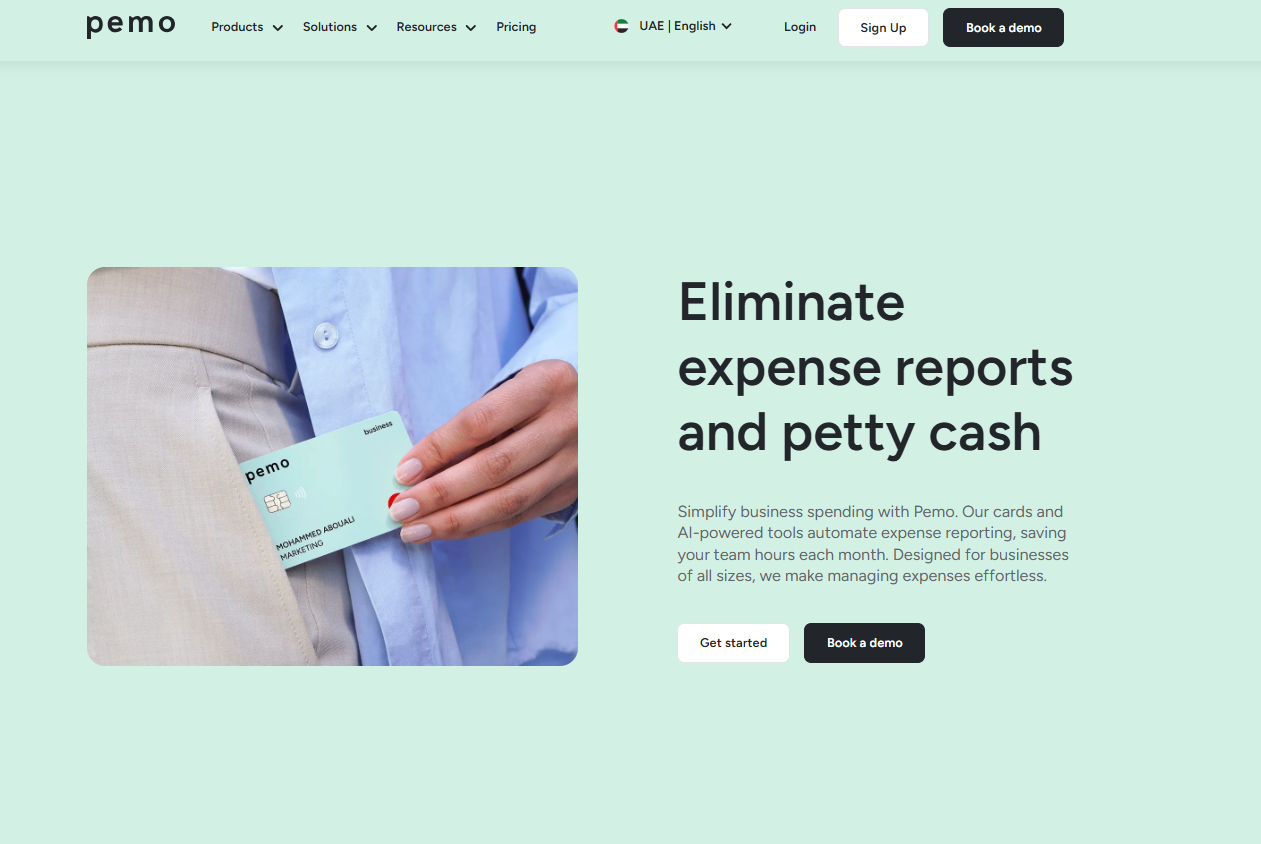
Full disclosure: Pemo is our product. I've kept to what our help centre and pricing page state, and applied the same rule to the other nine tools.
Travel is the spend category where finance tends to hear about the money last. The traveller is in another country when it leaves.
The flight goes on a personal card in April. Finance is still asking about the receipt in July.
Pemo closes that distance: the card that pays is the same system that records.
Let’s follow one trip through Pemo, from the flight to the coded entry: 👇
The travel policy becomes a card limit
Every Pemo card runs on Mastercard and spends from a wallet your company tops up.
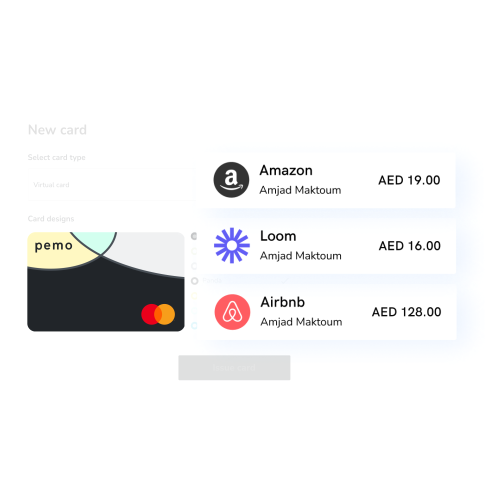
The rules go onto the card first:
- Pre-funded trip cards: a fixed amount approved for one trip or one traveller. Funds can be topped up mid-trip if plans change, and any balance can be pulled back to the wallet afterwards.
- Single-use virtual cards: one card number for one booking, a prepaid hotel or a low-cost carrier fare. The number expires the moment the booking clears.
- Limits per transaction, day, week, month, or year: a nightly hotel ceiling and a daily meals cap can both apply to the same card.
- Merchant category, vendor, and country restrictions on Premium: the card accepts airlines, hotels, and ground transport in the destination country. Anything else declines at the terminal.
- No card or cardholder limit on any plan: a card for the person who travels twice a year costs nothing extra.
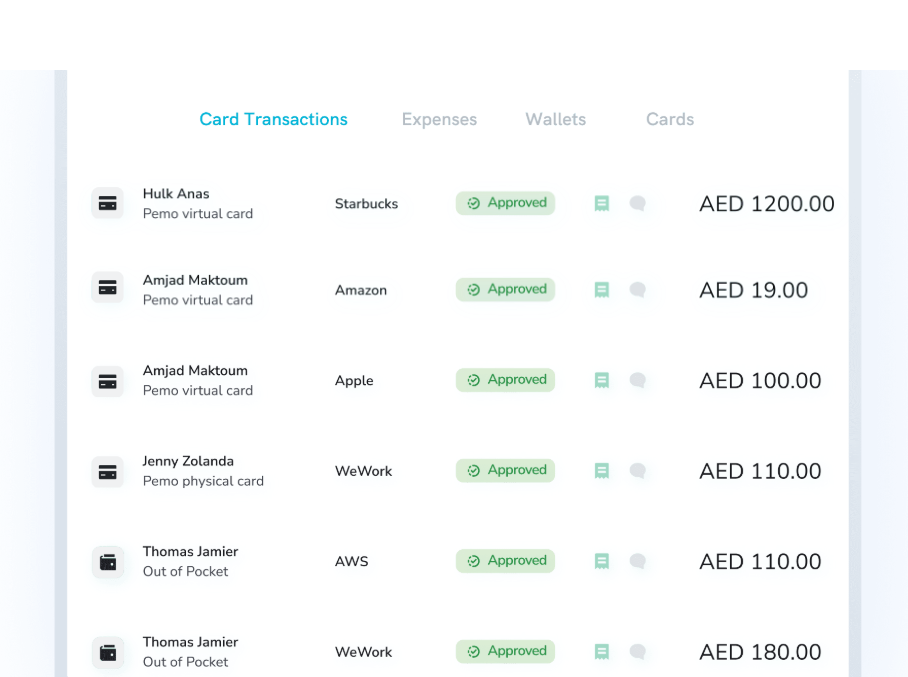
An out-of-policy charge fails at the point of sale. Finance is spared the conversation three weeks later.
Receipts attach themselves before the flight home
The dashboard shows the charge before the traveller has put the card away. Their phone asks for the receipt straight after:
- Mobile and email capture: a taxi receipt photographed at the kerb and a hotel folio forwarded from an inbox both reach Pemo AI Copilot, which pins them to the right transactions.
- Receipt verification: Pemo AI Copilot checks each matched receipt against its card transaction. A folio for the wrong night stands out.
- Missing-receipt flags: finance sees which trip purchases still have nothing attached, without waiting for the traveller to land.
- Reminders and duplicate checks on Premium: the same hotel folio submitted twice gets caught before it posts.
- Non-card expenses on Premium: the tip paid in cash and the taxi paid from a personal card get logged alongside the card spend.
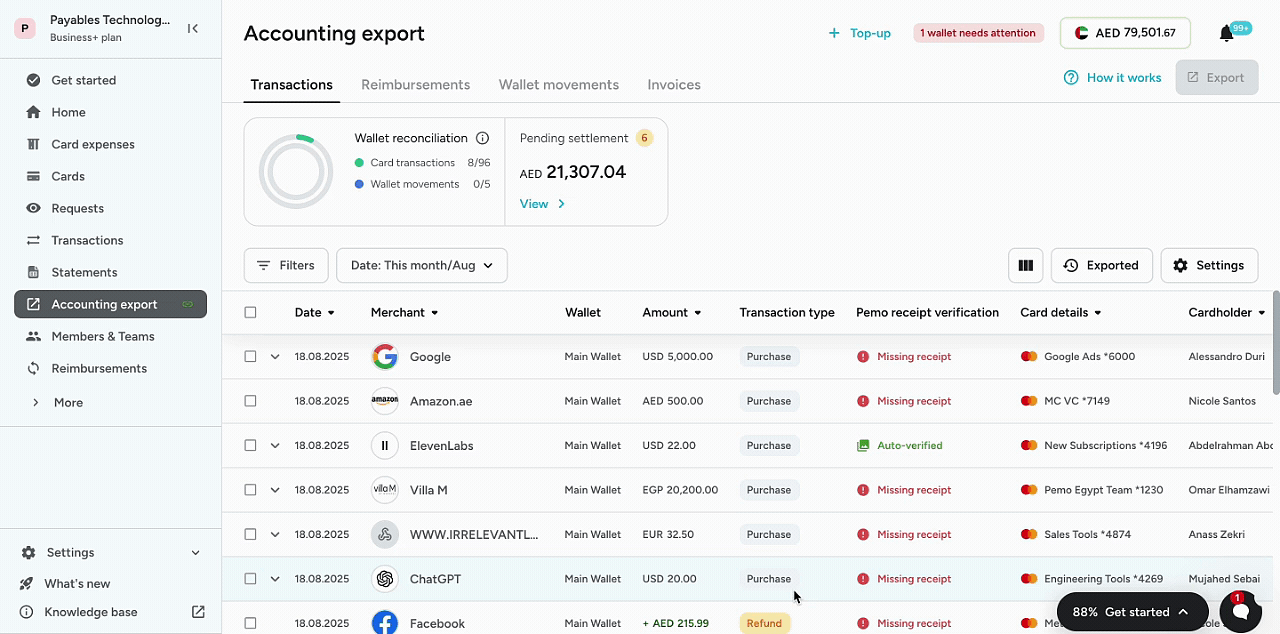
➡️ By the time the traveller is back at their desk, finance already holds a categorised record of the trip with the receipts attached.
Foreign spend costs are visible up front
Pemo cards are issued in AED and work anywhere Mastercard is accepted, with Mastercard exchange rates applied to foreign purchases.
- Cashback on international spend: 0.5% on Starter, up to 2% uncapped on Premium, and a custom rate on Enterprise. The rate you see depends on your account's foreign exchange fee profile.
- Foreign exchange fee: 3.68% applies to companies whose KYB was approved on or after 1 July 2026. Put that fee next to the cashback before you decide foreign card spend is a saving.
- ATM withdrawals on request from Premium: for the markets where cash is still how you pay a driver.
- International cards on Enterprise: for employees permanently based outside the UAE.
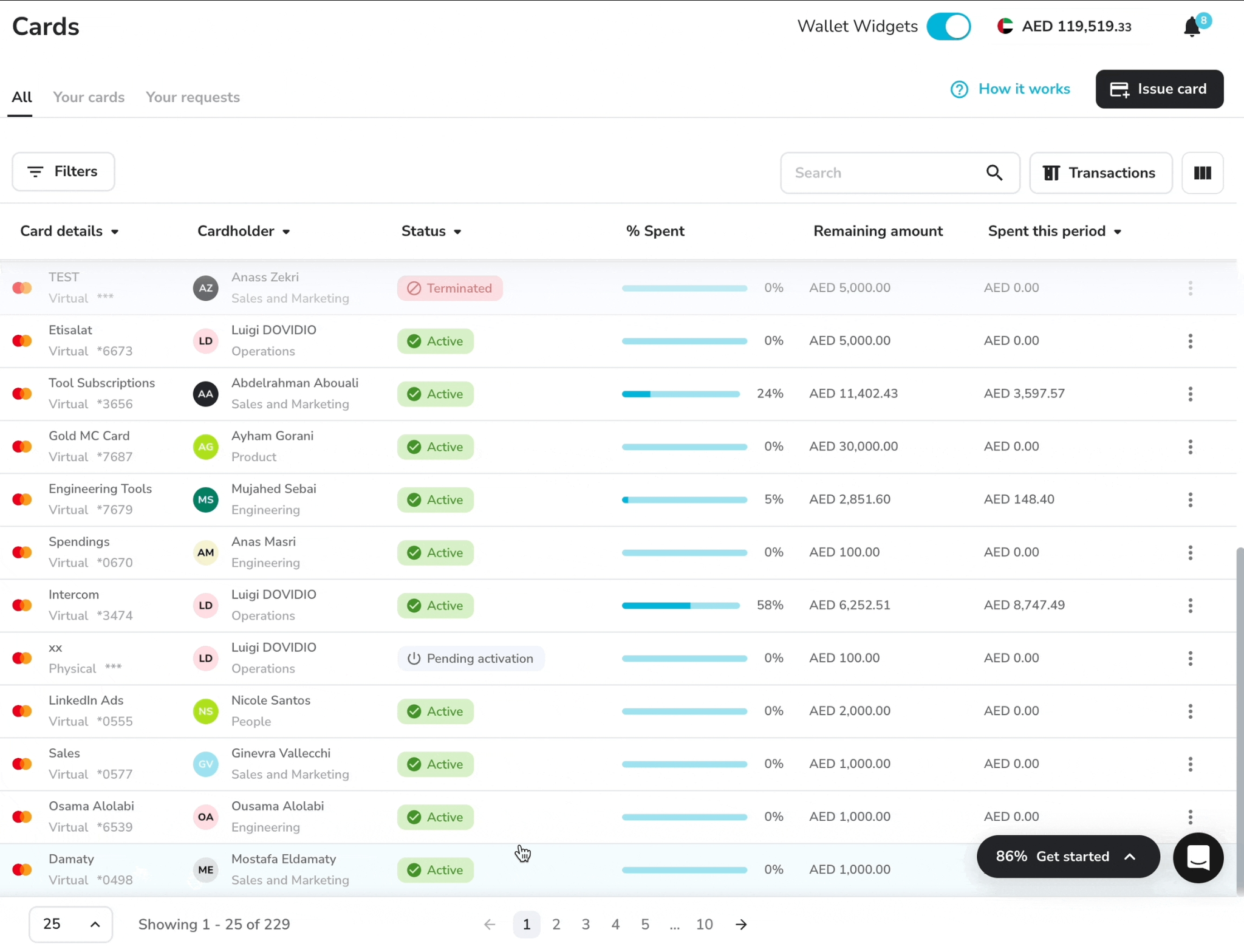
Pemo Mastercard holders also get a set of travel perks through the card benefits programme:
- Airport lounges: complimentary access to over 20 lounges across the Middle East and over 1,000 worldwide through the Mastercard Travel Pass app.
- Booking.com: 7% cashback on bookings made through the Mastercard link.
- IHG Hotels: 15% off the best available rate, a welcome drink, and late checkout until 4 PM.
- Careem: 20% off up to three rides a month in the UAE.
- Airalo and Budget: 15% off travel eSIMs and up to 10% off car rentals.
💡 Terms apply and offers change. Check the help centre before counting on one.
Approvals and coding finish the trip before month-end
Pemo Copilot codes each trip transaction with a category and vendor, improving as your history builds. The entry then syncs to your accounting software without an export.
- Approval routing by amount, category, or team: a AED 5,000 hotel bill reaches the CFO. A AED 60 taxi does not.
- Multi-layer approvals and maker-checker on Premium: the person requesting a limit increase from the departure gate is never the one approving it.
- Sub wallets: separate travel funds per team. Premium allows three, Enterprise removes the cap, and budgets arrive at that level too.
- Direct accounting sync on every plan: QuickBooks, Xero, Zoho Books, Odoo, Wafeq, and Mazeed, plus NetSuite, Odoo, and Dynamics 365 Business Central ERP connections on Premium.
- Wallet forecast on every plan: committed outflows shown against the balance before the next trip is funded.

Pemo's pricing
Pemo's bill is set by the plan you choose. On Starter and Premium, a team that adds ten travellers pays what it paid with two.
- Starter: AED 0, with no SaaS fee and no commitment. Includes unlimited cards and cardholders, a dedicated IBAN, and real-time expense creation. Mobile and email receipts, AI Copilot matching and verification, standard accounting integrations, and 0.5% cashback on international spend come with it.
- Premium: AED 399/month per company. Adds merchant category restrictions, reimbursements and non-card expenses, receipt reminders, and duplicate detection. Multi-layer approvals, three sub wallets, the spend analytics dashboard, standard ERP integrations, and up to 2% uncapped international cashback are Premium features too.
- Enterprise: from AED 1,500/month. Adds international cards for staff outside the UAE, unlimited sub wallets, and budgets. Custom ERP integration, developer API access, custom cashback rates, and a dedicated implementation manager round it out.
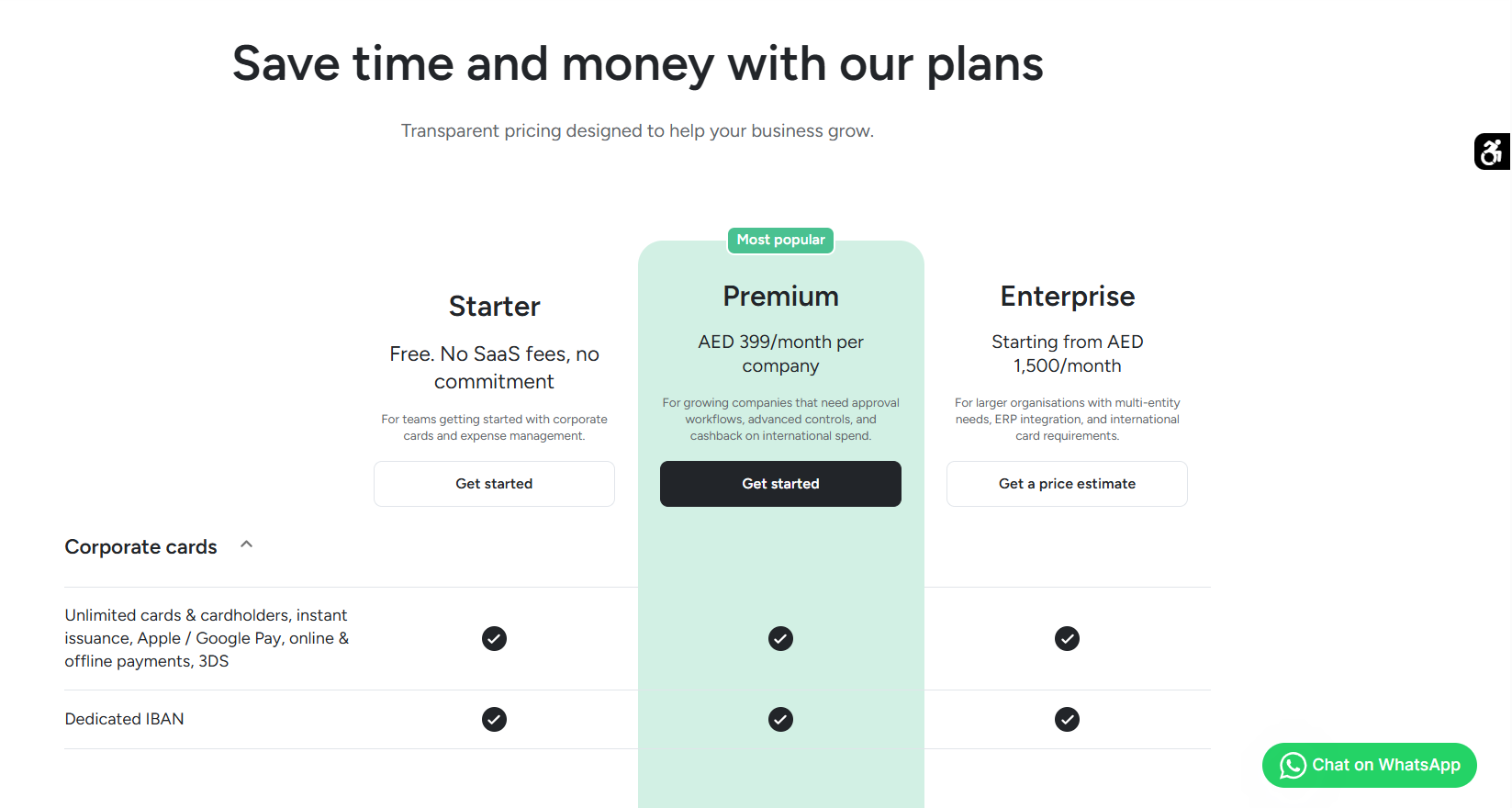
Starter is free to sign up for. If you'd rather see the numbers first, book a demo and bring last quarter's travel spend.
Pemo's pros and cons
✅ Trip cards with limits fixed before anyone books.
✅ Receipts matched and verified mid-trip.
✅ No cap on cards or cardholders, even on Starter.
✅ Lounge access, hotel, and ride perks bundled with the Mastercard.
✅ Direct sync into six accounting platforms, including Wafeq.
✅ Premium is priced per company, whatever the number of travellers.
❌ No flight or hotel booking module. You book elsewhere and pay with the card.
❌ Prepaid only. The wallet has to be funded before the trip.
#2: AirPlus
Best for: Paying flights, hotels, and rail centrally, with one statement covering every traveller.
Similar to: American Express, SAP Concur.

AirPlus approaches travel from the payment side.
Its company account and virtual card numbers settle flights and hotels centrally. The booking reference arrives attached to each payment.
Features
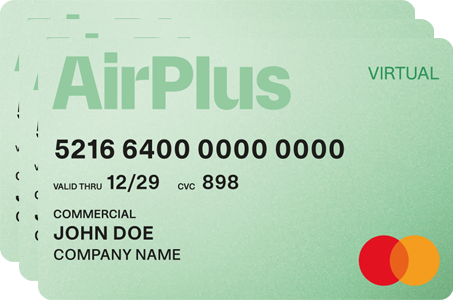
- AirPlus Company Account: a centrally lodged settlement account for flights, hotels, rail, car hire, and events, with one billing period and one statement.
- Virtual Cards Classic: a 16-digit Mastercard number generated for a single booking and restricted to an amount, a period, and a currency.
- Booking platform integration: card generation runs inside more than 80 booking platforms and partner systems. Nobody types a card number by hand.
- Reference data on every transaction: extra fields on each payment feed reconciliation in the ERP or expense tool you already use, with the AirPlus Portal and Intelligence Hub for reporting.
Pricing
There is no rate card on the AirPlus site.
A Company Account is offered under a UAE contract, and the price comes out of the consultation that precedes it.
Pros and cons
✅ Travel paid centrally. No personal card touches the booking.
✅ One statement across every traveller and supplier.
✅ Mastercard acceptance for online and ad hoc bookings.
❌ Pricing on request.
#3: American Express
Best for: A UAE-issued corporate charge card programme with a central account for agency-booked flights and hotels.
Similar to: AirPlus, Mamo.
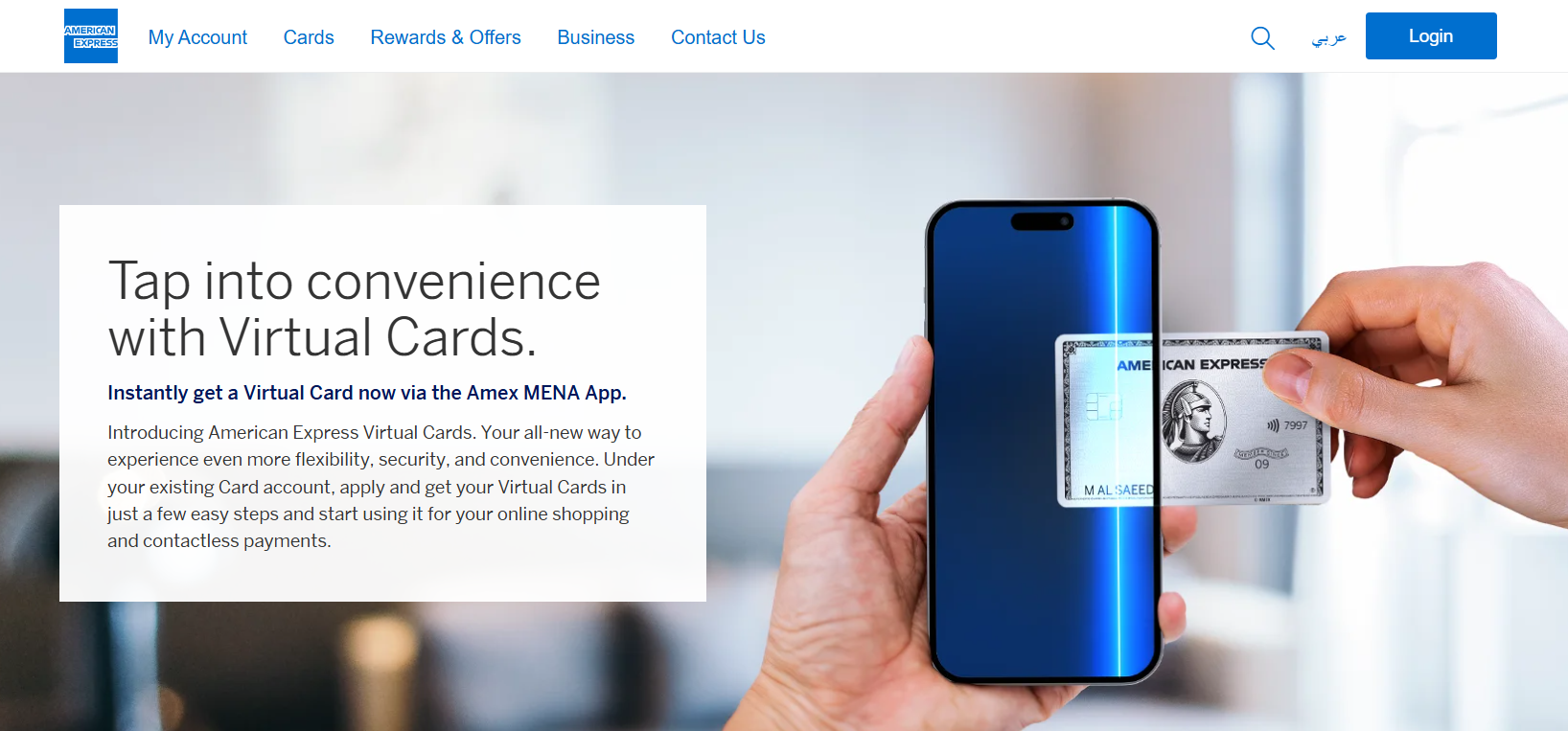
American Express offers its corporate card programmes through a UAE site. A Dubai-registered company applies locally.
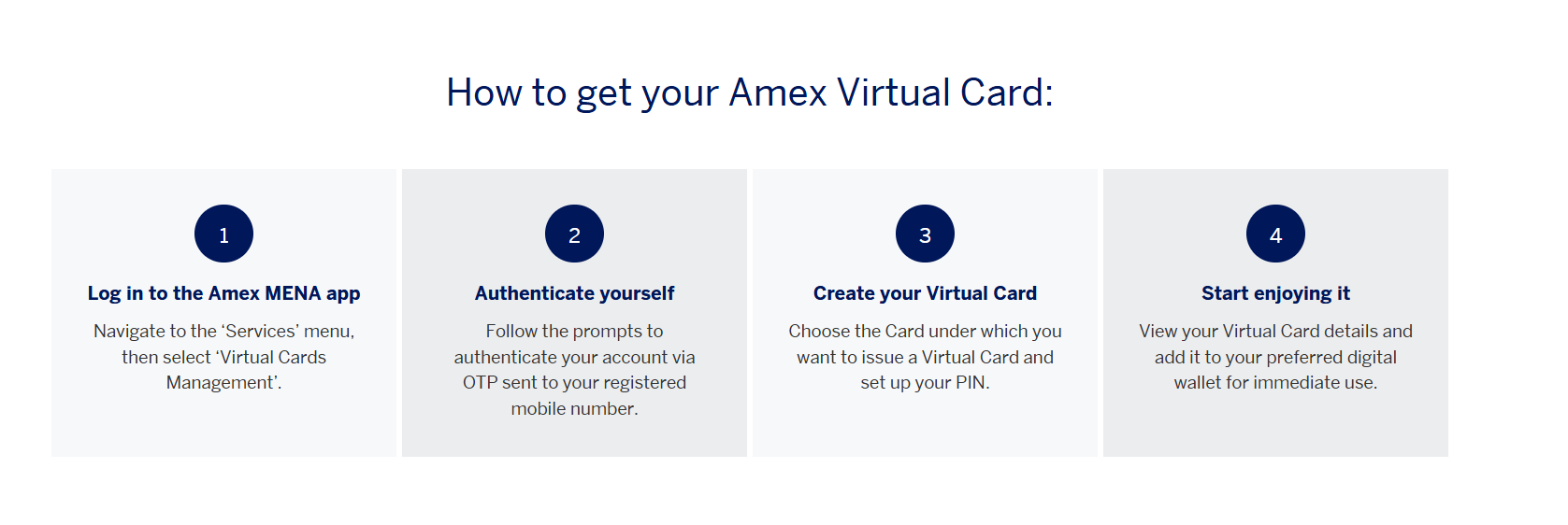
For travel, the Business Travel Account is the product to ask about. Your travel management company books flights and hotels against it and you receive one bill.
Features
- Corporate Card: individual cards for travelling staff, with programme-level visibility of what each cardholder spends.
- Business Travel Account: a central account charged by your travel management company for flights and hotels, settled on one monthly statement.
- Company Card: a flexible spending limit for short-term cash flow and larger business purchases.
- Corporate Purchasing Card: a separate product for indirect spend, with flexible limits and enhanced transaction data on one centralised account.
Pricing
Fees aren't listed anywhere public. American Express prices each UAE programme on application.
Pros and cons
✅ UAE-issued, with a charge line behind it.
✅ A central travel account for agency-booked trips.
✅ Long-standing acceptance with airlines and hotels.
❌ Fees and eligibility are set case by case, with no published rate card.
Which tools manage the booking and the expense claim together?
SAP Concur, Zoho Expense, and Happay each combine a booking tool with expense claims. Everything from the trip request to the receipts ends up in one record.
The difference between them is who each one is sized for.
SAP Concur is the enterprise option, Zoho Expense suits teams already inside the Zoho suite, and Happay targets high travel volumes.
#4: SAP Concur
Best for: Large, multi-entity organisations running travel booking, expense audit, and invoices on one platform.
Similar to: Happay, Zoho Expense.
SAP Concur is best known for the largest travel programmes. The product shows it in everything from the module names to the sales process.
The natural buyer already runs SAP and has entities in more than one country.
Features
- Concur Travel: bookings for air, hotel, rail, and car hire, with policy rules enforced while the employee books.
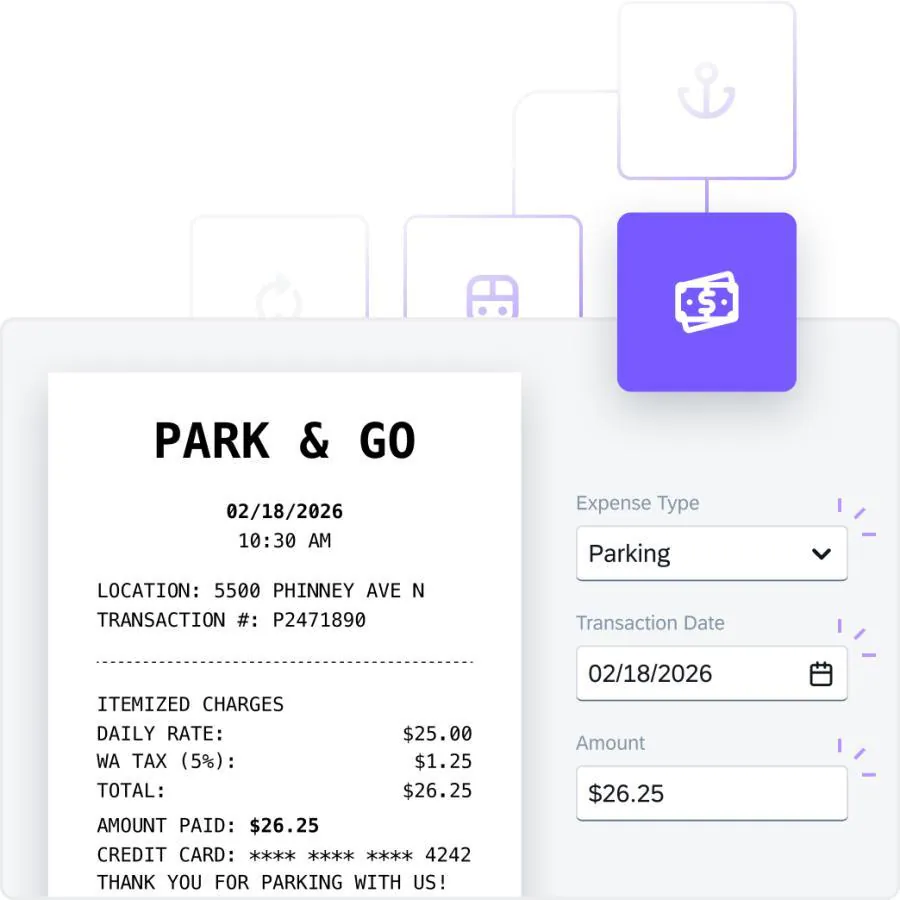
- Concur Expense: receipt capture on mobile, corporate card feeds, and policy checks before the report is submitted.
- Intelligent Audit and Verify: add-on audit services in which AI working alongside human auditors reviews every expense report. Nothing is sampled.
- Joule Agents: AI agents announced in March 2026 that build the expense report from card transactions and audit receipts before submission.
Pricing
SAP Concur does not publish pricing.
Quotes are built around the number of users and the modules chosen, and a sales cycle comes before any figure.
Pros and cons
✅ One system for booking, claims, and audit across many entities.
✅ Every report audited, with human auditors behind the AI.
✅ Tight coupling with SAP's own ERP, with more than 250 App Center integrations around it.
❌ No published pricing.
#5: Zoho Expense
Best for: Zoho Books users who need travel requests, per diems, and a booking tool inside the same suite.
Similar to: Expensify, Rydoo.
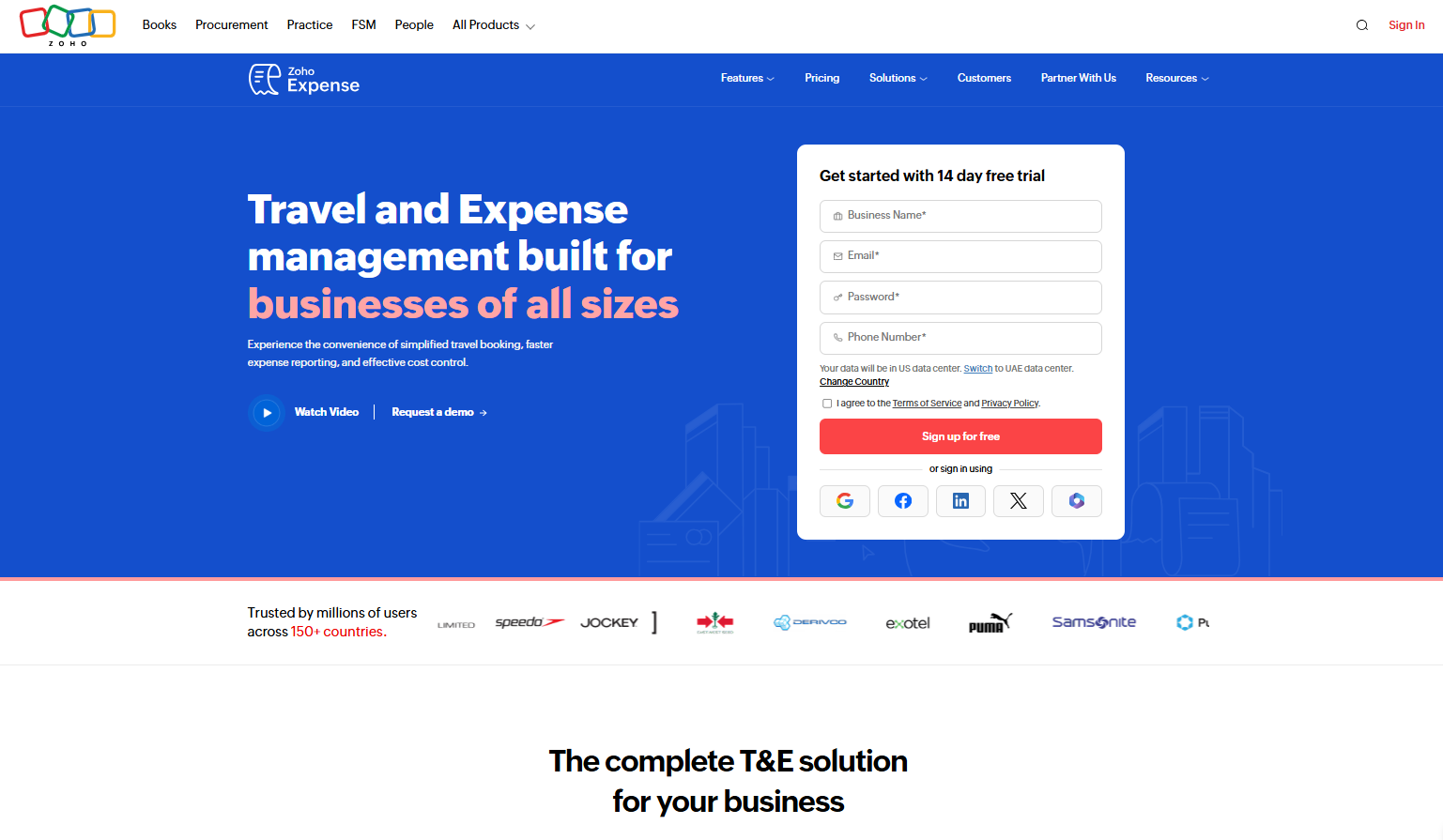
Zoho publishes a UAE edition of Zoho Expense with dirham pricing.
The travel features arrive on the Premium tier. The free plan covers three users and is where most small teams start.
Features
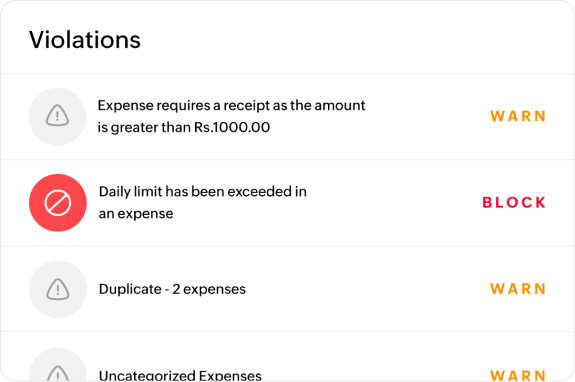
- Travel requests and self-booking: employees raise a trip request, get it approved, and book through the self-booking tool on Premium.
- Automated per diems: daily allowances calculated by destination on Premium, with cash advance management from Standard.
- Receipt Autoscan: AI-powered OCR on every plan, metered at 20 scans per user a month on the free plan, 200 on Standard, and 1,000 on Premium.
- Mileage via GPS: on every plan, with automatic capture and live tracking on Premium.
Zoho Expense's pricing
Zoho Expense's UAE edition has a free plan and three paid tiers:
- Free: AED 0 for up to 3 users, with Autoscan, expense reports, personal card tracking, mileage via GPS, and accounting integrations.
- Standard: AED 11/user/month billed annually (AED 18 monthly), minimum 5 users. Adds corporate card management, direct card feeds, multiple expense policies, cash advances, and direct bank reimbursements.
- Premium: AED 22/user/month billed annually (AED 33 monthly), minimum 5 users. Adds the self-booking tool, travel desk management, automated per diems, live budget tracking, and multi-entity expense management.
- Custom: quote-based, from 100 users.

Zoho Expense's pros and cons
✅ Dirham pricing published for the UAE edition.
✅ Per diems and booking on the same tier.
✅ Free for three users.
❌ Some of the workflows can feel a bit rigid at times, according to one G2 reviewer.
#6: Happay
Best for: High-volume travel programmes needing self-booking, trip-based reimbursements, and fraud checks in one platform.
Similar to: SAP Concur, Rydoo.

Happay grew up in India's enterprise T&E market and now sells into the Middle East through a dedicated regional offering.
The pitch is the full loop: book the trip, capture the spend, audit it, reimburse it.
Features
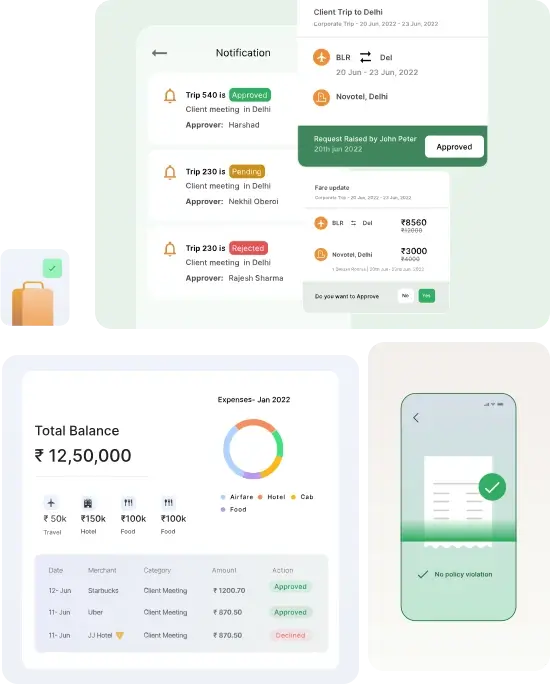
- Self-booking platform: flights, hotels, cabs, trains, and buses, with policy compliance enforced during booking.
- Xpendite: expense data pulled from card statements, SMS, Gmail, Outlook, and ride-hailing apps without anyone typing it in.
- SmartAudit: duplicate invoices, overclaimed amounts, and data mismatches flagged before finance opens the report.
- Trip-based reimbursements: real-time, individually or in bulk, tied to the trip record.
- Happay Analytics: reporting on travel and expense data across the programme.
Pricing
Happay quotes every deal individually. Expect a demo followed by a scoped proposal.
Pros and cons
✅ The whole trip in one system, from booking to reimbursement.
✅ Automated capture from card statements, email, SMS, and ride apps.
✅ Audit checks that cut verification effort.
❌ Happay is quite limited as it's not able to handle transactions in foreign currency, according to one G2 review.
Which expense apps work best for travellers who paid out of their own pocket?
Rydoo and Expensify are built around the claim. The traveller photographs the receipt for the app to read, and finance approves and reimburses from there.
Expensify's card is US-issued, and Rydoo treats cards as an add-on. Both tools assume the money has already left someone's account.
#7: Rydoo
Best for: Claims from travellers spread across several countries, with per diem and mileage rules to match.
Similar to: Expensify, Zoho Expense.
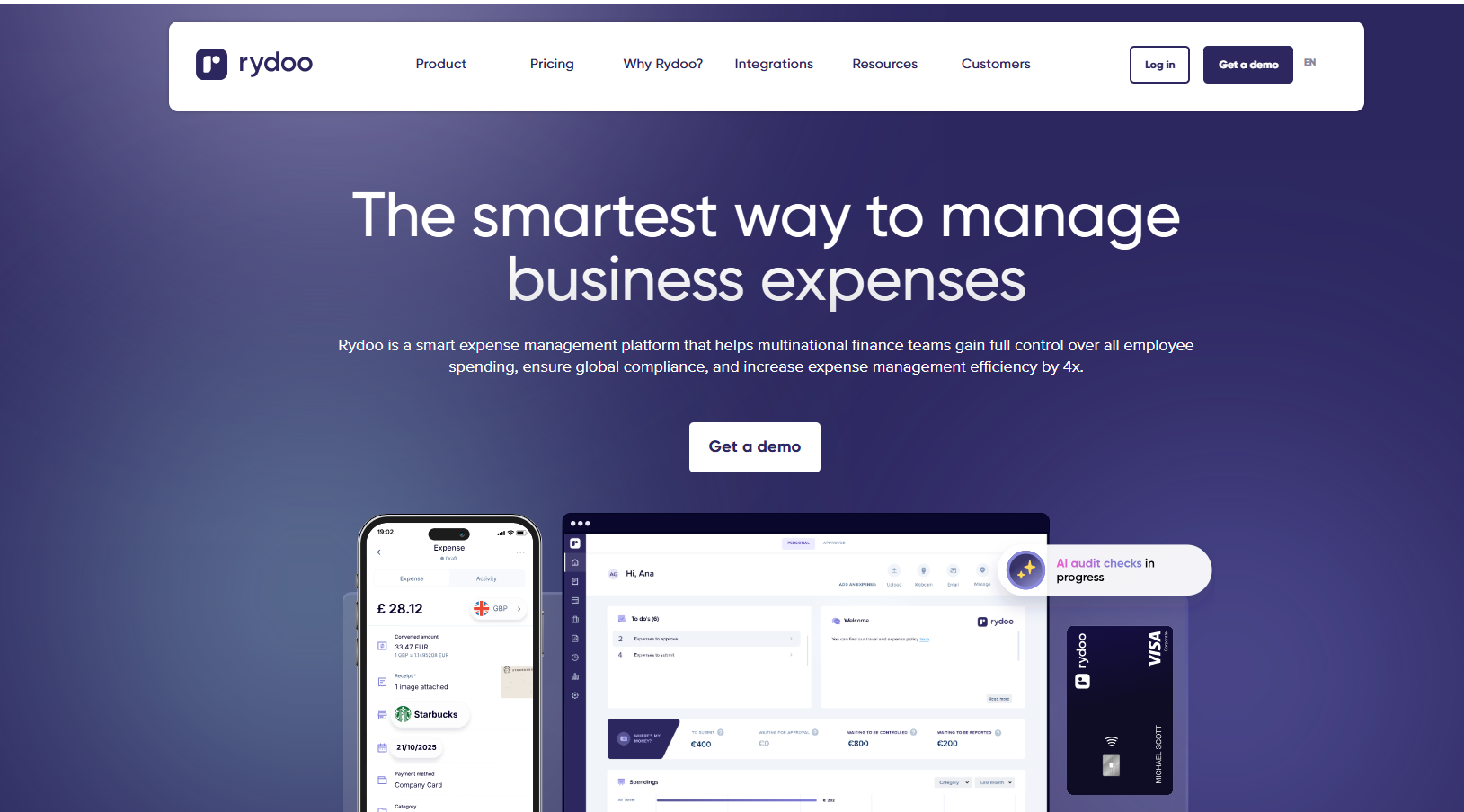
Rydoo keeps official per diem, mileage, and tax data current for more than 80 countries. That database is what multinational finance teams are paying for.
The app is aimed at the traveller first and the controller second.
Features

- Receipt scanner: an expense submitted from a photo in about ten seconds, by Rydoo's own account.
- Per diems on Pro: daily allowance rates maintained for 15 plus countries, plus approvals for trips and cash advances.
- Card reconciliation on Pro: automated matching of Visa, Mastercard, Amex, and AirPlus transactions.
- TravelPerk and Egencia connections: TravelPerk booking data flows in on Pro and above, with Egencia available as an add-on on Business and Enterprise.
Rydoo's pricing
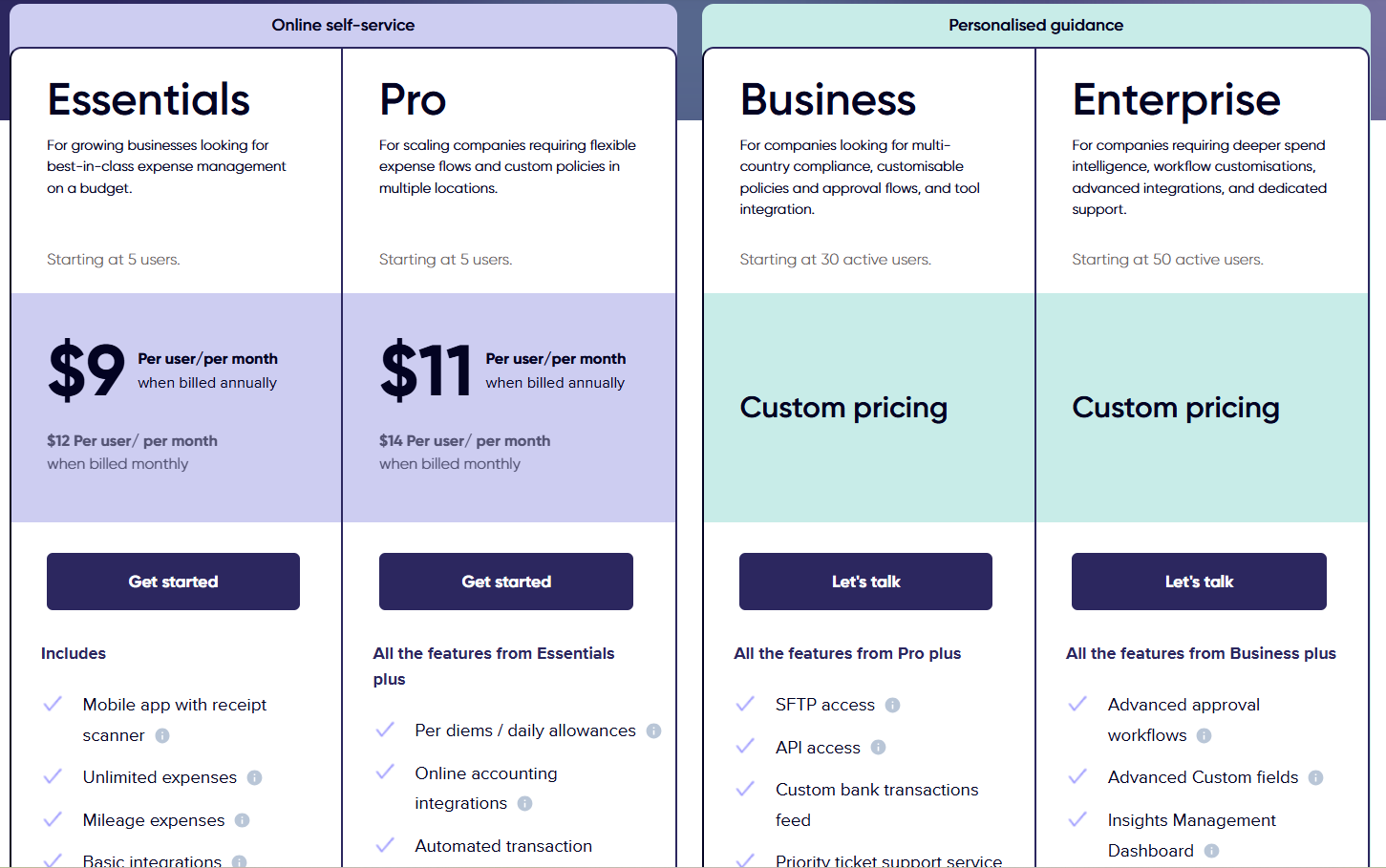
Rydoo has no free plan. The self-serve plans start at five users:
- Essentials: $9/user/month billed annually ($12 monthly). Receipt scanner, unlimited expenses, mileage, a single approval flow, and PDF and Excel exports.
- Pro: $11/user/month billed annually ($14 monthly). Adds per diems, QuickBooks and Xero, automated card reconciliation, custom policies, and two-level approvals.
- Business: custom pricing from 30 active users, adding Rydoo Cards, SFTP, and API access.
- Enterprise: custom pricing from 50 active users, adding Smart Audit, advanced approval workflows, SSO, and a dedicated success manager.
Rydoo's pros and cons
✅ Allowance data for over 80 countries.
✅ Fast receipt scanning.
✅ Active-user billing on the top two plans.
❌ Business and Enterprise plans do not have public pricing.
#8: Expensify
Best for: Small and remote teams after receipt capture and travel booking they can switch on in an afternoon.
Similar to: Rydoo, Zoho Expense.
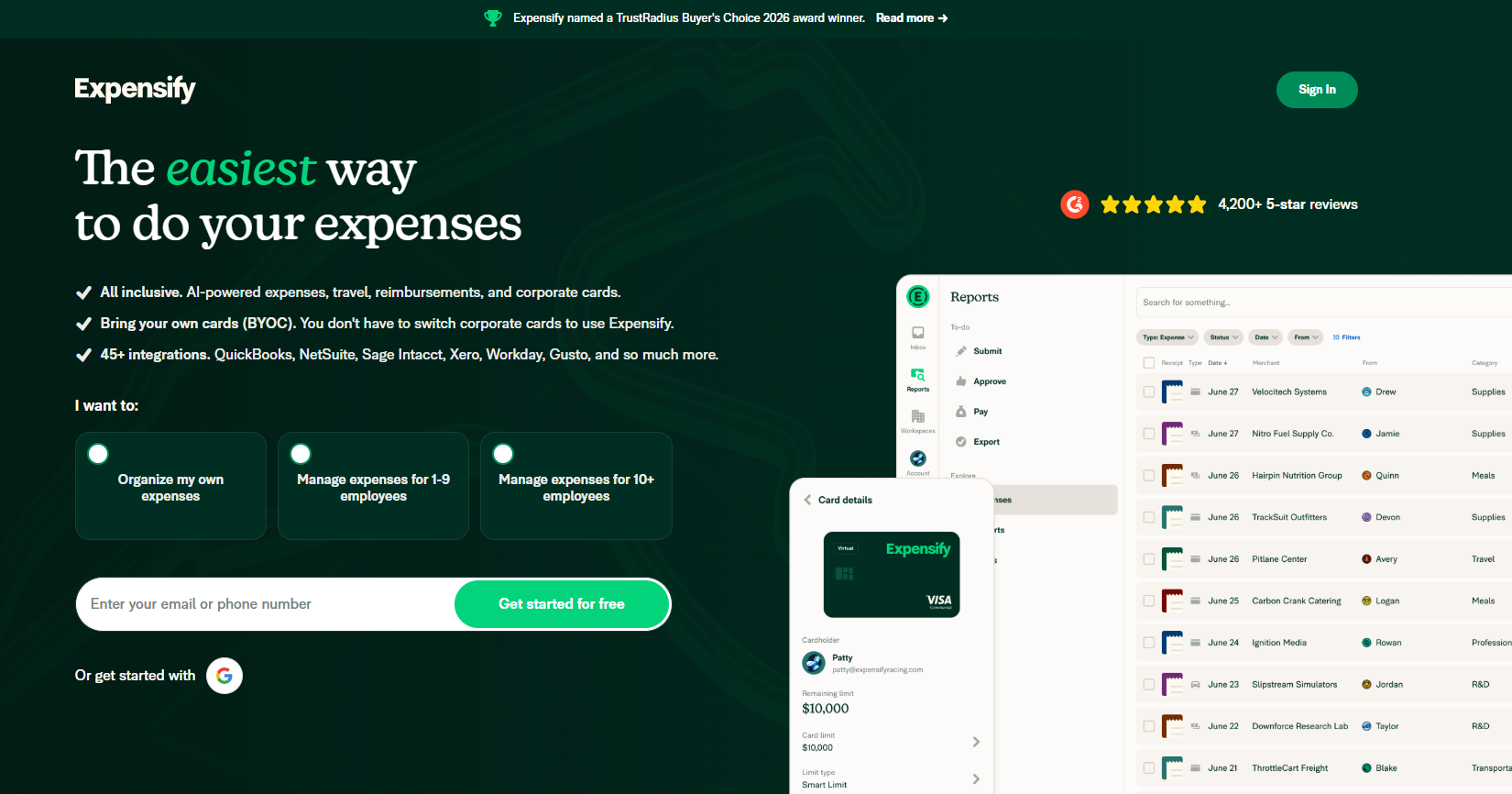
Expensify has spent 15 years on one problem: moving a receipt from someone's pocket into the books with the fewest taps possible.
The platform also leaves your existing corporate cards in place, linking them for reconciliation with no switch required.
Features
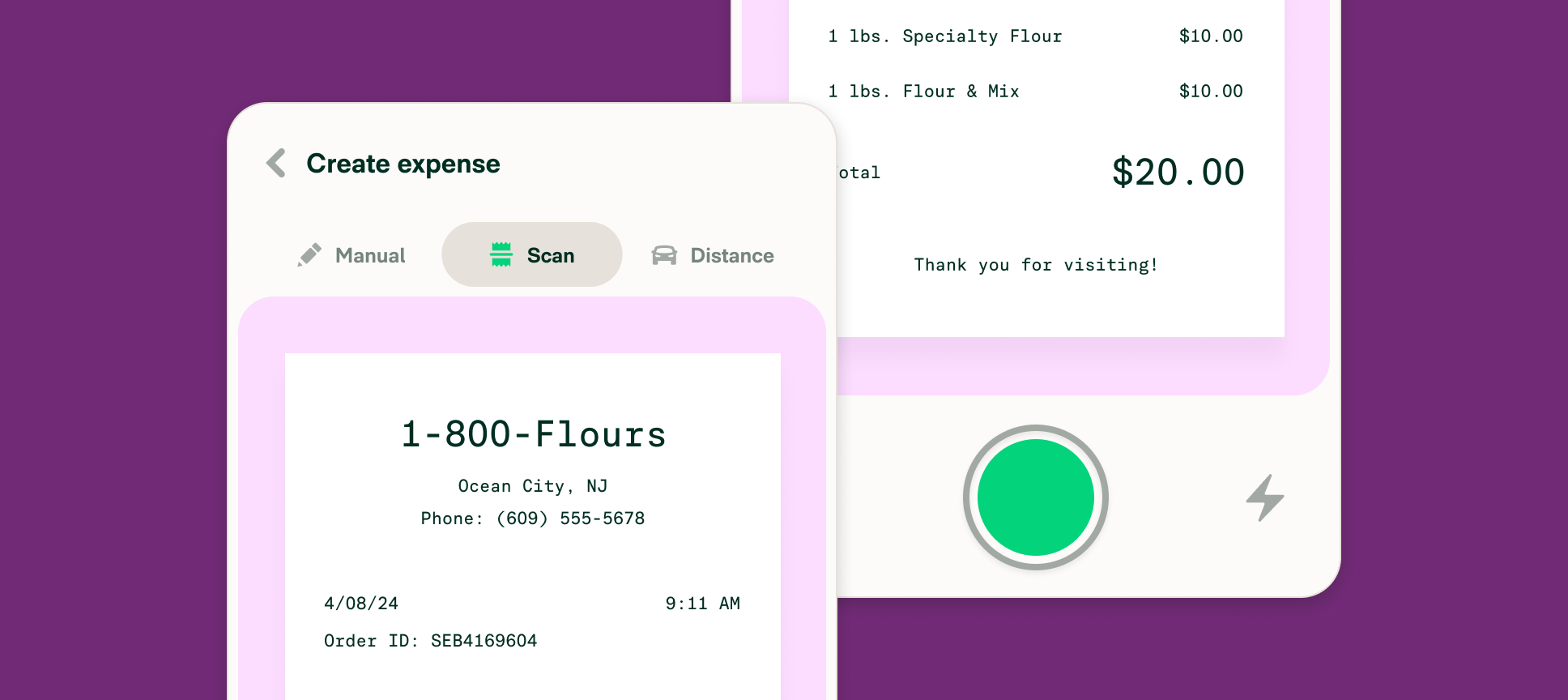
- SmartScan: photograph, email, or text a receipt. Expensify reads the merchant, the date, the amount, and the currency off the image.
- Expensify Travel: flight, hotel, car, and rail booking with policy rules, open to all members since February 2025, with a booking fee charged per trip.
- Approvals and reimbursements: expense approvals on Collect and travel approvals through travel policies, with multi-level flows and custom rules on Control.
- Accounting connections: QuickBooks Online and Xero on Collect, with NetSuite and Sage Intacct on Control.
Expensify's pricing
Expensify has a free individual tier and two business plans:
- Free: a Submit workspace for one person to track and submit receipts, with no approvals or accounting integrations.
- Collect: $5/member/month, pay-per-use only, billed for every member in the workspace.
- Control: $18/member/month on an annual subscription, or $36 pay-per-use, with a discount of up to 50% tied to Expensify Card usage.
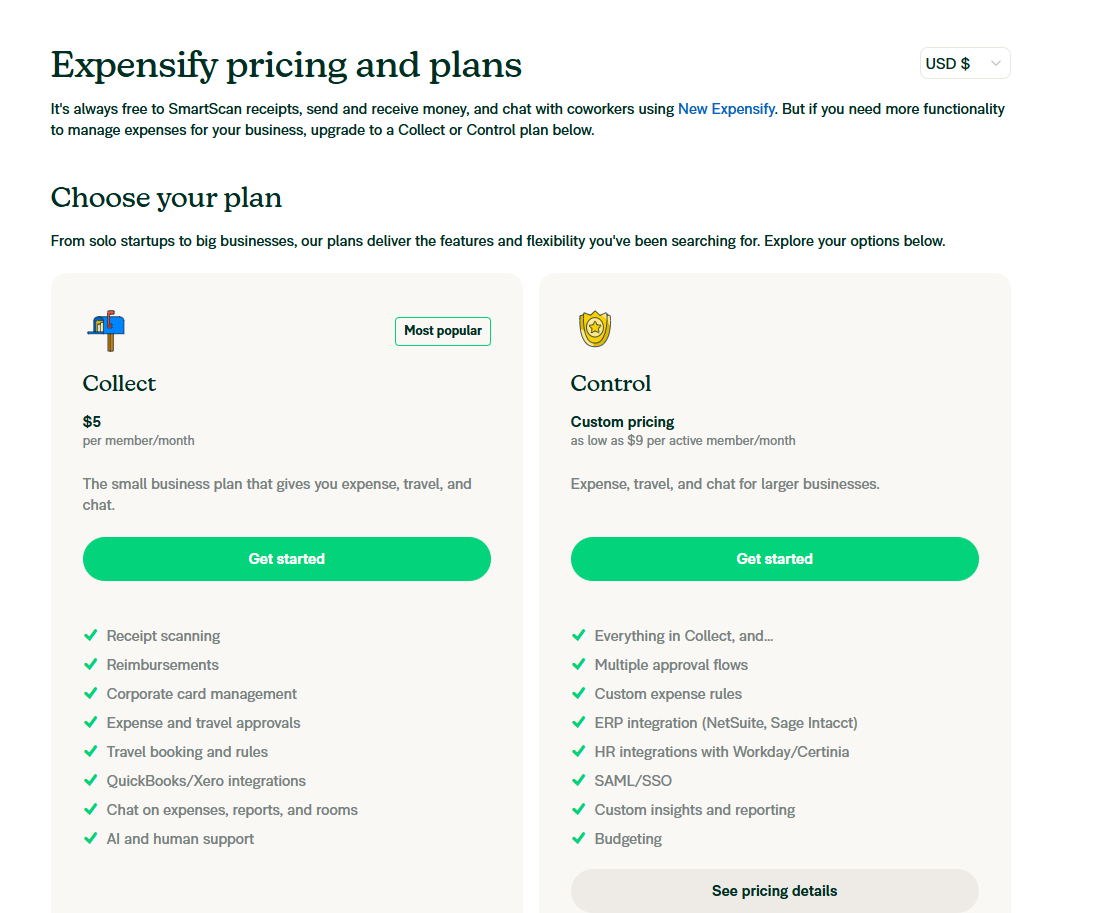
The Expensify Card is issued by a US bank under a US Visa licence. A UAE company is unlikely to qualify for it, so budget for the undiscounted Control rate.
Expensify's pros and cons
✅ Flat, predictable pricing on Collect.
✅ Travel booking inside the same app as the expenses.
✅ SmartScan has a long track record.
❌ Expensify did a big update in January 2026 that's still difficult to get used to for interfacing as an admin, according to one G2 review.
Which UAE-built cards suit teams that travel a few times a year?
Mamo and Xpence issue cards from the UAE that work abroad. For a team that travels a few times a year, that covers the trip without a full travel and expense platform.
Both are Visa products that leave booking to the traveller.
#9: Mamo
Best for: UAE SMEs already collecting payments through Mamo, with free cards and cashback on foreign spend.
Similar to: Pemo, Xpence.
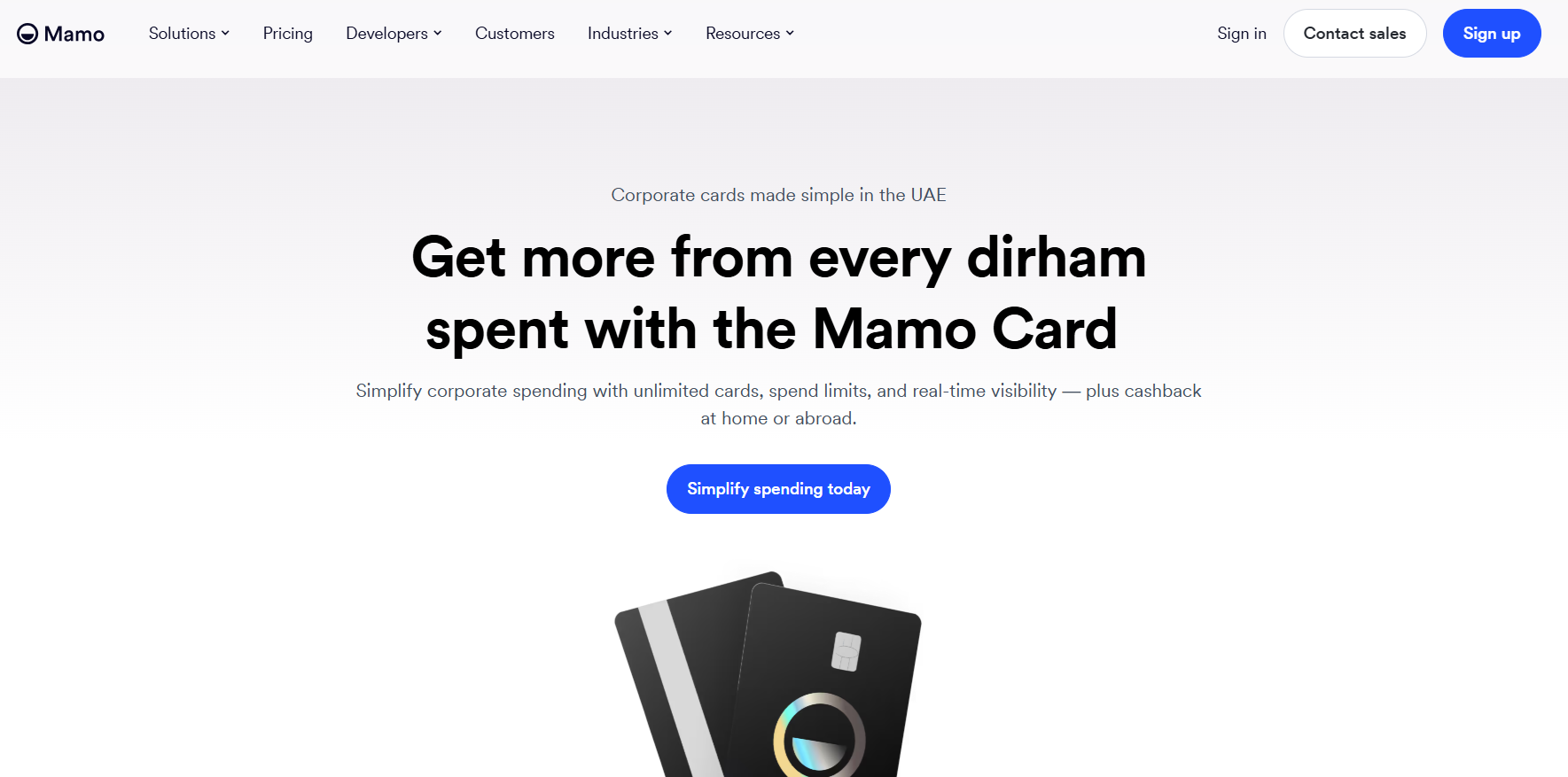
One line on Mamo's pricing page justifies its place in a travel article: 2% uncapped cashback on non-AED card spend on the Premium plan.
The cards themselves are free. Mamo's own FAQ says it takes a small fee from the merchant each time a card is used, so nothing is charged to the cardholder.
Features
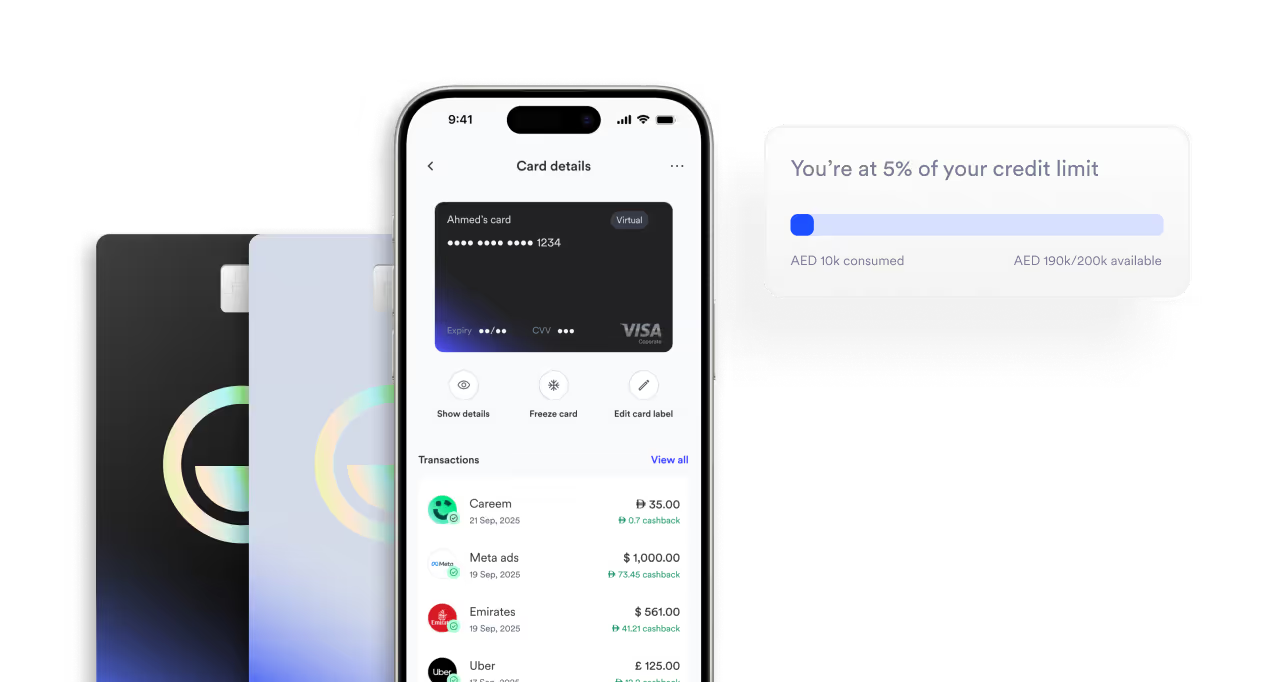
- Unlimited corporate cards: physical and virtual Visa cards at no issuance fee, with Apple Pay, Google Pay, and Samsung Pay.
- Cashback on foreign spend: 1% on non-AED transactions on Growth and 2% on Premium, uncapped on both.
- Spend limits and approvals: per-card limits, expense management, and approval workflows on both plans.
- WhatsApp receipts: travellers send a photo over WhatsApp for Mamo to match to the transaction.
Mamo's pricing
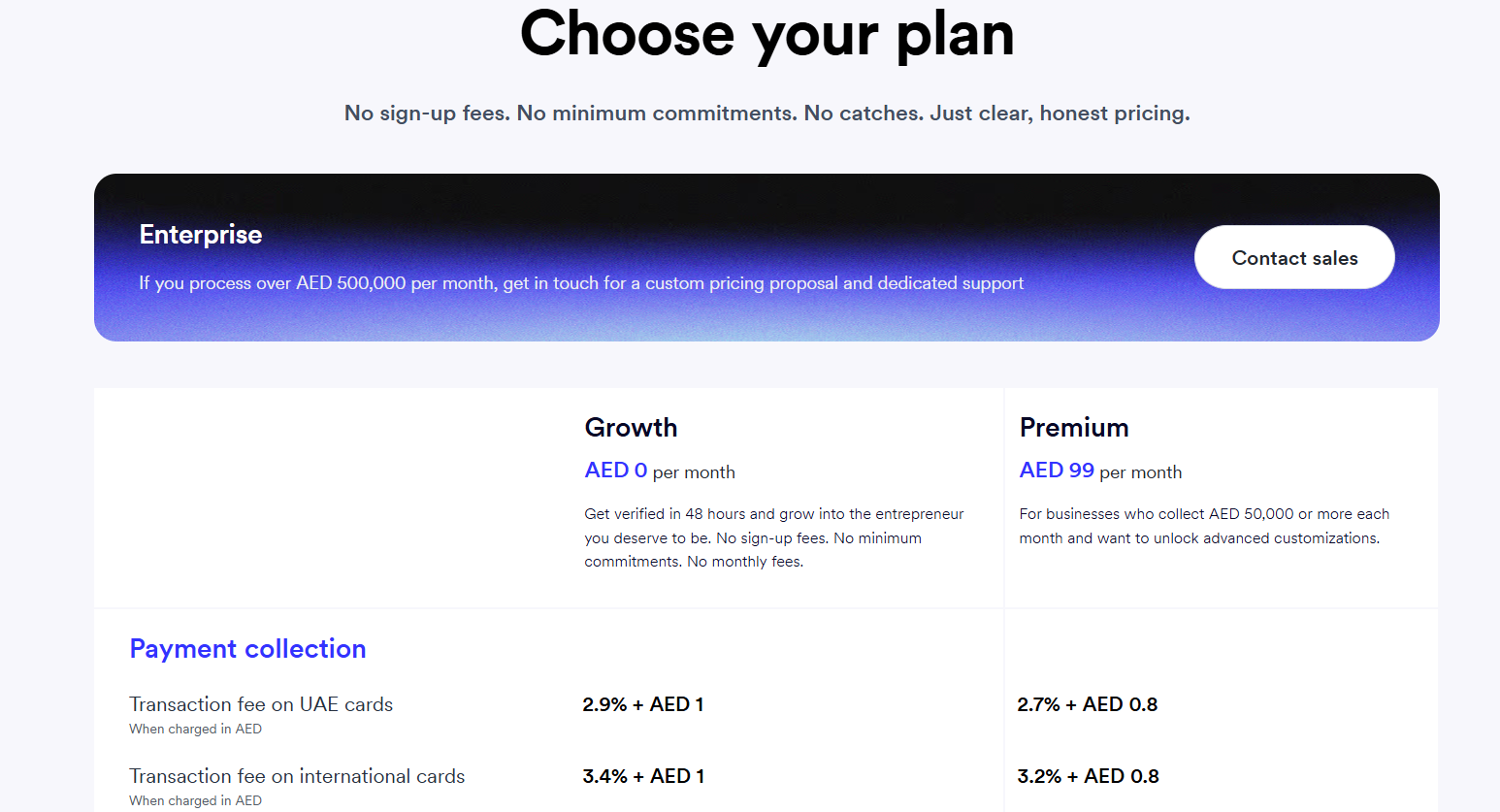
Mamo has two published plans and an enterprise tier:
- Growth: AED 0/month. Payment collection at 2.9% plus AED 1 per UAE card transaction, free corporate cards, 0.4% cashback on AED spend, and 1% on non-AED spend.
- Premium: AED 99/month, positioned for businesses collecting AED 50,000 or more a month. Fees drop to 2.7% plus AED 0.8, cashback rises to 0.5% on AED and 2% on non-AED spend, and UAE ATM withdrawals become free.
- Enterprise: custom pricing above AED 500,000 in monthly volume.
Mamo's pros and cons
✅ Free cards, unlimited.
✅ Uncapped cashback on foreign-currency spend.
✅ DFSA-regulated, with client funds held at RAKBANK.
❌ 2.9% + AED 1 per transaction on the Growth plan.
#10: Xpence
Best for: Occasional travellers on a prepaid Visa card, with a limit set per person and the card frozen between trips.
Similar to: Mamo, Pemo.
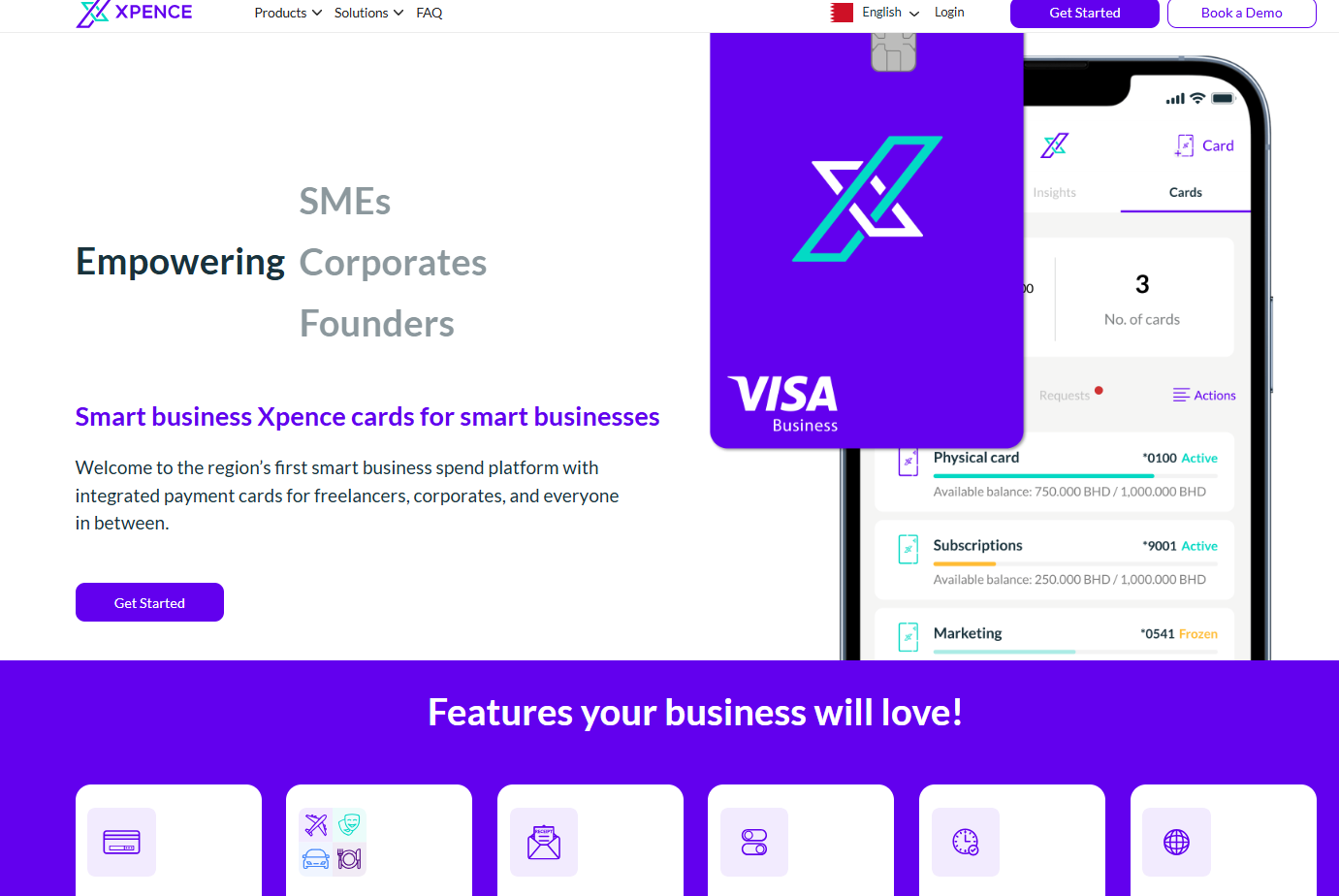
Xpence is a UAE-built prepaid card platform that also operates in Bahrain and Saudi Arabia.
Travel is handled through card controls. A limit is set for the trip, and the card is frozen again once the traveller is home.
Features
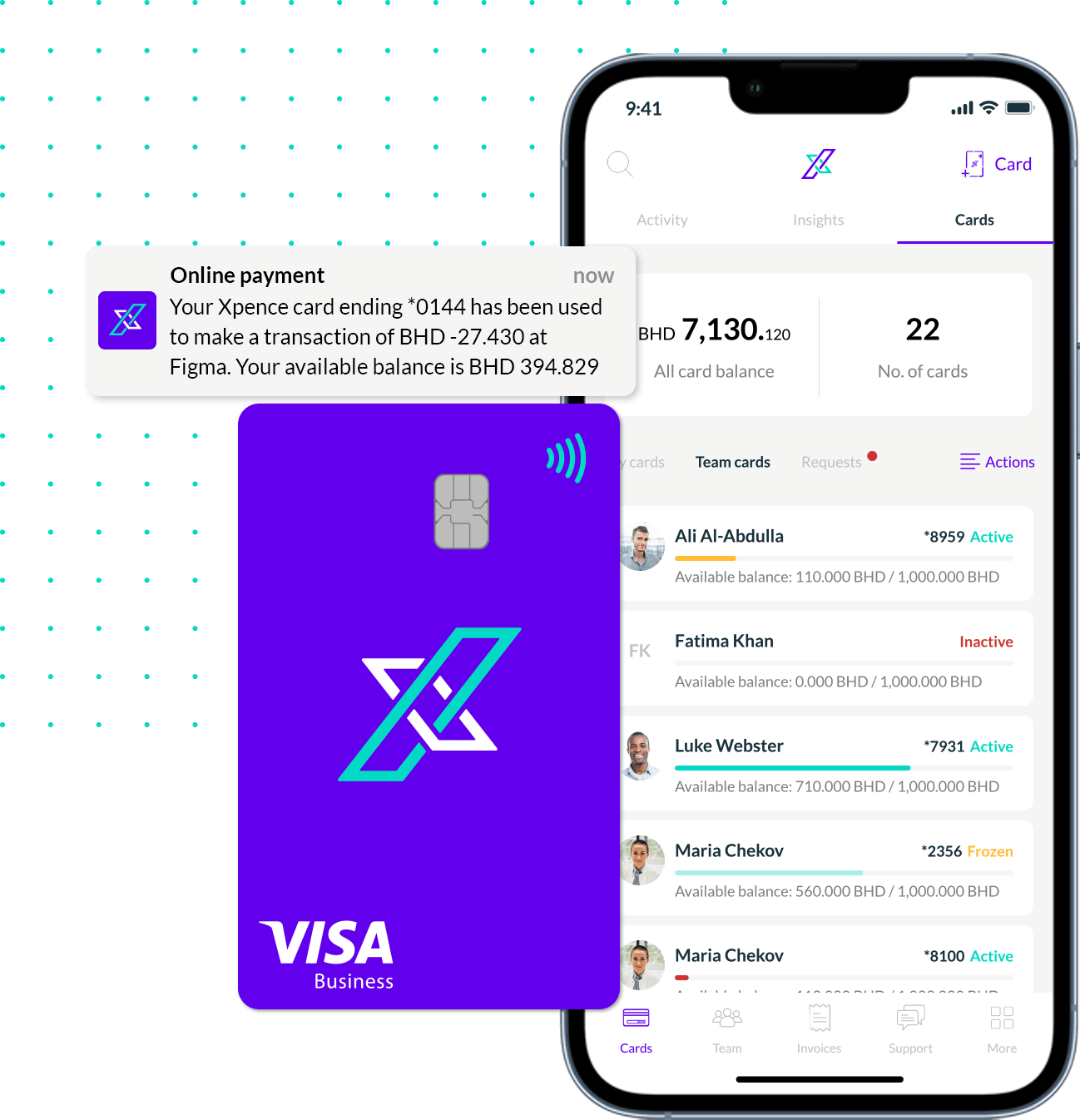
- Prepaid Visa cards: physical and virtual, usable at millions of merchants worldwide in any currency, with contactless and chip-and-PIN.
- Over 500,000 control combinations: Xpence's own count of the ways limits, freezes, and controls can be combined on a card, managed from any device.
- Instant freeze: cards frozen or unfrozen from the app at any time.
- Roles and visibility: each employee sees their own transactions. Admins see everyone's.
- Virtual cards and receipt prompts: virtual cards for single or repeat online payments, with employees reminded to add receipts and notes after each spend.
Pricing
Xpence keeps its pricing off the website. A demo and a quote come first.
Pros and cons
✅ Built and supported in the UAE.
✅ Per-employee limits, adjustable from the app.
✅ An app for every employee, with real-time tracking.
Next steps: run your next trip on Pemo
Next month's trip to Riyadh could go like this:
- The sales lead books the flight on a pre-funded trip card with a AED 6,000 ceiling.
- The hotel goes on a single-use card that expires when the booking clears.
- The airport taxi is paid with a phone, and the receipt is photographed at the kerb.
- Dinner in riyals is on the dashboard before dessert, with the receipt request already on the traveller's phone.
- Nobody meets a pile of riyal receipts a month later.
For a UAE finance team, that trip on Pemo comes with:
- Spend rules fixed before the ticket is bought, on cards issued in minutes.
- Receipts matched and verified before the traveller lands back in Dubai.
- Lounge, hotel, and ride perks bundled with the Mastercard.
- Coded entries synced to QuickBooks, Xero, Zoho Books, Odoo, Wafeq, or Mazeed.
- No per-user fee on Starter, Premium, or Enterprise.
You can sign up for the free Starter plan or book a demo to see why over 10,000 companies across the MENA region run on Pemo.
⚠️ Disclaimer: This article was last updated on the 3rd of September, 2026. It is general information and does not constitute legal, tax, or accounting advice. Confirm anything affecting your filings with a qualified adviser. Product features, pricing, and plan availability change, so check current details before relying on them. If you spot something that needs correcting, contact us, and we will review it.
Frequently asked questions
What should travel expense management software do for a UAE business?
Travel expense management software should do two things before month-end: apply the travel policy before the money is spent, and post a coded, receipt-backed entry to the accounting system with no re-keying.
Card-based tools such as Pemo handle both at the card.
Rydoo and Expensify, which start from the claim, pick up after the traveller has paid.
Do I need a travel booking tool as well as expense software?
A separate booking tool makes sense when you want approval to happen before the ticket is bought, or when your travel volume is large enough to justify negotiated rates.
SAP Concur, Zoho Expense, Happay, and Expensify include booking.
Pemo, Mamo, and Xpence leave booking to the traveller and control the payment instead.
Can employees keep using personal cards for business travel?
Employees can keep using personal cards, but each purchase then becomes a reimbursement claim that someone has to approve and pay back.
Pemo logs those out-of-pocket items as non-card expenses on Premium and tracks the reimbursement from the same dashboard.
Company cards remove most of the claims in the first place.


